
Eid al-Fitr Dates 2026–2029
| Year | Eid al-Fitr (approx.) | Ramadan Ends (approx.) |
|---|---|---|
| 2026 | ~March 19–21 | ~March 19 |
| 2027 | ~March 9–11 | ~March 8 |
| 2028 | ~February 26–28 | ~February 25 |
| 2029 | ~February 15–17 | ~February 14 |
Note: Exact dates depend on the sighting of the crescent moon and may shift by 1–2 days. Eid al-Fitr begins the day after the last day of Ramadan. The celebration lasts 3 days — Day 1 is the main holiday, with Days 2 and 3 being lighter family-visiting days. For Ramadan dates, see our Ramadan guide.
What Happens During Eid
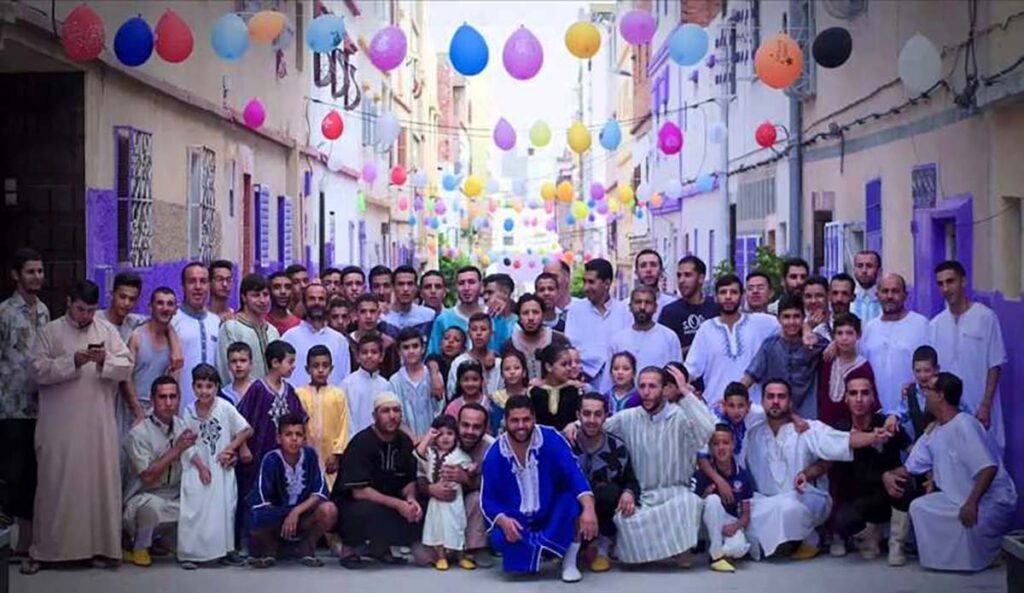
Day 1 — The Main Celebration: The morning begins with Eid prayer — a large communal prayer held at the msala (outdoor prayer ground) or at mosques across the country. Entire neighbourhoods walk together in their finest clothes — men in white djellabas, women in embroidered kaftans. Before the prayer, families give Zakat al-Fitr (charity to the poor — typically grain or money, enough to feed one person for a day). After prayers, the greeting “Eid Mubarak” (Blessed Eid) fills the streets. Families return home for the Eid feast — the biggest meal of the year: pastilla, couscous, lamb, ghriba, chebakia, ma’amoul, and endless mint tea. Children receive gifts and sweets. This is a family day — almost everything closes.
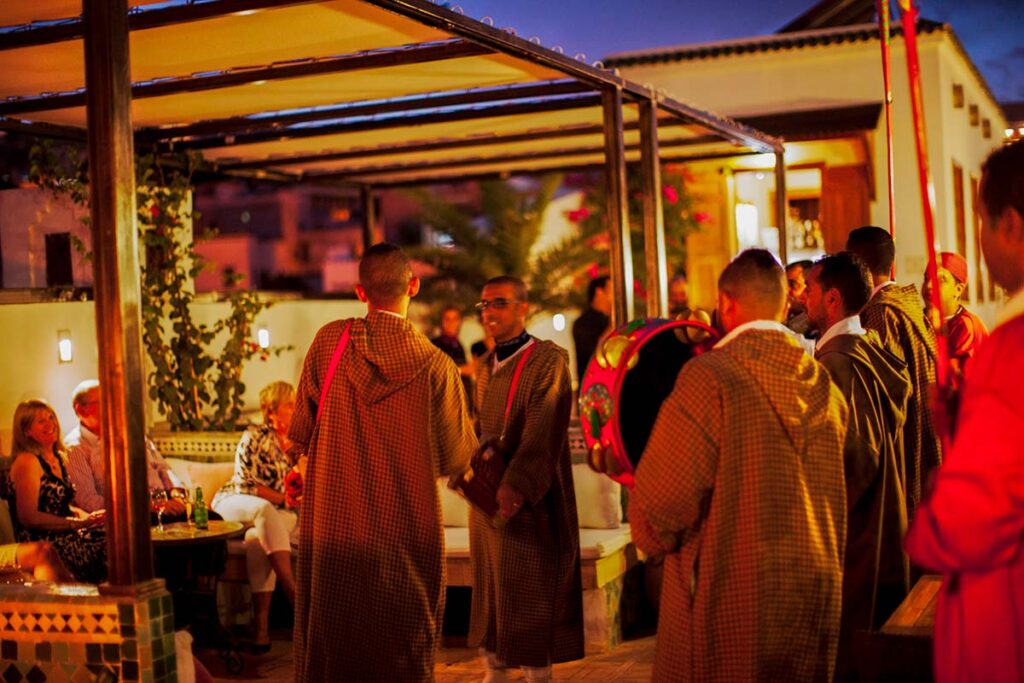
Days 2–3 — Visiting and Celebrating: Families visit relatives, neighbours, and friends. The atmosphere is festive but calmer. Streets fill with dressed-up families, children playing, and the sound of music. Shops and souks gradually reopen on Day 2 and are mostly back to normal by Day 3. Tourist hotels and riads serve meals throughout. If you’re in a city like Marrakech or Fes, the late evenings on Days 2–3 have a lively celebratory energy — street food, music, and families out late.
What Changes for Tourists
| Category | Eid al-Fitr (3 days) | Ramadan (30 days) | Normal |
|---|---|---|---|
| Shops & souks | Closed Day 1, partial Day 2, normal Day 3 | Reduced PM hours | Open all day |
| Restaurants (local) | Closed Day 1–2 | Closed daytime, open after sunset | Open all day |
| Restaurants (tourist) | Most closed Day 1, some reopen Day 2 | Open in tourist areas | Open |
| Hotels & riads | Open — meals served | Open — meals served | Open |
| MDT tours | Guides off Eid morning → resume PM | Run as scheduled | Normal |
| Public transport | Reduced schedules, crowded | Mostly normal | Normal |
| Alcohol | Unavailable | Almost unavailable | Licensed venues |
| Atmosphere | Festive, family-focused, quiet mornings | Reflective, slow days, lively nights | Normal |
Eid Foods
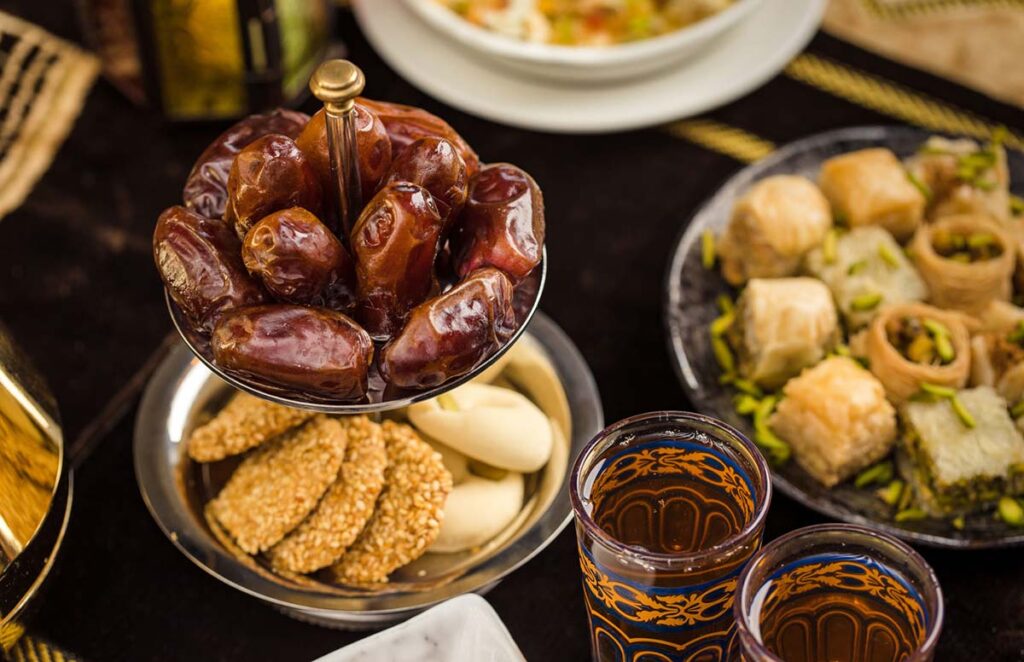
The Eid feast is the most elaborate meal of the Moroccan year. Savoury: pastilla (layered savoury pastry with chicken or pigeon, dusted with cinnamon and icing sugar — the showpiece dish), couscous with lamb (the Friday classic elevated to a grand scale), and slow-roasted lamb (sometimes whole, marinated with cumin, paprika, and saffron). Sweets: ghriba (crumbly powdered-sugar cookies — almond, coconut, or sesame varieties), ma’amoul (date-filled cookies), chebakia (honey-soaked sesame flower cookies), and sellou (toasted flour with almonds, sesame, and honey — a dense, spiced confection). Drinks: mint tea flows all day, fresh orange juice in the morning. Many riads offer special Eid feast menus for guests — ask when booking.
MDT Tours During Eid
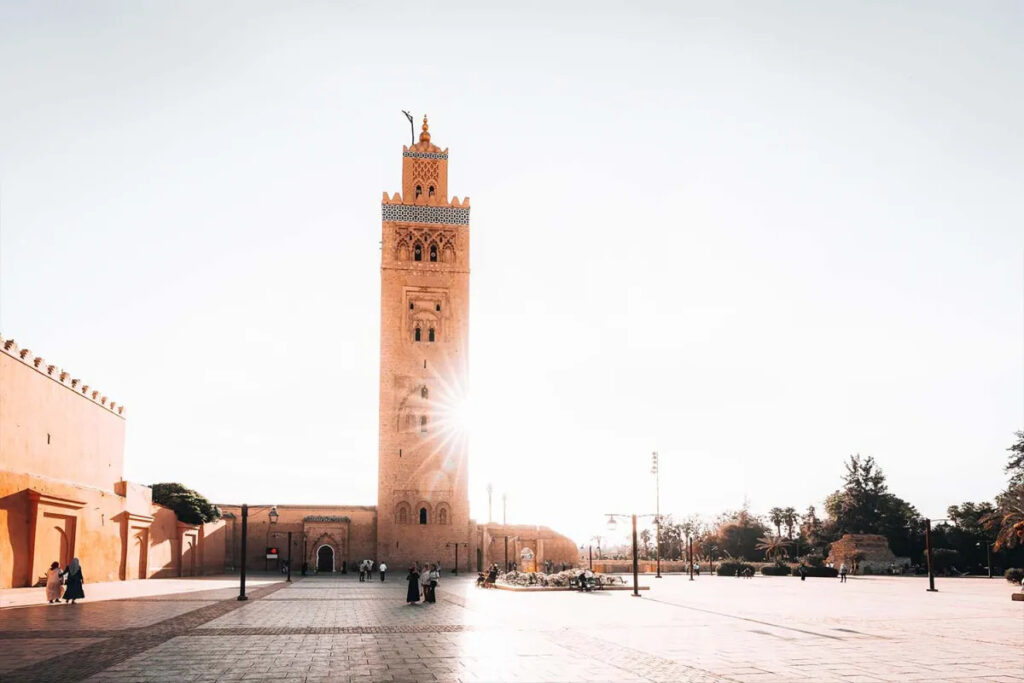
MDT tours operate during Eid, but with one adjustment: most guides and drivers take Eid morning off (Day 1) to attend communal prayer and celebrate with their families. This is a deeply rooted tradition — we respect it and ask guests to understand. Tours typically start in the afternoon on Eid Day 1 and run completely normally from Day 2 onward.
Desert tours departing before or after the Eid window are completely unaffected. If your multi-day tour overlaps with Eid, your camp and hotel meals continue as scheduled — only the guide’s morning availability on Day 1 changes. Contact MDT if your dates overlap and we’ll plan accordingly.
| Tour | Duration | Eid Impact | From |
|---|---|---|---|
| 3-Day Merzouga (Shared) | 3 days | Guide off Eid AM only | €95 |
| 3-Day Merzouga (Private) | 3 days | Guide off Eid AM only | €195 |
| Ourika Valley Day Trip | 1 day | Best booked Day 2+ | €25 |
| Essaouira Day Trip | 1 day | Best booked Day 2+ | €20 |
If You’re Invited to a Moroccan Home
Accept. Being invited into a Moroccan home during Eid is a privilege — it means you’ve been welcomed into one of the most intimate and generous moments in the cultural calendar. Here’s what to know:
Bring a gift: Pastries, flowers, or a box of sweets. This is expected and appreciated. Remove your shoes at the door. Greet everyone with “Eid Mubarak” (Blessed Eid). Dress well — Moroccans wear their finest clothes during Eid; showing up in smart attire is a sign of respect. Expect generous quantities of food — declining food can be seen as impolite, so pace yourself. Mint tea will flow. Conversation is warm and inclusive. It is one of the most memorable cultural experiences Morocco offers — and one that few tourists ever get to have.
What: 3-day celebration ending Ramadan. Morocco’s biggest family holiday.
2026: ~March 19–21. Moves ~11 days earlier each year (lunar calendar).
Day 1: Eid prayer, family feast (pastilla, lamb, ghriba), new clothes, everything closed.
Days 2–3: Visiting relatives, shops reopen gradually, festive evening atmosphere.
Tours: MDT operates — guides off Eid AM, resume PM. Desert tours unaffected.
Invited home? Say yes. Bring pastries. Remove shoes. Say “Eid Mubarak.”