
What Are Todgha Gorges?
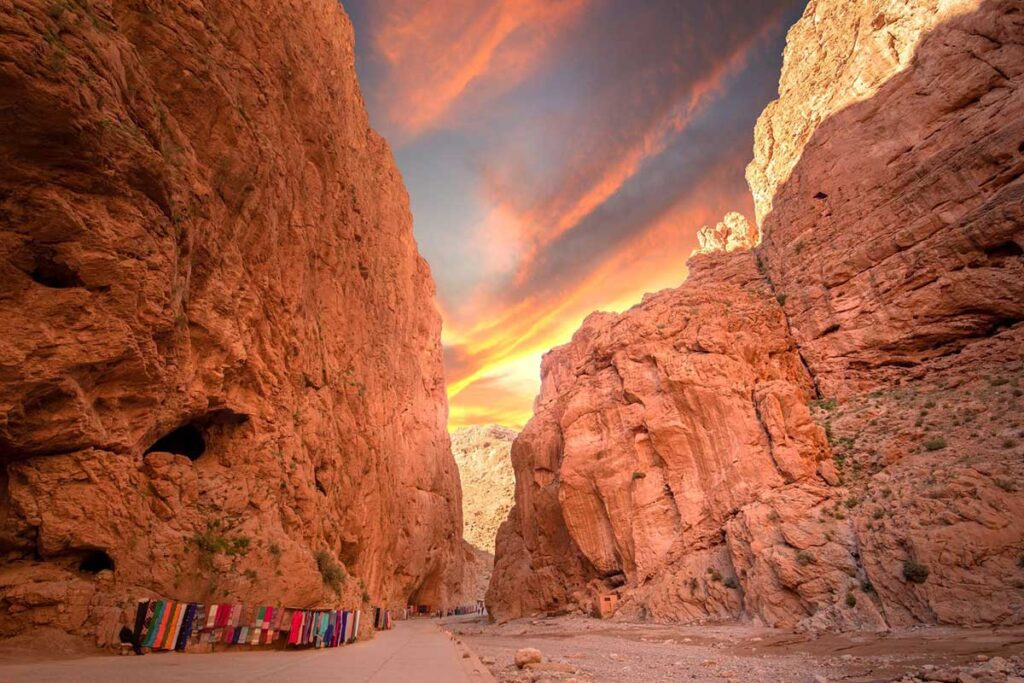
Todgha Gorges (sometimes spelled Todra Gorges — both are transliterations of the same Arabic/Berber name تودغى) are a series of limestone river canyons in the eastern High Atlas Mountains near the town of Tinghir. Carved by the Todgha River over millennia, the cliffs rise up to 300 metres in some sections — among the most dramatic in North Africa.
The gorge features crystal-clear waters flowing through a narrow canyon, surrounded by golden-red rock walls. It’s a paradise for rock climbers (100+ routes on ideal limestone), hikers (trails for all levels), and cultural travelers (Berber villages, traditional crafts, riverside hospitality). The layers of sedimentary rock reveal millions of years of geological history.
Location: 15km from Tinghir, which sits halfway between Marrakech and Merzouga. Coordinates: 31.59°N, 5.58°W. Whether you’re coming from Marrakech or the Sahara, Todgha is a natural stopover on the route.
Todgha on Desert Tours
Todgha Gorges is a standard stop on Day 2 of every 3-day and 4-day Merzouga desert tour from Marrakech. You’ll walk through the gorge for 30–60 minutes, have lunch at a riverside café, then continue east to Merzouga for the camel trek and desert camp.
| Tour | Duration | Todgha Stop | From |
|---|---|---|---|
| Shared 3-Day Merzouga | 3 days | Day 2 (30–60 min walk) | €85 |
| Private 3-Day Merzouga | 3 days | Day 2 (flexible time) | €195 |
| Private 4-Day + Todgha | 4 days | Day 2 (extended visit) | €280 |
| Fes → Marrakech via Desert | 3 days | Day 2 | €195 |
Hiking Trails & Itineraries
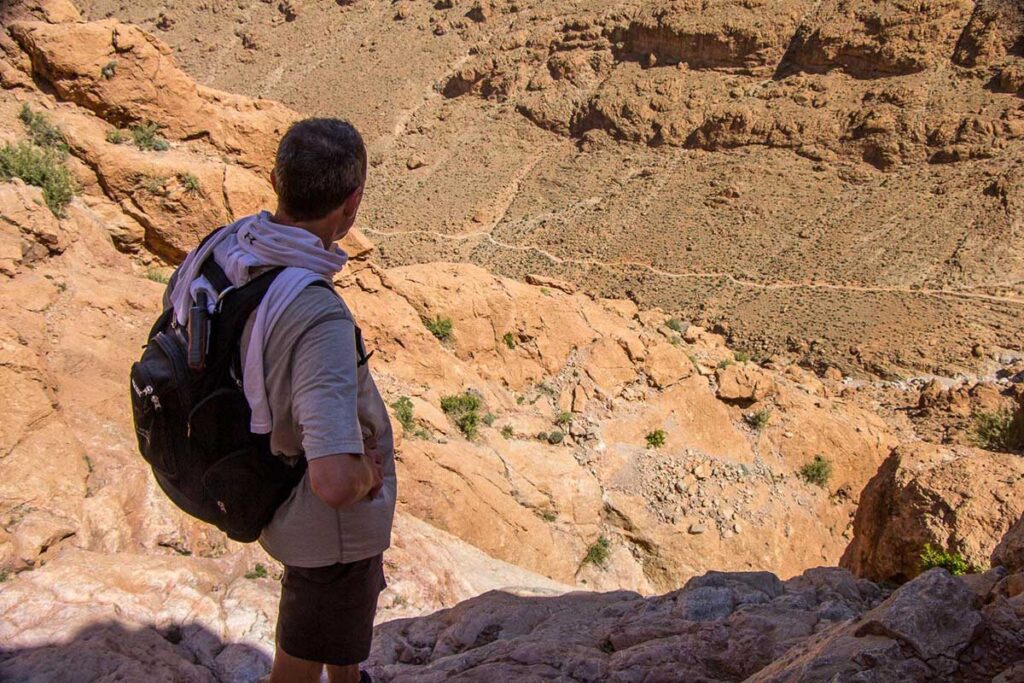
| Level | Trail | Duration | Highlights | Guide Needed? |
|---|---|---|---|---|
| Beginner | Gorge Floor Trail | 1–2 hours | Flat river walk, 300m cliff views, cafés | No |
| Intermediate | Tinghir Loop | 4–5 hours | Village views, palm groves, oasis | Recommended |
| Advanced | High Atlas Climb | 7–8 hours | Mountain vistas, remote Berber terrain | Essential |
Tips: Always carry water and sun protection. Wear sturdy footwear — the gorge floor is rocky. Morning light is best for photography. The Gorge Floor Trail is suitable for families and wheelchair-accessible for the first section.
Guide costs: ~200–300 MAD (€20–30) per half day for a local hiking guide. Book through your guesthouse or in Tinghir. Guides add cultural context and know the best viewpoints.
Rock Climbing — World-Class Routes
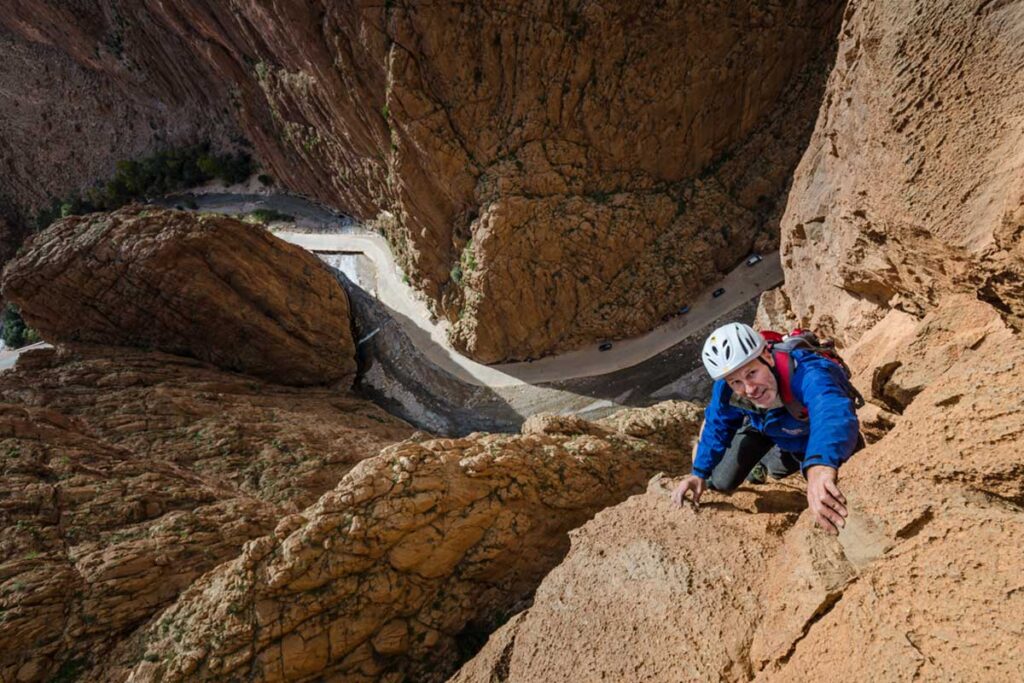
Todgha Gorges attracts climbers from around the globe for its vertical walls, ideal limestone conditions, and 100+ routes ranging from beginner to expert. The rock is high-quality, well-featured, and mostly bolt-protected on sport routes. Grades range from French 3 (beginner) to 8a+ (elite) — the standard grading system used here.
Classic routes: “Etoile des Gorges” (multi-pitch, French 5c–6a, intermediate — the most popular), “Le Rappel” (single pitch, French 4, beginner-friendly), “Pilier du Couchant” (multi-pitch, 6b+, advanced). The main climbing area is in the narrowest section of the gorge where the walls are closest.
Gear rental: ~150–200 MAD per session. Available in Tinghir and at local climbing shops near the gorge entrance. Certified guides: ~300–500 MAD for a half-day guided session. Highly recommended for first-timers.
Safety: Always check weather — flash floods can occur in rainy season. Let someone know your route. Hire a certified guide if you’re new to outdoor climbing.
Berber Culture & Villages
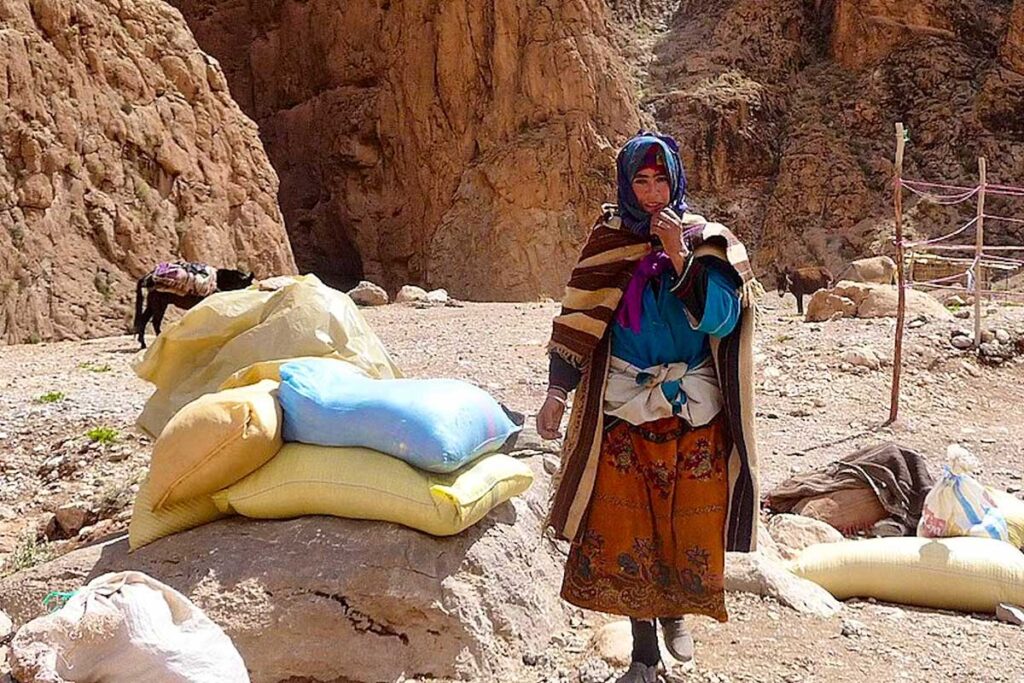
The Todgha Valley is home to Amazigh (Berber) communities who have lived in harmony with this landscape for generations. They maintain traditional farming, artisanal crafts, and a hospitality culture that welcomes visitors with mint tea and genuine warmth.
Walking through the palm groves and villages near the gorge gives you a glimpse of traditional irrigation channels (khettaras), mud-brick kasbahs, and daily life far removed from the tourist trail. The Tinghir Loop hiking trail passes through several of these communities. For deeper cultural context, see our Morocco culture and etiquette guide.
Geography & Natural Features
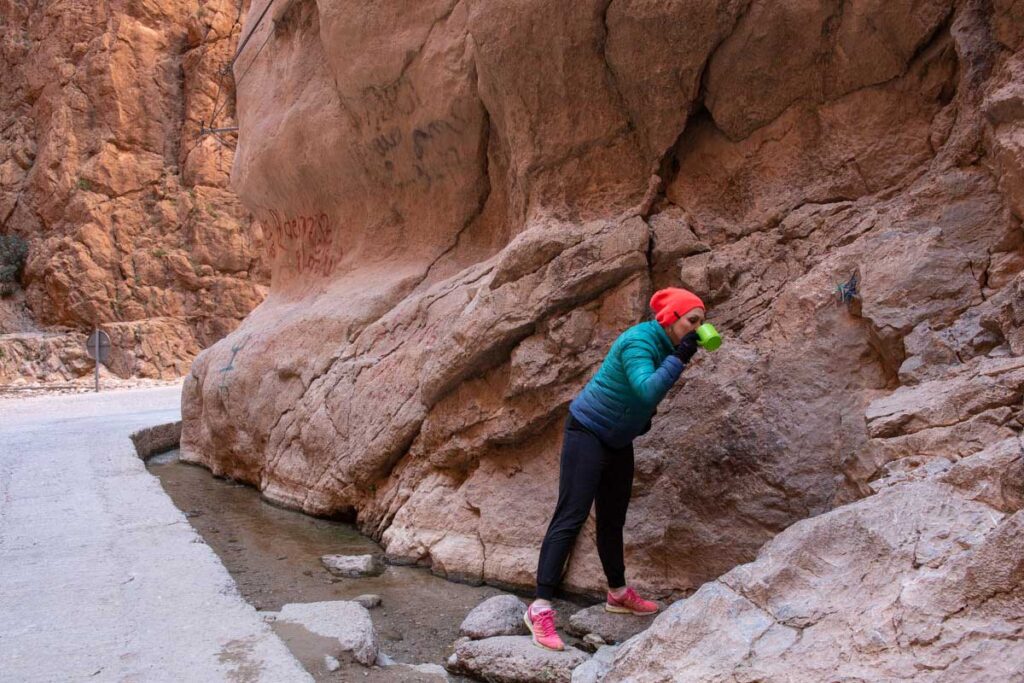
The towering limestone cliffs glow in hues of orange, pink, and gold, especially at sunrise and sunset — a photographer’s dream. During spring, the Todgha River rushes through the gorge floor, forming shallow pools and streams. In drier months, it reduces to a trickle, revealing polished stones and walkable paths.
The gorge edges and surrounding valleys are dotted with palm groves, olive trees, and resilient desert flora. Birdwatchers may spot kestrels, eagles, and other birds of prey soaring between the cliffs. The area is significant for tectonic and erosional research — layers of sedimentary rock reveal the region was once an ancient seabed.
Best Time to Visit
Spring — Mar to May
20–30°C. River flowing, wildflowers, ideal for hiking and climbing. Clear skies. The sweet spot.
Autumn — Sep to Nov
20–28°C. Post-summer, fewer crowds. Perfect climbing conditions. October is ideal.
Summer — Jun to Aug
38–42°C afternoons. Mornings still fine. Avoid midday hiking. The gorge provides shade.
Winter — Dec to Feb
15–20°C days, cold nights. Pleasant walking. Pack warm layers for evenings. Snow possible on surrounding peaks.
Getting There
From Marrakech: 6–7 hours via Tizi n’Tichka pass and Dades Valley. Most visitors see Todgha as part of a 3-day Merzouga desert tour — no separate planning needed.
From Fes: 8–9 hours via Errachidia and Erfoud — more desert-laden. Our Fes-to-Marrakech tour includes the stop.
Public transport: Buses and shared taxis run regularly to Tinghir, from where a local taxi to the gorges costs ~30–50 MAD.
Independently: Rental car works — the road from Tinghir to the gorges is paved and well-maintained. The gorge has free parking.
Todgha vs Dades Gorges
| Feature | Todgha | Dades |
|---|---|---|
| Cliff height | Up to 300m | Up to 200m |
| Landscape | Narrow canyon, vertical walls | Winding valley, serpentine road |
| Rock climbing | ⭐ World-class (100+ routes) | Limited |
| Walking | Canyon floor (flat, easy) | Road viewpoints (driving) |
| Famous for | Climbers, hikers, river | Snaky road photo, kasbahs |
| Photography | Vertical cliff portraits | Winding road aerial shots |
| Distance apart | ~60km (1h drive) — visit both on the same tour day | |
Both gorges are visited on MDT desert tours — Dades on Day 1 (evening), Todgha on Day 2 (morning). They’re complementary, not competing.
Where to Stay & Eat
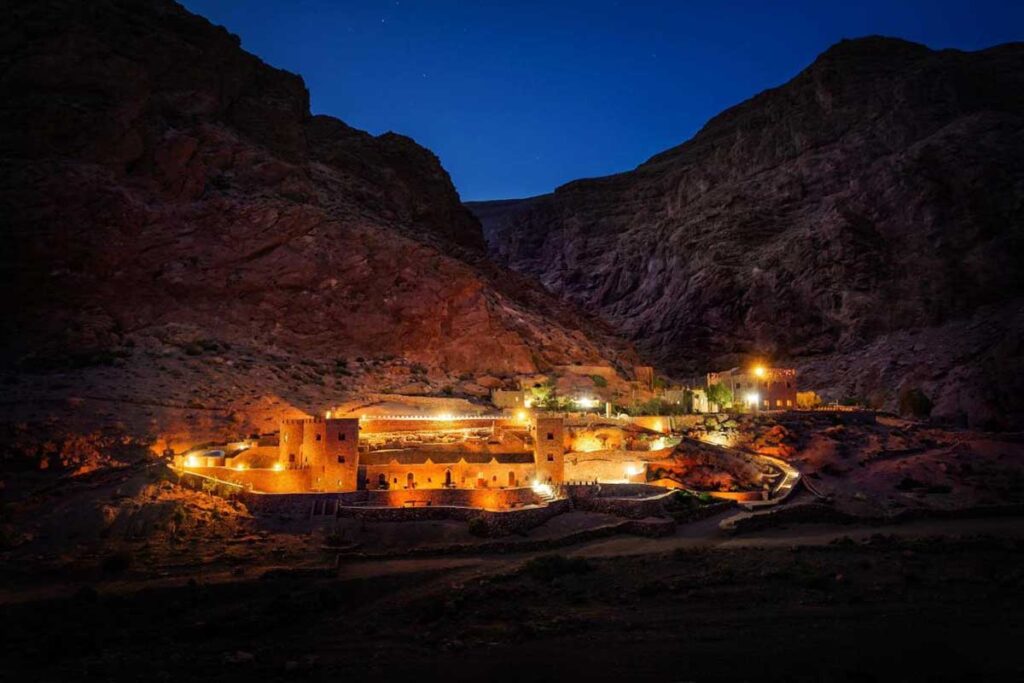
Budget (150–250 MAD/night): Hostels and small auberges with clean rooms, shared bathrooms. Ideal for backpackers and climbers.
Mid-range (250–500 MAD): Guesthouses and riads with private rooms, hot showers, optional meals, and rooftop terraces with gorge views. Excellent value.
Luxury (500+ MAD): Boutique eco-lodges blending comfort with sustainability. Some include guided tours and spa facilities.
Where to Eat
| Restaurant | Location | Price | Known For |
|---|---|---|---|
| Etoile des Gorges | Inside gorge | 40–80 MAD | Tagines, canyon terrace views |
| Chez Michèle | Inside gorge | 30–70 MAD | Couscous, pastilla, river-side seating |
| Guesthouse dinners | Tinghir / gorge | 50–100 MAD | Home-cooked Berber food, best value |
After Todgha, the desert tour route continues east through Erfoud and Rissani to Merzouga and the Erg Chebbi dunes — where the sunset camel trek and desert camp await. The contrast between the gorge’s cool shade and the Sahara’s golden heat makes the transition unforgettable.
Photography Tips
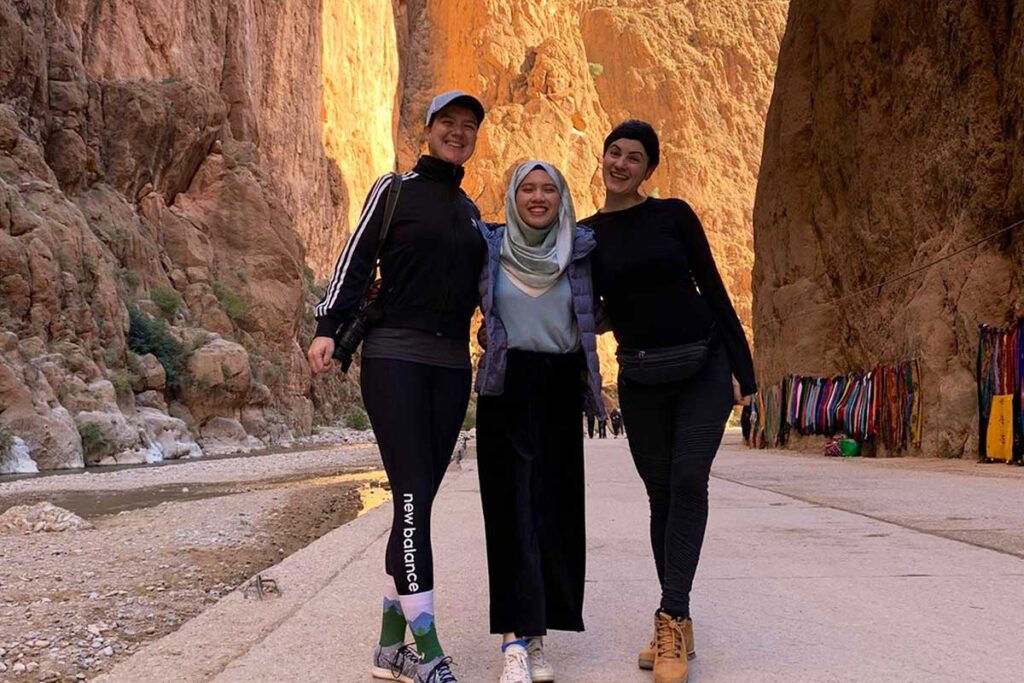
Best times: Early morning and late afternoon — golden hues on the canyon walls, softer shadows, fewer tourists. The gorge faces roughly north-south, so direct sunlight enters the narrowest section only briefly.
Top spots: the gorge entrance (dramatic perspective with both walls framing the canyon), the footbridge crossing the river, and the higher trail viewpoints (wide-angle view of the canyon and valley below). Bring a wide-angle lens — the walls are so close that a phone camera captures the scale well too.
Safety & Packing
Packing: Sunscreen, sunglasses, reusable water bottle, sturdy hiking boots, warm layers for chilly nights, basic first-aid kit, headlamp for early treks. Full list: What to Pack for a Morocco Desert Tour.
Safety: Stick to marked trails. Flash floods can occur in rainy season — check weather and ask locals. Avoid climbing without proper gear. The gorge floor is safe for walking year-round.
Health: Tinghir has pharmacies and a hospital. Nearest major medical centres: Ouarzazate or Errachidia. Phone signal: patchy in the gorge — download offline maps before arriving. Morocco SIM card guide.
What: 300m limestone gorge, free entry, 15km from Tinghir. Also called Todra.
Activities: Hiking (3 levels), rock climbing (100+ routes), Berber villages, photography.
On tour: Standard Day 2 stop on 3-day and 4-day Merzouga tours from €85.
Best months: March–May and September–November.
Costs: Free entry. Guide ~200 MAD. Meals 30–80 MAD. Accommodation 150–500+ MAD.