
Key Facts
| Fact | Detail |
|---|---|
| Self-name | Amazigh (plural: Imazighen) — “free people” |
| External name | “Berber” — from Greek/Roman barbaroi (foreigner) |
| Identity | Indigenous people of North Africa — oldest known inhabitants |
| Population (Morocco) | ~40% identify as Berber (~15 million); 60%+ have ancestry |
| Language | Tamazight — official since 2011 constitution |
| Dialects | Tarifit (Rif), Tamazight (Central Atlas), Tashelhit (Souss) |
| Script | Tifinagh — ancient alphabet, now on currency and road signs |
| Religion | Islam (with pre-Islamic cultural traditions and festivals) |
| Key dynasties | Almoravid (11th–12th C), Almohad (12th–13th C) |
| Key figures | Dihya (Kahina) — queen who resisted Arab conquest, 7th C |
| Key festivals | Imilchil Wedding (Souk Aamur), Yennayer (New Year, Jan 13) |
| Where in Morocco | Atlas Mountains, Rif, Souss, Tafilalet, Draa Valley |
Identity & Origins
The Berbers are the indigenous people of North Africa — their presence predates the Arab conquest by thousands of years. Archaeological evidence places Berber-speaking populations across the Maghreb (Morocco, Algeria, Tunisia, Libya) from at least the late Stone Age. The name “Berber” comes from the Greek and Roman term barbaroi (meaning anyone who didn’t speak Greek or Latin — i.e., “foreigner”). The people’s own name is Amazigh (singular) / Imazighen (plural), meaning “free people” or “noble people.”
In Morocco, approximately 40% of the population identifies primarily as Berber (~15 million people), while over 60% have some Berber ancestry. Berber communities are concentrated in the Atlas Mountains (High, Middle, and Anti-Atlas), the Rif Mountains (north), the Souss plain (south), and the oasis regions of the southeast (Tafilalet, Draa Valley, Dades). Berber identity in Morocco is both ethnic and cultural — many Moroccans move fluidly between Arab and Berber identity depending on context.
History — 3,000 Years in Brief
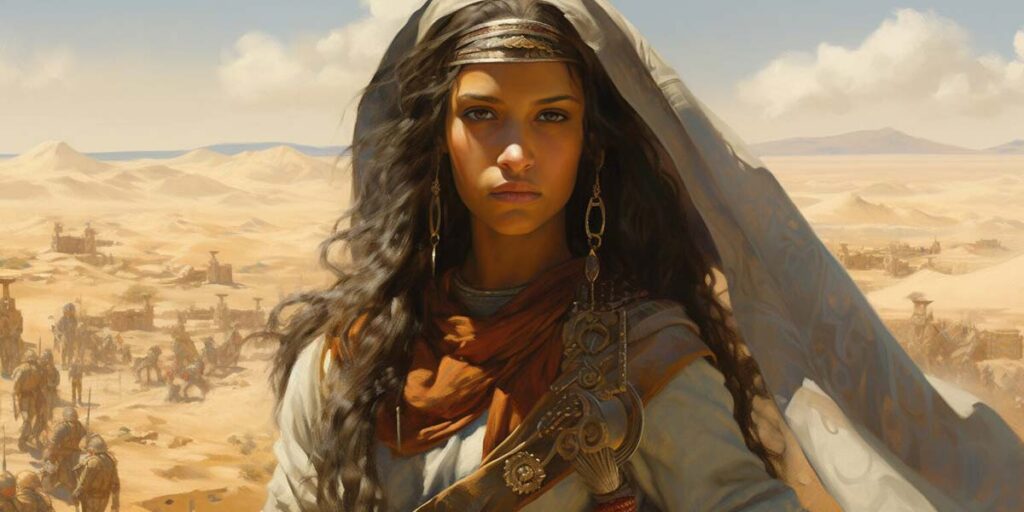
Ancient era: Berber kingdoms traded with Phoenicians and Romans. The Numidian king Masinissa (202–148 BCE) united Berber tribes into a powerful North African state. Berbers served in Roman armies and governed provinces.
7th century — Arab conquest: The arrival of Islam transformed North Africa. Most Berbers embraced Islam within a few generations, but the transition was contested — the warrior queen Dihya (known as Kahina) led fierce Berber resistance in the late 7th century before her defeat. Islam was adopted, but Berber languages, customs, and social structures persisted alongside it.
11th–13th centuries — Berber empires: The Almoravid dynasty (1040–1147) — Berber warriors from the Sahara — founded Marrakech and built an empire stretching from Senegal to Spain. The Almohad dynasty (1121–1269) succeeded them, creating one of the largest empires in medieval history. Both left architectural, cultural, and religious legacies that define Morocco today.
19th–20th centuries — colonialism: French and Spanish colonial powers divided Morocco and attempted to separate Berber and Arab populations through the Berber Dahir (1930) — a decree that backfired by uniting Moroccans against colonial rule. Independence came in 1956.
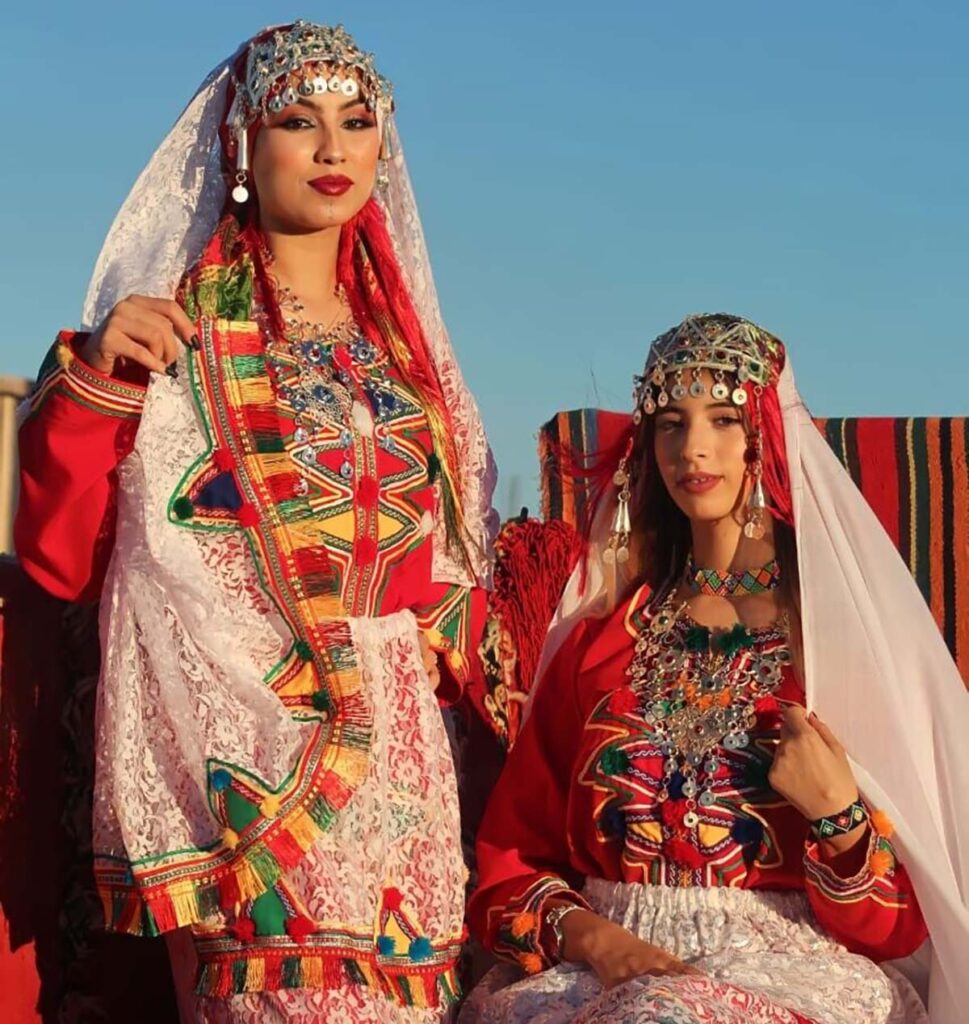
2011 — Tamazight becomes official: Morocco’s new constitution recognized Tamazight as an official language alongside Arabic — a landmark achievement for Berber cultural rights after decades of advocacy.
Language & Tifinagh Script
Berbers speak Tamazight — a family of closely related languages with three main dialects in Morocco: Tarifit (Rif Mountains, north), Tamazight (Central Atlas — the dialect that gave the language family its name), and Tashelhit (Souss plain, Anti-Atlas, south). The dialects are partially mutually intelligible — roughly like Spanish and Portuguese.
The traditional writing system is Tifinagh (ⵜⵉⴼⵉⵏⴰⵖ) — an ancient alphabet with roots dating back over 2,000 years, related to the Libyan script found on rock inscriptions across the Sahara. The modern standardised version (Neo-Tifinagh) was adopted by Morocco’s Royal Institute of Amazigh Culture (IRCAM) and is now taught in schools, printed on Moroccan currency (the 200-dirham note), and visible on road signs, government buildings, and airport signage throughout the country.
Culture & Traditions
Cuisine
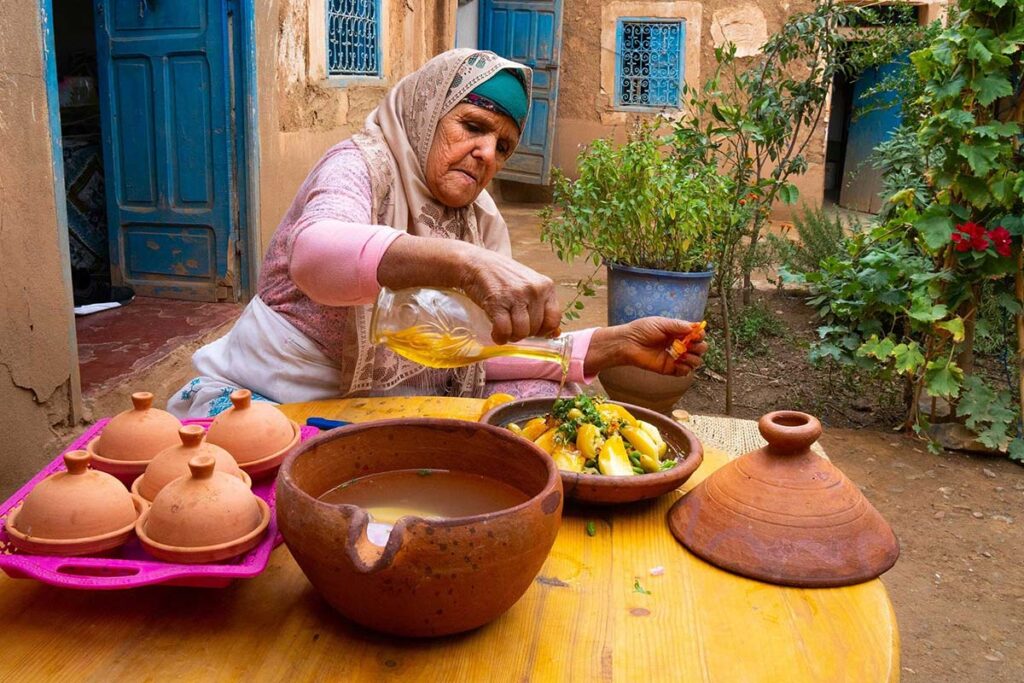
Berber cuisine is the foundation of what the world knows as “Moroccan food.” Tagine (slow-cooked stew in a conical clay pot), couscous (hand-rolled semolina, traditionally served on Fridays), argan oil (from trees endemic to the Souss region), and mint tea (the national drink, served three glasses at a time) all have Berber origins. Regional variation is enormous — coastal Berbers cook seafood, mountain communities specialise in hearty stews and preserved meats, and Saharan Berbers make medfouna (a stuffed bread baked in sand). On MDT desert tours, your camp dinner is a traditional Berber tagine prepared over open coals.
Festivals
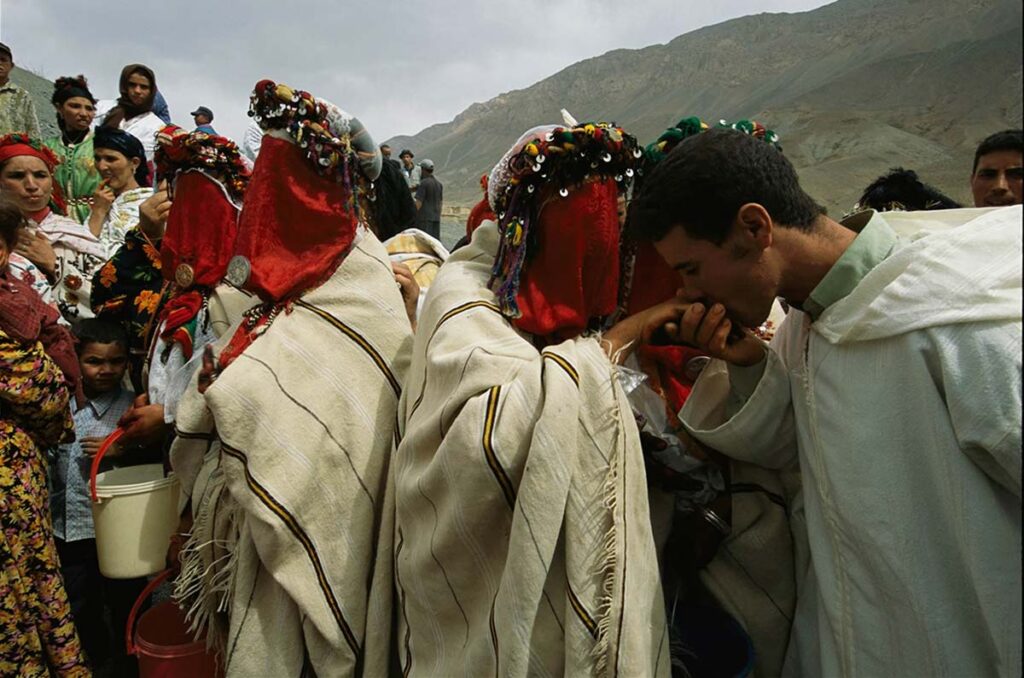
The Imilchil Wedding Festival (Souk Aamur) — held annually in the Atlas Mountains — brings together young Berber men and women from different tribes for courtship and marriage. It’s one of Morocco’s most unique cultural events. Yennayer (January 13) is the Berber New Year, celebrated with special foods, family gatherings, and rituals marking agricultural renewal — officially recognised as a national holiday in Morocco since 2018.
Music & Dance
Ahouach (Atlas Mountains) — a communal circle dance with drums and call-and-response singing, performed at weddings and festivals. Ahidous (Middle Atlas) — similar but with distinctive rhythmic chanting and swaying movements. Guedra (Saharan south) — a trance-like ritual dance performed by women, originating from the desert Tuareg-Berber communities. You’ll often see Ahouach performed at desert camps on multi-day tours.
Crafts
Berber carpets (each tribe has distinctive patterns — the most famous are Beni Ourain, Azilal, and Boucherouite), silver jewellery (Tiznit and Anti-Atlas traditions, often featuring Amazigh geometric symbols), and pottery (especially from the Rif). Berber architecture — kasbahs, ksour, and pisé construction — is covered in our kasbah guide.
Where to Meet Berber Communities
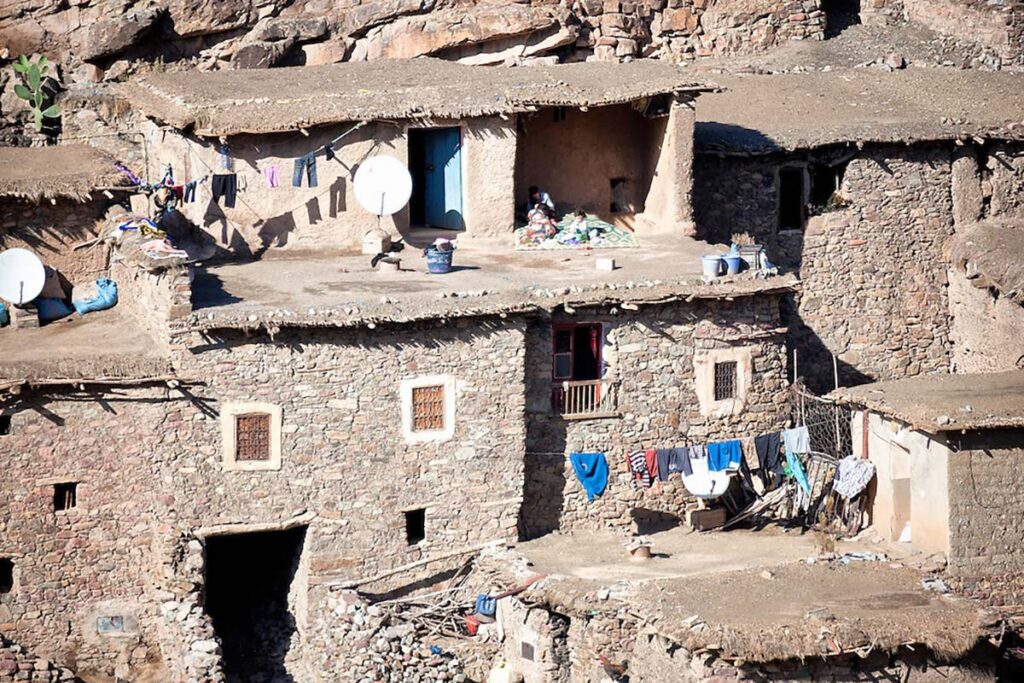
Atlas Mountains: Villages like Imlil and Aroumd (the trailhead for Toubkal) are Berber communities where visitors are welcomed for mint tea, home-cooked meals, and overnight stays. The Ourika Valley (1 hour from Marrakech) offers the most accessible Berber village experience — our day trips stop at a traditional home. The Atlas Mountains guide has full details.
Sahara Desert: The Merzouga region is home to Berber families who have lived on the desert edge for generations. On MDT desert tours, your camel trek guide, camp host, and cook are Berber — the evening around the campfire includes Berber drumming and singing. The luxury camp guide covers the experience.
Kasbah towns: Ouarzazate, Skoura, and the Dades Valley are Berber heartland — the kasbahs, oases, and farming communities here are the living heritage of centuries of Berber settlement.
| Tour | Duration | Berber Experience | From |
|---|---|---|---|
| 3-Day Merzouga (Shared) | 3 days | Berber guides, camp, drumming | €95 |
| 3-Day Merzouga (Private) | 3 days | Berber guides, camp, villages | €195 |
| Ourika Valley Day Trip | 1 day | Berber home visit, mint tea | €25 |
| Atlas Mountains Day Trip | 1 day | Berber village, lunch, hike | €25 |
Who: Indigenous North Africans. Self-name: Amazigh (“free people”). ~40% of Morocco.
Language: Tamazight (official 2011). Three dialects. Written in Tifinagh script.
History: Almoravid + Almohad empires. Dihya (Kahina). Islam adopted 7th century.
Culture: Tagine, couscous, argan oil. Ahouach dance. Imilchil Wedding. Yennayer New Year.
Crafts: Beni Ourain carpets, Tiznit silver, pottery. Kasbahs = Berber architecture.
Meet them: Atlas villages, Sahara camps, kasbah towns — on every MDT tour.