Morocco Grand Tour – 16 Days: Cities, Desert & Mountains
- Private vehicle & driver — Pick-up at your riad, pace set by you
- Local licensed guide — Licensed guide nº2898 · since 2011
- Book on WhatsApp — Reply within 1 hour · no payment at this stage
- Two nights in the Sahara with a full desert day between them
- Guided medina days in Chefchaouen, Fes and Marrakech — plus free time in each
- Dinner cooked and shared at a family home in Fes

The 16-day Morocco Grand Tour costs from €2400 per person — fifteen nights half-board across riads, kasbah hotels and an Erg Chebbi desert camp, with your own driver, licensed guides, a sunrise balloon and a Marrakech gastronomy tour included, never in a group. Sixteen days buys what the classic loop cannot: the human extras. Dinner at a family home in Fes, a two-day desert chapter instead of a drive-by, a proper carpet education, the Majorelle garden, then an Essaouira finale of hammam, beach horses and a cooking class before the Portuguese coast road returns you to Casablanca. The monuments — Chefchaouen, Volubilis, the four imperial cities, Aït Ben Haddou — are the skeleton every grand tour shares; this one is fleshed out with tables and conversations. Written quote, hotels named, within the hour on WhatsApp.
| Duration | 16 Days |
| Price | From €2400 per person — car, driver and accommodation included |
| Departures | Your dates — every departure is private, never a shared group |
| Languages | English- and French-speaking driver-guides; licensed city guides where included |
| Booking | WhatsApp +212 661 454 738 — written quote within 1 hour, no payment at this stage |
Sixteen days that leave nothing important out — this is the complete Morocco, given the time each region actually deserves. The route runs Casablanca to Casablanca through blue Chefchaouen and the Akchour falls, medieval Fes with dinner at a family table, two nights of Sahara at the Erg Chebbi, the kasbah road to Aït Ben Haddou, Marrakech seen from a dawn balloon, and a slow three-night seaside chapter in Essaouira before the Portuguese coast carries you home.
What makes sixteen days different from ten is not the list of places — it is the margin. Cities get guided days and free ones. The desert gets a full day, not a photo stop. Essaouira gets long enough for the wind to change your pace. Activity days — the waterfall hike, the balloon, the cooking class, the beach ride — can shuffle around weather with nothing lost.
Like every departure we run, this tour is fully private: your vehicle, your driver-guide, licensed local guides in each medina, and an itinerary that bends to you. The version below is the shape we recommend; your version starts from it.
Sixteen days, the complete circle, from €2400 per person: the Hassan II Mosque, Rabat and a guided Chefchaouen with the Akchour falls, Volubilis and Moulay Idriss into Fes — unveiled over two days with dinner at a local home — then Merzouga with camels at dusk and a full Erg Chebbi day, Aït Ben Haddou, the carpet country to Marrakech, and the closing days at the coast.
Against our 15-day best-of, this grand tour buys one more day and spends it on people: the family dinners, the craft encounters, the slower Fes. The skeleton is the same complete circuit — north, imperial cities, Sahara, Atlas, ocean.
It is the itinerary for travellers who measure a trip by conversations as much as sights. Private throughout, on your dates — send them on WhatsApp and the full itinerary, hotels named, comes back within the hour.
Who this tour is for: completists with sixteen days — cities, desert and mountains with nothing traded away. On two weeks, Two Weeks in Morocco keeps the loop; sea-first travellers should look at the Morocco Coastal Tour – 16 Days instead.
Sixteen days, and the extras are all human: dinner at a family home in Fes, a carpet education you actually asked for, the balloon-and-gastronomy double morning in Marrakech, a hammam day and a horses-then-cooking finale at Essaouira. The monuments and the Erg Chebbi camp are the skeleton every grand tour shares; this one is fleshed out with the tables, steam and conversations that turn a circuit into a memory.
- Two nights in the Sahara with a full desert day between them
- Guided medina days in Chefchaouen, Fes and Marrakech — plus free time in each
- Dinner cooked and shared at a family home in Fes
- Sunrise hot-air balloon and an evening gastronomy tour in Marrakech
- Three seaside nights in Essaouira — hammam, horseback and a cooking class
- The Portuguese coast — Safi, El Jadida, Azemmour — as the closing road
Photos from the tour




Itinerary
Open a day to see the detail: transport, accommodation, meals and activity time.
Day 1 Casablanca and the Hassan II Mosque
Your driver meets you at Casablanca airport with a name sign, whatever the delay. First stop is the Hassan II Mosque — the only working mosque in Morocco open to non-Muslim visitors — where a guided visit takes you inside a prayer hall built for 25,000, over glass floor panels with the Atlantic moving beneath. The evening is yours on the Corniche: a seafood dinner, the ocean air, and an early night before the road north.

Day 2 Casablanca — Rabat — Chefchaouen
A travelling day that never feels like one. The motorway runs to Rabat for a midday stop at the capital's essentials — the Kasbah of the Oudayas above the river mouth, the Hassan Tower and the mausoleum of Mohammed V. From there the road climbs into the Rif through olive country and the holy town of Ouazzane, arriving in Chefchaouen as the evening light turns the famous blue lanes their deepest shade. Dinner near the Uta el-Hammam square.
Day 3 Chefchaouen guided, Akchour falls
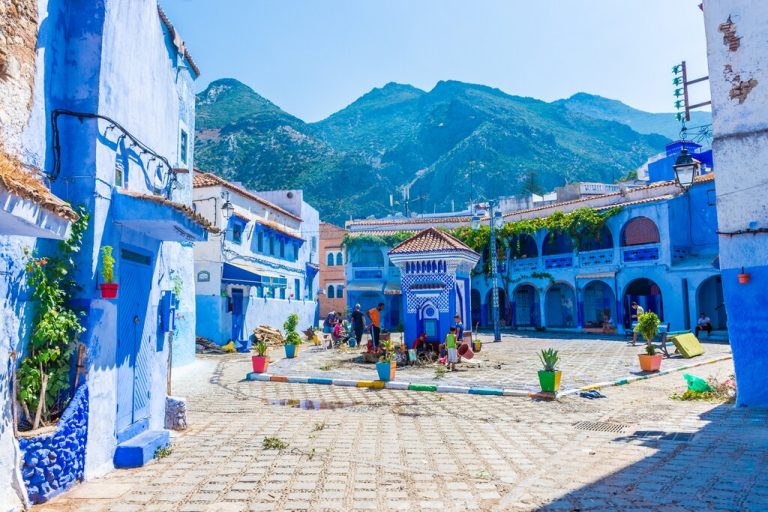
The blue city with a local guide in the morning: the kasbah and its tower, the lanes the photographs never quite capture, the wool souks, the story of why the town paints itself sky-colour. After lunch, a 45-minute drive brings you to Talassemtane National Park for the Akchour waterfall hike — three to four hours along a river gorge, with pools and path-side cafés, ending at the great cascade. Back in Chefchaouen for sunset from the Spanish Mosque viewpoint.

Day 4 Volubilis — Moulay Idriss — Meknes — Fes
South out of the mountains on one of Morocco's richest half-day roads. Volubilis first — the best-preserved Roman city in the country, its mosaics still in place under the open sky. Then whitewashed Moulay Idriss, the holy hill town wrapped around the tomb of the founder of the first Moroccan dynasty, and imperial Meknes for Bab Mansour, arguably the finest gate in the kingdom. Fes by late afternoon; your riad sits inside the old walls.

Day 5 Fes unveiled — dinner at a local home
A full guided day inside Fes el-Bali, the world's largest car-free medina: Bab Boujeloud, the carved cedar of the Bou Inania madrasa, the view into Al-Qarawiyyin — founded in 859 — the coppersmiths' square ringing like an orchestra, and the Chouara tannery seen from a leather terrace with a sprig of mint against the smell. The day ends the way Fes should: dinner at a family home, dishes with no written recipe, and conversation across the table.

Day 6 Fes — Merzouga, camels at dusk
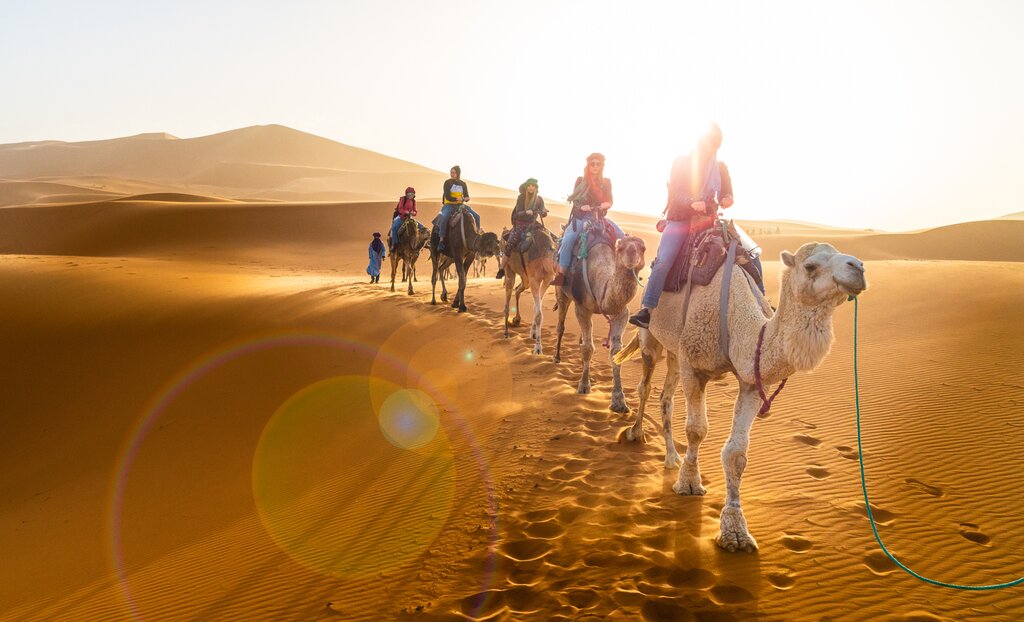
The great crossing: over the cedar forests of the Middle Atlas — Barbary macaques by the road near Azrou — through Midelt and down the Ziz valley's palm ribbon to the edge of the sand at Merzouga. Late afternoon, camels take you into the Erg Chebbi dunes at exactly the hour the light turns gold. Your camp is the ensuite kind: real beds, hot showers, dinner under lanterns, drums by the fire, and a sky with too many stars to process.

Day 7 Desert day in the Erg Chebbi
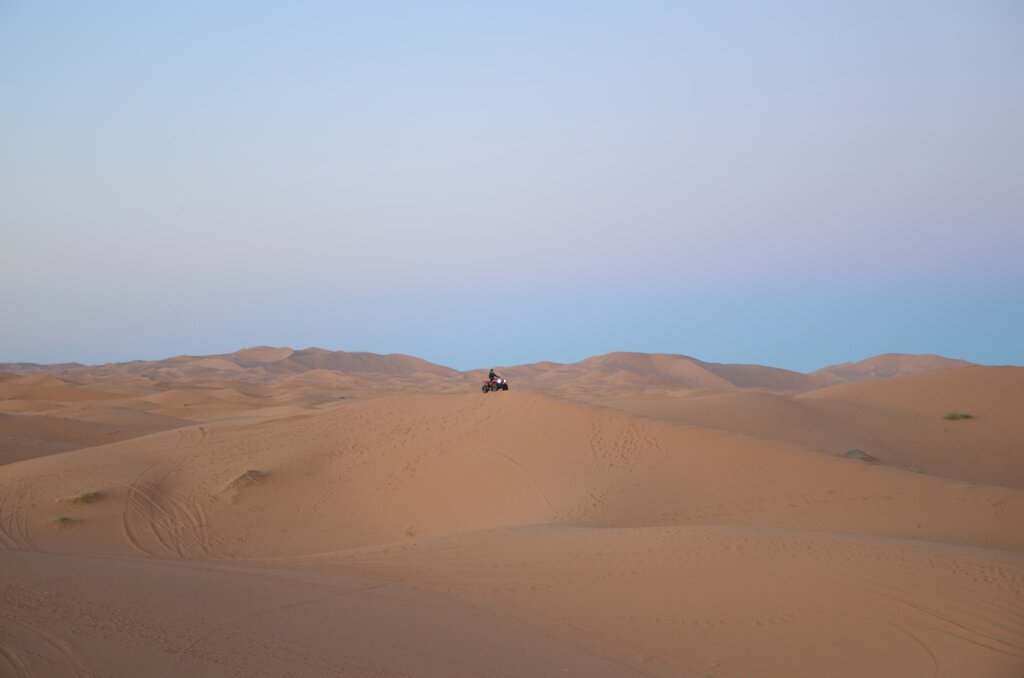
A whole day of Sahara, which is where the desert stops being a postcard and becomes a place. Sunrise from a dune crest costs one short climb and pays for the entire trip. Then 4×4 tracks through the dune sea, gnawa music with the musicians of Khamlia village, tea with a nomad family, the fossil workshops near Erfoud if they tempt you — and a second night at camp, when the silence properly arrives.

Day 8 Merzouga — Aït Ben Haddou
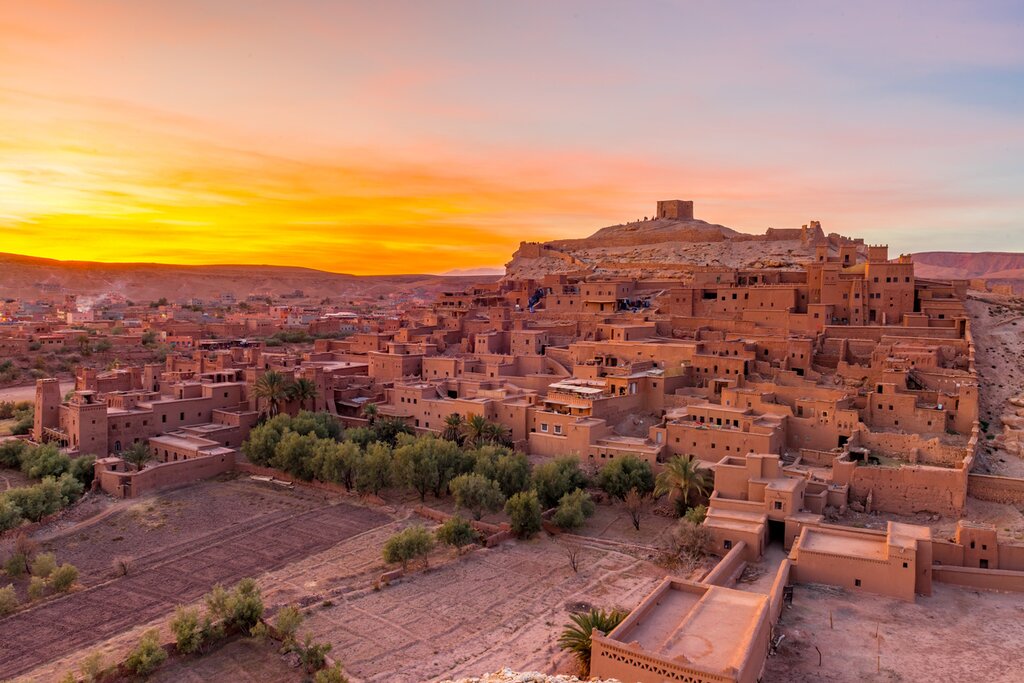
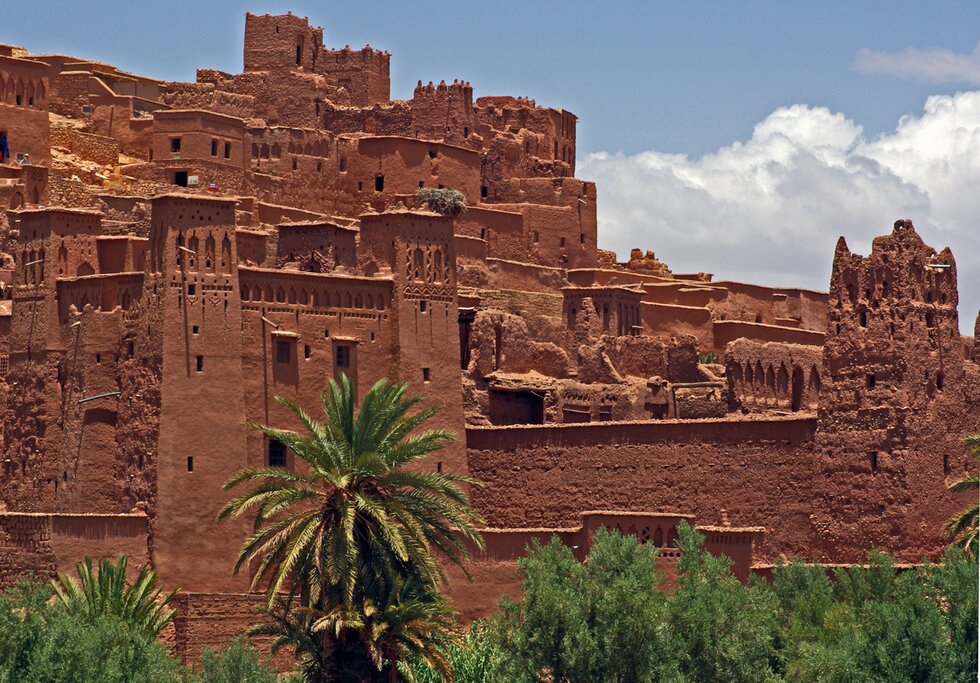
West along the kasbah road: the sheer 300-metre walls of the Todra Gorge for a canyon walk, the Dades valley's mudbrick fortresses, and Ouarzazate — Africa's Hollywood — before the day closes at Aït Ben Haddou. The UNESCO-listed ksar is best exactly when you get it: golden hour, when day-trippers have gone and the earthen towers hold the light. A guided walk threads its lanes to the granary at the top.

Day 9 Carpets and the road to Marrakech
A morning among looms: a Berber carpet-weaving demonstration in the valley, where the knots, wools and symbols get explained by the women who tie them — buy only if you love something. Then the High Atlas by the Tizi n'Tichka pass at 2,260 m, with mint-tea viewpoints on the way up and the plain of Marrakech opening on the way down. Arrive with the evening free; Jemaa el-Fna is ten minutes from your riad and best at dusk.

Day 10 Marrakech and the Majorelle garden
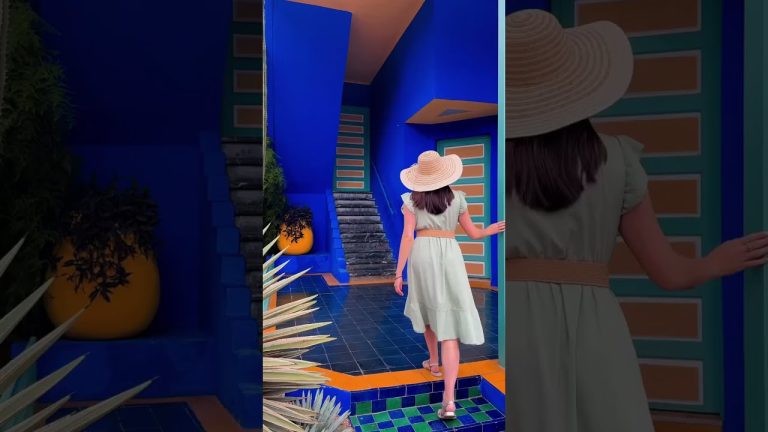
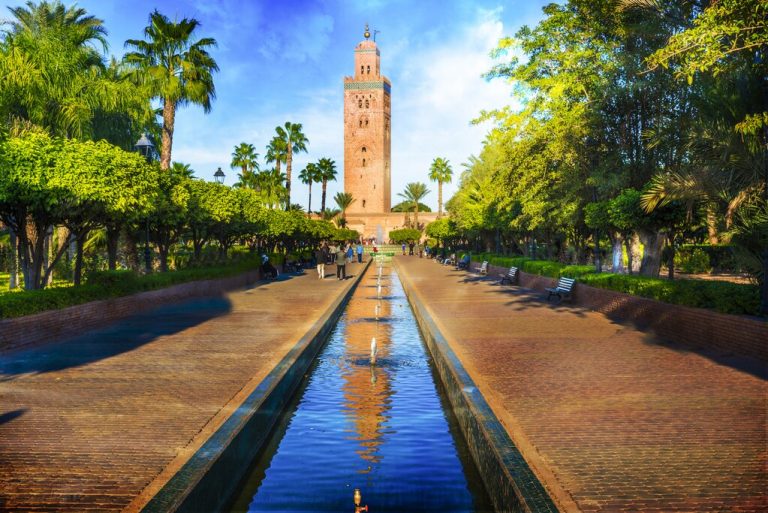
Marrakech unlocked with a licensed guide: the Bahia Palace's painted ceilings, the Saadian Tombs behind their kasbah wall, the Koutoubia gardens, and the souk labyrinth taken with someone who knows which lane leads where. The afternoon belongs to the Jardin Majorelle — cobalt walls, cactus and calm — with your timed tickets arranged in advance so the queue is someone else's problem.
Day 11 Balloon at dawn, gastronomy tour
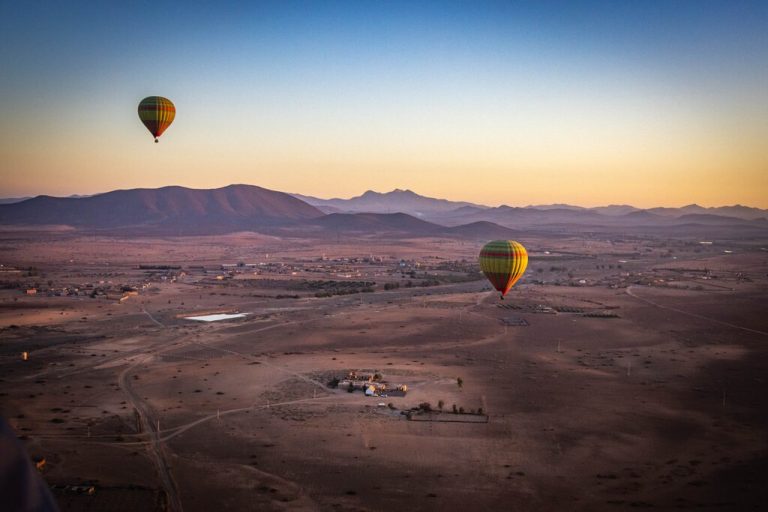
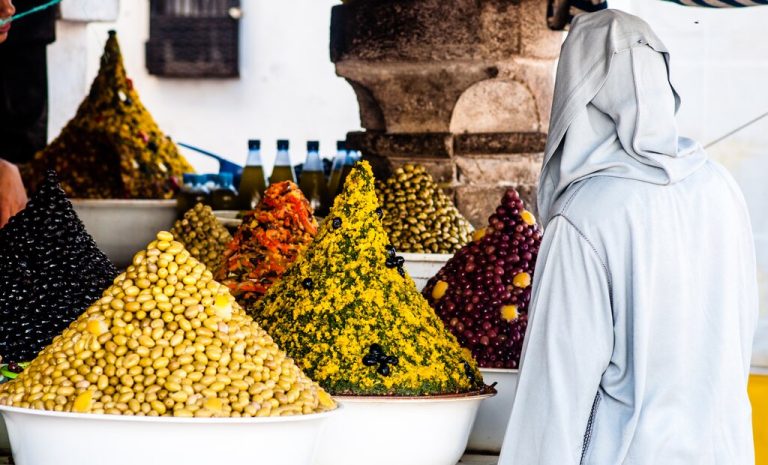
A dawn start that nobody regrets: a hot-air balloon lifts you over the palmery as the Atlas catches first light, with breakfast after landing. The day stays free until evening, when a gastronomy tour eats its way through the medina — grill stalls, olive stands, the right msemen griddle, a rooftop finish — guided by someone who orders in Darija and knows where the queue is Moroccan.
Day 12 Argan road to Essaouira
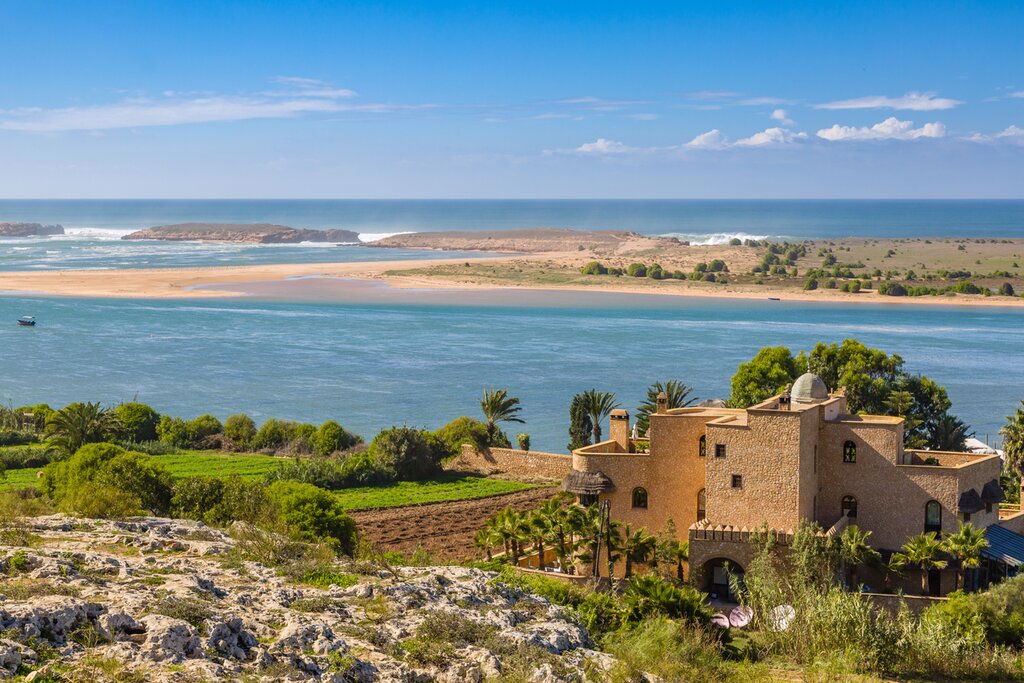
The argan road west. Between Marrakech and the coast you stop at a women's argan-oil cooperative to see the cracking, grinding and pressing — and to buy the real thing at honest prices. Essaouira announces itself with wind and gulls: an 18th-century fortified port where the fishing fleet still lands beside the ramparts. Three nights here, on purpose. The first evening is for the sea walls and grilled sardines at the port stalls.

Day 13 Hammam day in Essaouira
A slow day, by design. Morning in the medina — flat, calm, gallery-lined, mercifully free of motorbikes — and an afternoon given to the traditional hammam and spa: steam, black soap, the kessa-glove scrub, argan oil to finish. Essaouira does one thing better than anywhere in Morocco: it convinces you to stop rushing. Let it.
Day 14 Horses on the beach, cooking class
Horses at first light on the long southern beach — a ride for any level, with the ramparts behind you and the wind at work on the waves. After the market, a Moroccan cooking class takes over: shopping the stalls with the chef, then tagines and salads built from scratch and eaten as lunch. The evening is yours; the blue boats at sunset are the photograph everyone keeps.

Day 15 The Portuguese coast to Casablanca
The closing road north is the Morocco most visitors never meet: Safi's potters' hill, the lagoon at Oualidia if you want an oyster stop, Portuguese El Jadida with its UNESCO cistern, and quiet, muralled Azemmour on the river. Casablanca by evening for a final night by the Atlantic — the journey's loop nearly closed.

Day 16 A Casablanca farewell
One last ritual before the airport: coffee (or an early lunch) at Rick's Café, the lovingly built homage near the old medina that serves the movie's fantasy with a straight face. Then your private transfer to Mohammed V airport, sixteen days of Morocco in the luggage. When you want the sequel, you know where we are.

Sixteen days gives every stage a margin — activity days can shuffle around the weather with nothing lost. The two long driving days (Fes to the desert, desert to Aït Ben Haddou) are broken by the best scenery of the trip; everywhere else stays under five hours. Best months: March–May and September–November; winter works beautifully with a warm layer for desert and mountain nights.
Included in your tour
- Private air-conditioned 4×4 or minivan with English/French-speaking driver-guide — 16 days
- Pickup at Casablanca airport or your hotel
- Night 1: Casablanca hotel — half-board
- Nights 2–3: Chefchaouen riad (2 nights) — half-board
- Nights 4–5: Fes riad (2 nights) — half-board
- Nights 6–7: luxury ensuite desert camp (2 nights) — half-board
- Night 8: kasbah hotel, Ait Ben Haddou — half-board
- Nights 9–11: Marrakech riad (3 nights) — half-board
- Nights 12–14: Essaouira riad (3 nights) — half-board
- Night 15: Casablanca hotel — half-board
- Guided visit of Fes with a licensed local guide (Day 5)
- Guided visit of Marrakech with a licensed local guide (Day 10)
- Guided visit of Chefchaouen with a licensed local guide (Day 3)
- Guided visit of Casablanca with a licensed local guide (Day 1)
- Guided visit inside the Hassan II Mosque, Casablanca
- Guided visit of the Aït Ben Haddou ksar (UNESCO)
- Camel trek in the dunes
- Sunrise hot-air balloon flight over the palmery
- Moroccan cooking class
- Traditional hammam session
- Guided food tour
- Horseback ride on the beach
- 4×4 desert excursion
- Gnawa music visit in Khamlia
- Traditional dinner at a family home
- Visit of a women's argan cooperative
- Drop-off at your Casablanca hotel or at the airport
Not included
- International flights
- Lunches and beverages
- Entrance fees to monuments and historical sites (optional — pay directly)
- Tips for guide and driver
- Personal expenses
- Travel insurance (recommended)
Explore more
Desert tours Marrakech Merzouga & the Sahara Fes Chefchaouen Essaouira
Questions travellers ask
How much does Morocco Grand Tour – 16 Days: Cities, Desert & Mountains cost?+
From €2400 per person, per person. The price includes private air-conditioned 4×4 or minivan with english/french-speaking driver-guide — 16 days, pickup at casablanca airport or your hotel, night 1: casablanca hotel — half-board. You receive a written itemised quote before paying anything — no hidden fees.
How long is this tour and when does it depart?+
16 Days, departing on the dates you choose — there is no fixed schedule, because every departure is arranged for you alone.
Is this a group tour or private?+
Fully private: your own vehicle, driver and licensed guide, never seat-in-coach and never mixed with other travellers. The daily pace flexes around you.
Where is the desert in Morocco?+
South and east of the Atlas mountains. The named destinations, in order of distance from Marrakech: the Agafay stone desert 45 minutes away (no sand dunes), the Zagora dunes down the Draa valley at 360 km, Erg Chigaga beyond M'Hamid where the tarmac ends, and the great Erg Chebbi dune sea at Merzouga, 560 km out — the Sahara of the photographs.
How much of Morocco is desert?+
Broadly, everything south and east of the Atlas watershed is arid or Saharan — roughly half the country by area. The photogenic sand seas are actually small pockets of that expanse: Erg Chebbi and Erg Chigaga are each a day's drive apart, islands of dunes in a vast landscape of stone, oases and kasbah valleys.
What should I wear on a Morocco desert tour?+
Layers, always: desert days can hit 30°C while nights drop near freezing outside summer. The working formula is light long sleeves and trousers for sun and camels, a warm fleece or jacket for the camp evening, closed shoes for sand and stones, sunglasses, and a scarf (a cheche) — bought in any souk for a few dirhams — for sun, wind and the photograph. Luggage stays in the vehicle; you carry a small overnight bag to the camp.
How far is the Sahara desert from Marrakech?+
The honest ladder: the Agafay stone desert is 45 minutes away (no sand dunes, but real desert scenery); the first true Sahara dunes at Zagora are 360 km — about 6 hours over the Tizi n'Tichka; the great Erg Chebbi dunes at Merzouga are 560 km — 8 to 9 hours, which is why serious itineraries take 3–4 days. There is no Sahara 'day trip' from Marrakech worth the name — anyone selling one is selling Agafay.
More answers in the “The desert experience” chapter of our Travel FAQ →
Itinerary and prices last updated October 2026.