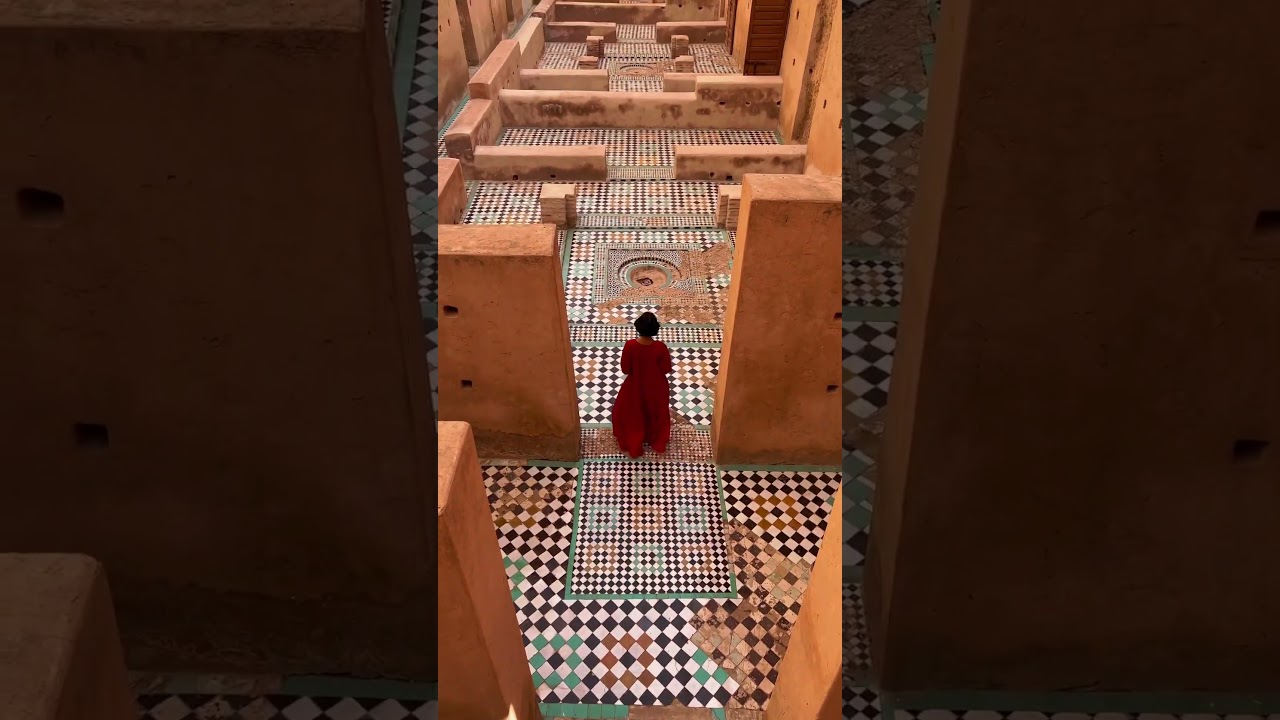
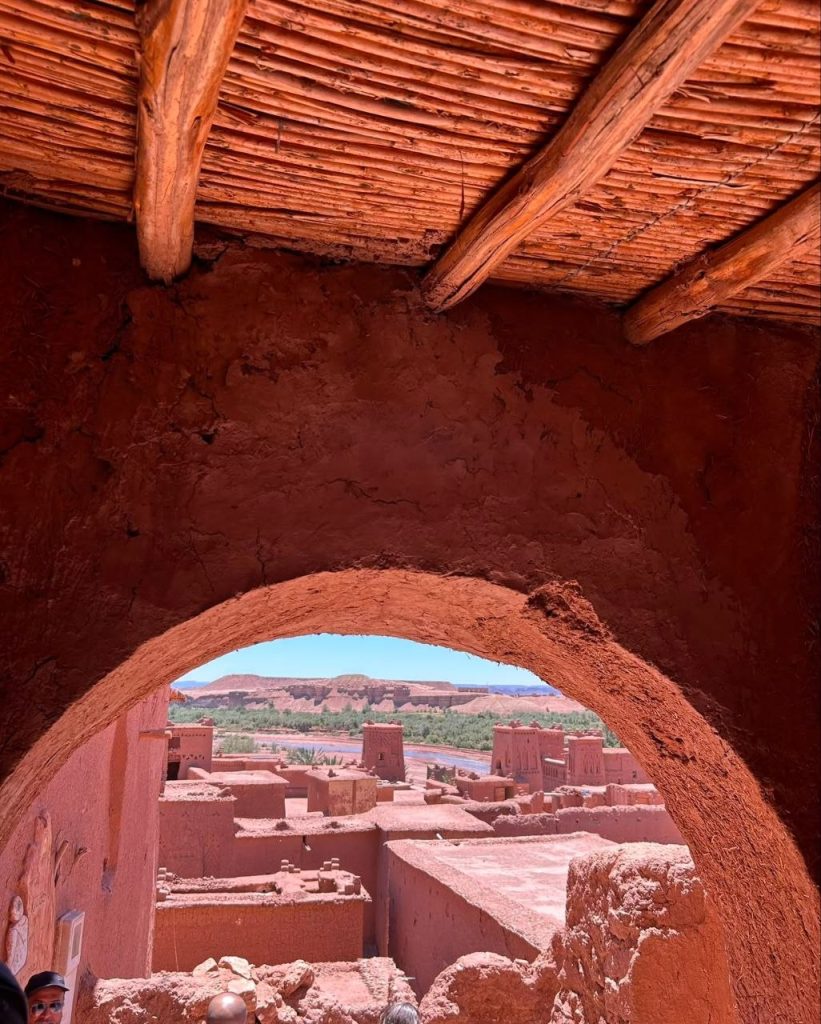
El Badi — “the Incomparable” — was the most extravagant palace in Africa when Saadian sultan Ahmed al-Mansour raised it from 1578, funded by the ransom of the Battle of the Three Kings and the sugar trade. Italian marble, gold from Timbuktu, onyx and ivory: chroniclers ran out of superlatives.
Then history’s great recycling: a century later Sultan Moulay Ismail stripped it bare to build his own capital at Meknes, leaving the mighty pisé walls, the sunken orange-tree gardens and the vast central pool open to the sky. What remains is one of Morocco’s most atmospheric spaces — a ruin that communicates scale better than most intact palaces, with resident storks conducting from the ramparts.
Climb the terrace for the medina panorama, seek out the original 12th-century Koutoubia minbar displayed on site — a masterpiece of Almoravid woodwork — and give the whole site about an hour. Pair it with the Bahia and the Saadian tombs next door for the full dynastic morning; our licensed guides carry the stories the walls no longer can.
Key facts
- Begun 1578 by Saadian sultan Ahmed al-Mansour
- Funded by the Battle of the Three Kings ransom and the sugar trade
- Stripped by Moulay Ismail for Meknes a century later
- Home to nesting storks and the original Koutoubia minbar
- Allow about 1 hour; terrace views over the medina
Good to know
Mostly open-air — hat and water in summer, and the golden hours flatter the pisé walls. Tickets are paid on site; the minbar exhibit is worth the small supplement when offered.
Questions travellers ask
Is Marrakech worth visiting?+
Yes — with the right expectations. It delivers spectacle like nowhere else in Morocco: Jemaa el-Fna at dusk, the souk labyrinth, palaces and gardens, the Atlas an hour away. It is also intense: touts, heat and noise are part of the package. Two to three days is the sweet spot, ideally as the gateway to the mountains or the desert rather than the whole trip.
Can you wear shorts in Marrakech?+
You can — tourists do, and knee-length shorts raise no issues in the main areas. That said, light long trousers or skirts are both cooler in the sun and more comfortable deep in the medina, where dress runs conservative. For mosque visits and rural villages, covered knees and shoulders are the respectful standard.
What is Marrakech famous for?+
Jemaa el-Fna square and its nightly food-stall theatre, the souks, the Koutoubia minaret, the Bahia Palace and Saadian Tombs, the Majorelle and Menara gardens — and its role as the classic base for the High Atlas, Essaouira and the desert routes south.
What is Marrakech known for?+
The Red City is Morocco's sensory capital: Jemaa el-Fna square and its nightly food theatre, the labyrinth of souks, palaces like the Bahia, the Koutoubia minaret, the Majorelle Garden — and its role as gateway to the Atlas mountains and the Sahara routes. It is also Africa's events capital, hosting everything from film festivals to GITEX. Most Morocco journeys start, end or pivot here — ours have since 2011.
More answers in the “Marrakech” chapter of our Travel FAQ →