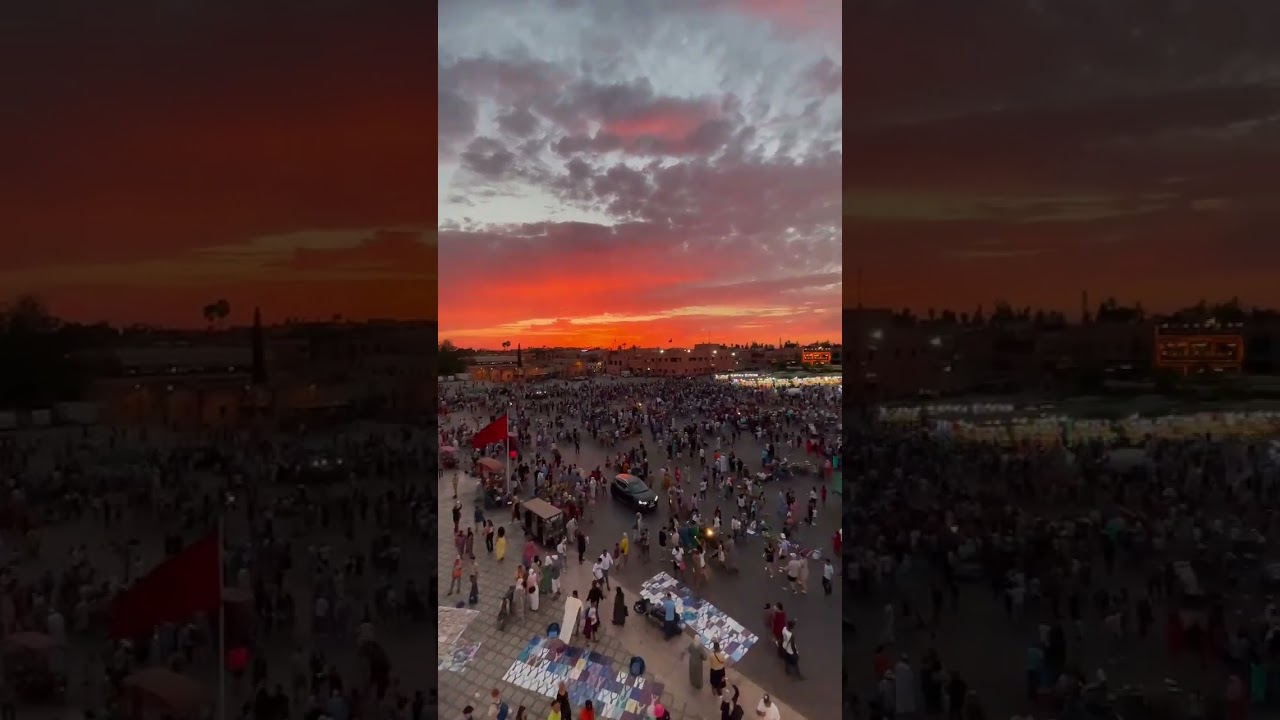
Jemaa el-Fna is not a monument you look at; it is one you stand inside while it performs. Marrakech’s great square has hosted storytellers, musicians, healers and acrobats for close to a thousand years, and UNESCO recognised its oral traditions among the first Masterpieces of the Intangible Heritage of Humanity — a listing created partly with this square in mind.
Read it by the clock. Morning: orange-juice presses and calm, the square as marketplace. Late afternoon: the circles (halqas) form — Gnaoua musicians, storytellers working Darija-speaking crowds, the snake charmers tourists photograph and locals ignore. Sunset from a terrace café: the food stalls assemble into a smoking open-air restaurant a hundred kitchens strong. Night: drums, steam and lamplight — the spectacle that has outlived every empire that funded it.
The etiquette that keeps it pleasant: agree prices before photos with performers (10–20 MAD is standard), keep bags forward in the crowds, and eat where the queue is local. The square anchors every one of our guided Marrakech days — and the terrace-at-dusk moment is scheduled into all of them deliberately.
- Core of Marrakech life for ~1,000 years
- UNESCO Masterpiece of Intangible Heritage (2001 proclamation)
- Halqas (performance circles) from late afternoon; food stalls from sunset
- Photos with performers: agree 10–20 MAD first
- Free, always open — the show is the city itself
Evening is the masterpiece — but the 8am square, empty and smelling of oranges, is the connoisseur's version. Terrace cafés charge a little more for the view; it is the best seat in Morocco.