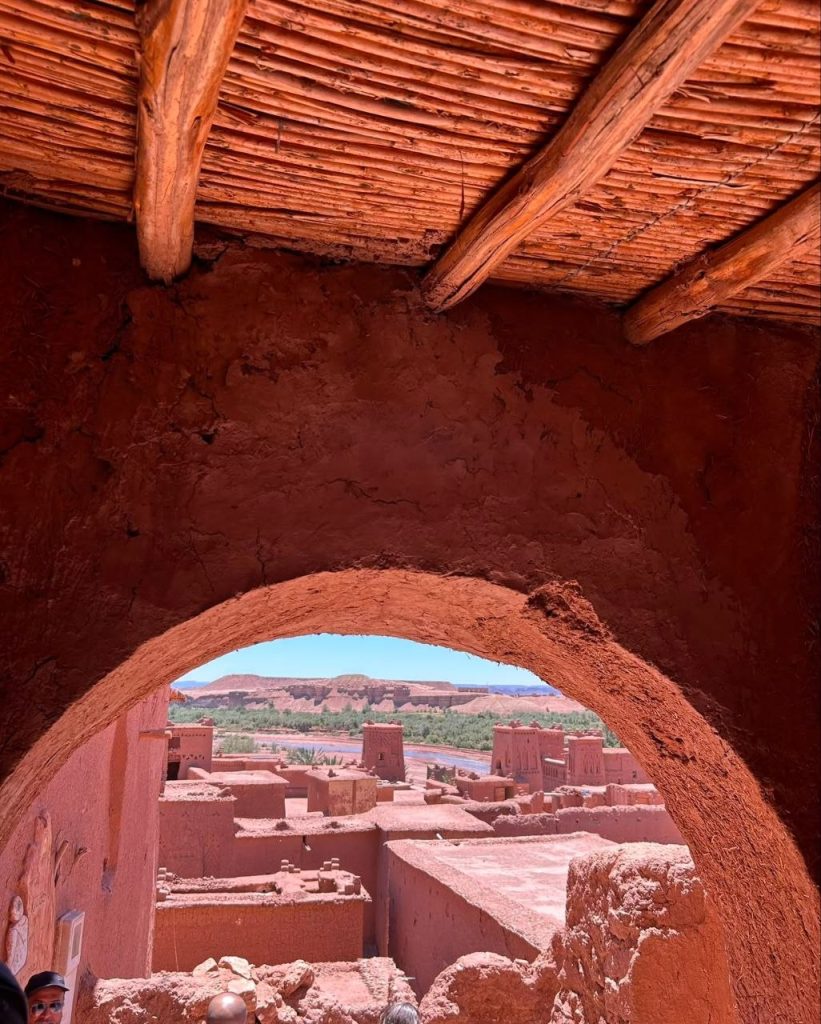
Marrakech announces itself with nineteen kilometres of red wall: rammed-earth ramparts begun in 1126 when the Almoravid sultan, warned of approaching Almohad armies, ringed his young capital in months. The Almohads took the city anyway — then kept, repaired and extended the walls, as every dynasty since has done. What surrounds the medina today is nine centuries of maintenance of a single idea.
The masterpiece among the twenty-odd gates is Bab Agnaou, the ceremonial entrance the Almohads carved for their kasbah around 1188. It breaks every local rule: not pink pisé but blue-grey Guéliz stone, carved in receding horseshoe arches of floral scrollwork under a Kufic inscription — a triumphal arch to humble Rome’s. This was the royal door; the frame once displayed the heads of the defeated. Today storks patrol the top, which suits the city’s temperament better.
Walk through Bab Agnaou and you enter the kasbah quarter in the footsteps of sultans — the Saadian Tombs and the El Badi ruins lie minutes beyond, which is why our guided days use this gate as the historical hinge between medina and palace city.
The walls themselves are best consumed in motion. The classic is the calèche circuit at golden hour: the western stretch along the olive groves turns molten, bastion after bastion, storks lifting off the towers. Agree the fare before boarding (or let us arrange the carriage — it is a standard piece of our Marrakech evenings).
Everything here is free and always open — these are working city doors, not museum pieces. The courtesy is traffic-awareness: the gates funnel mopeds, carts and taxis exactly as they funnelled caravans.
Nine centuries, one building material, and the light show is nightly. Tell us your dates on WhatsApp and we thread the walls, the gate and the kasbah quarter into one unhurried afternoon with your licensed guide.
- 19 km of red pisé walls, begun by the Almoravids in 1126
- Bab Agnaou: the Almohad ceremonial gate, finest in Morocco
- Carved blue-grey stone that ignores the city's pink rule
- Best seen by calèche at golden hour
- Gates free and always open — they are the city's doors
The walls and gates are free, public and permanent. Bab Agnaou photographs best in morning light; the western ramparts glow at sunset — the classic calèche circuit (agree the price before boarding, or let us arrange it). Storks nest on the bastions near the royal palace.