★★★★★ Rated 4.5/5 — 204 Google reviews · 576 reviews · 5.0/5 on Tripadvisor · Written by a licensed Marrakech tour operator, on the road since 2011
Between the High Atlas and the Sahara runs a range most maps skim past: Jbel Saghro, a volcanic badland of rock towers, table mountains and almond-dotted gorges that becomes, each winter, Morocco’s best trekking secret. When Toubkal is under snow, Saghro is in season.
What makes it different
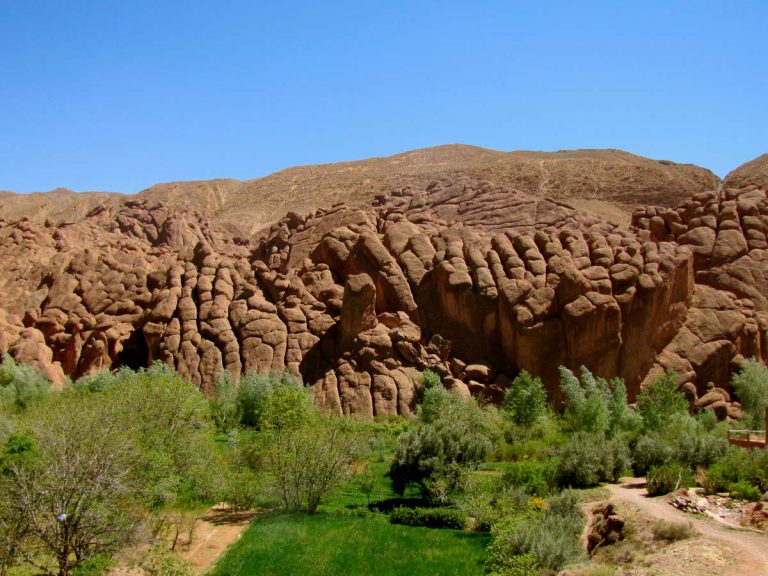
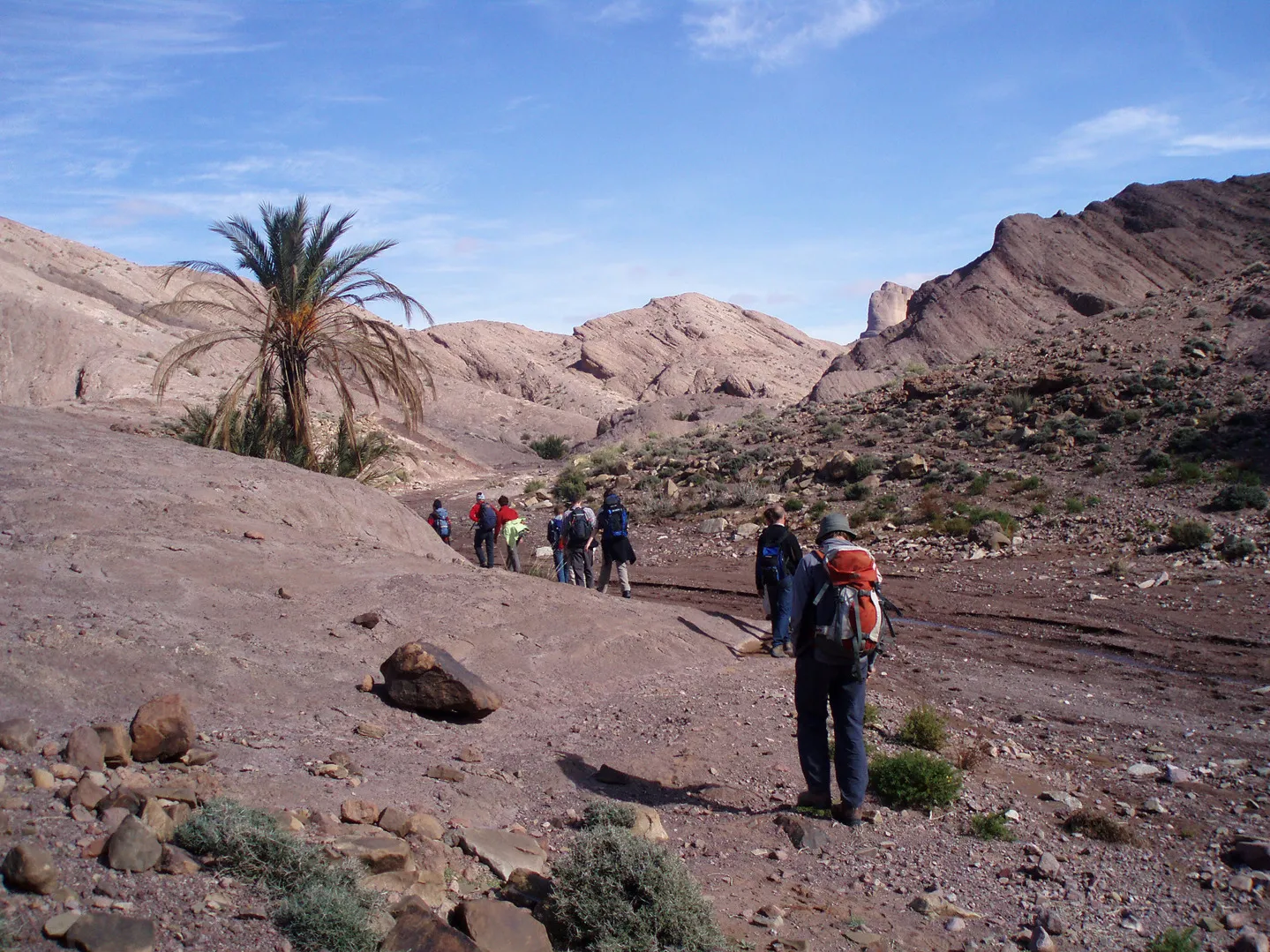
Saghro is desert mountain — black volcanic plugs and pinnacles (the Bab n’Ali towers are the pin-up), oasis villages in the folds, and the huge light of the pre-Sahara over everything. It is the winter grazing ground of the Aït Atta nomads, whose camps and flocks give treks here a human dimension the high Atlas paths lost to popularity years ago.
The walking
Classic Saghro treks run two to five days between village gîtes and camps — Bab n’Ali’s towers, the Tête de Chameau ridges, palm-bottomed canyons — at moderate altitudes (high point around 2,700 m) that stay walkable from late autumn through early spring, exactly the months the big range turns technical. Day formats exist from the Dades side for circuit travellers who want a taste.
When and how
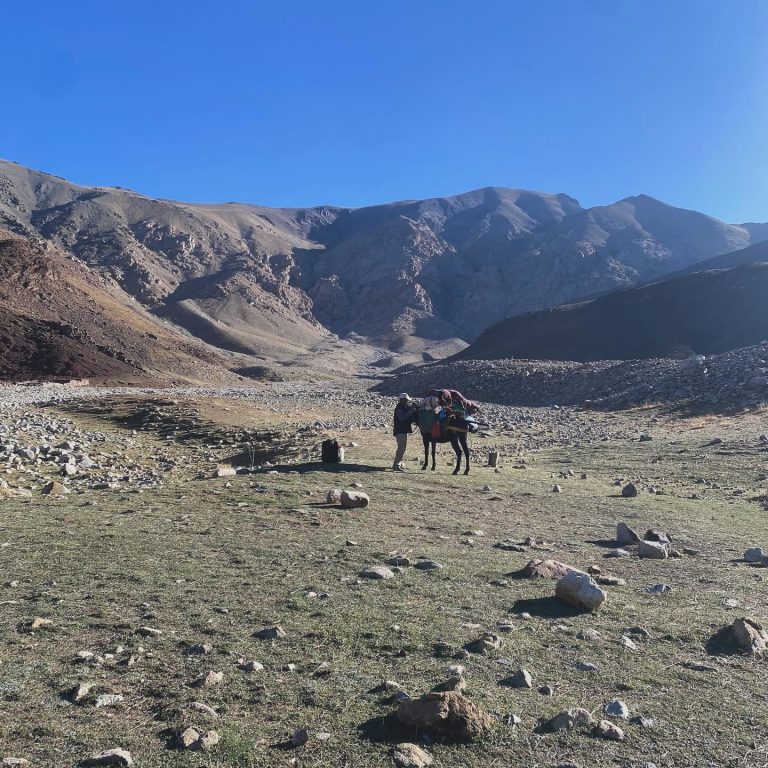
October to April is the window; summer bakes. Access is from the Dades valley (north) or the Draa (south) — both already on the desert-circuit spine — making Saghro the natural add-on for returning travellers who have done the classics. This is guide-and-mule country with no signage: we run it as tailor-made private treks with licensed mountain guides, priced from the same trekking baseline as our Atlas routes (the 3-day format, from €195 per person, transposes directly). Fitness and season questions live in the trekking FAQ.
Rachid Amzil — Rachid handles the High Atlas — Toubkal, the Ourika and Imlil valleys, and the passes in between. He treats trail notes as a safety matter, not a style exercise: distances, water points and honest difficulty gradings come before the lyrical bits. His pieces are the closest thing this site has to a mountain briefing, and he updates them when the trails change.