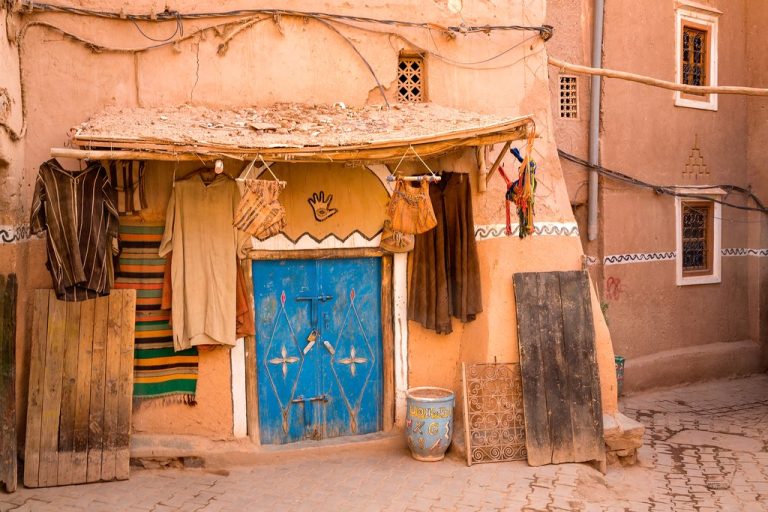
Marrakech Tour 10 Days: Sahara, Atlas Hiking & Essaouira Coast
- Private vehicle & driver — Pick-up at your riad, pace set by you
- Local licensed guide — Licensed guide nº2898 · since 2011
- Book on WhatsApp — Reply within 1 hour · no payment at this stage
- Marrakech as your recurring base — big luggage stays, daypack travels
- Erg Chebbi expedition — camels at dusk, ensuite camp night
- A night in a Berber family home above Amizmiz
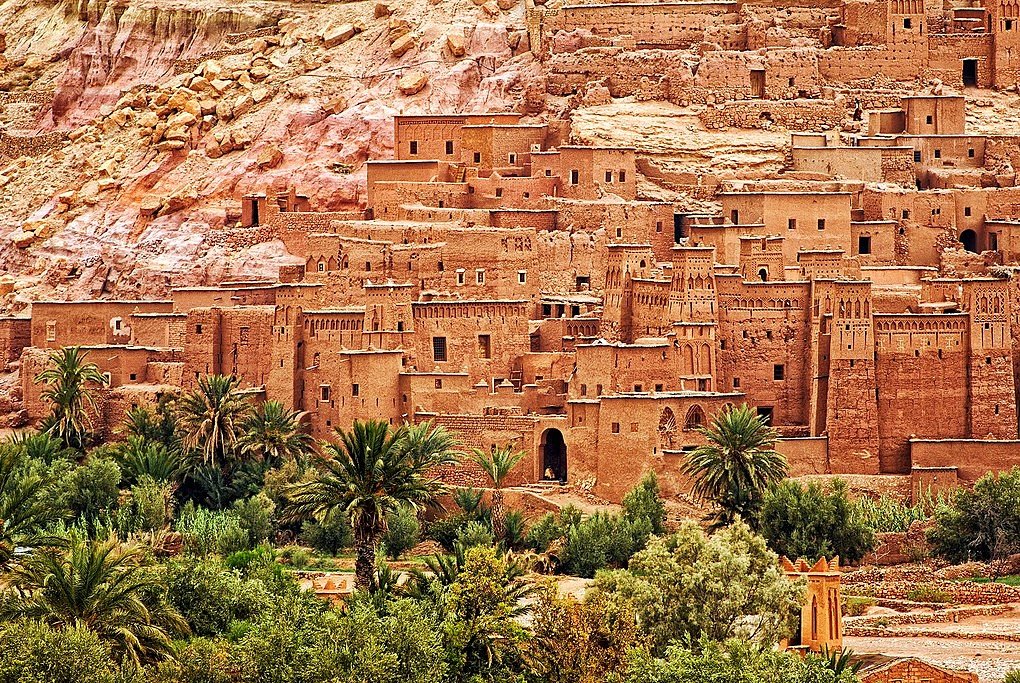


A private 10-day tour from Marrakech: from €1500 per person, with vehicle, driver, licensed guide and accommodation included — no groups, departures on your dates. Along the way: Erg Chebbi, Aït Ben Haddou and Essaouira.
| Duration | 10 Days |
| Price | From €1500 per person — car, driver and accommodation included |
| Departures | Your dates — every departure is private, never a shared group |
| Languages | English- and French-speaking driver-guides; licensed city guides where included |
| Booking | WhatsApp +212 661 454 738 — written quote within 1 hour, no payment at this stage |
Ten days that use Marrakech the way locals wish visitors would: as a base to leave and return to. Out to the Sahara for camels and a camp night; back for the city, guided. Out to the Amizmiz hills for a village walk and a night in a Berber home; back for a free day. Out to Essaouira for sea air; back for the farewell. Three expeditions, three homecomings, one riad that learns your name.
The pattern matters more than it sounds. Repacking only a daypack, sleeping twice in most beds, and measuring the trip in returns rather than departures — it produces a different kind of holiday: less logistics, more noticing. And the night with a family in the hills, between the desert and the sea, is the pivot everyone mentions afterwards.
Private vehicle and driver-guide for every leg; licensed city and mountain guides; ensuite camp in the erg.
Ten days, three Moroccos: the Red City guided, the desert loop — kasbah country, the Erg Chebbi with camels and a camp night, Aït Ben Haddou — then a Berber home in the Amizmiz hills for the walking days, and finally Essaouira, the wind city on the Atlantic. From €1500 per person with your own driver throughout, licensed guides and every night included.
This is the route for second visits, honeymoons that want variety, and anyone allergic to spending ten days in a car: the pattern alternates driving days with full days on foot — in the souks, on foothill paths, on the beach — so no two days feel the same. The Marrakech base repeats twice, which means lighter packing between stages.
The coast finale is the point of difference: most 10-day tours end in a city; this one ends with ocean air. Private on your dates, never in a group — dates on WhatsApp, the day-by-day quote comes back within the hour.
Who this tour is for: active travellers who want dunes, Atlas trails and the ocean in ten days from Marrakech. Prefer capitals to trails? Morocco Tour 10 Days pairs the imperial cities with the Sahara instead. For the same length at luxury pace, the Luxury Morocco Tour – 10 Days stages it with riads and a balloon.
Everything radiates from Marrakech, and nothing repeats: a desert block (camels, camp, Aït Ben Haddou), an immersion block — a night in a Berber home in the Amizmiz hills, where the only other visitors are the wildflowers — and a coastal block at Essaouira, where the trade winds that cool the ramparts also run one of Africa’s best kitesurf schools for anyone tempted. It is the ten days for travellers who want the south’s full range without ever touching the northern motorways.
- Marrakech as your recurring base — big luggage stays, daypack travels
- Erg Chebbi expedition — camels at dusk, ensuite camp night
- A night in a Berber family home above Amizmiz
- Aït Ben Haddou and the Todra Gorge on the desert loop
- An Essaouira sea day to finish — argan road included
Photos from the tour


Itinerary
Open a day to see the detail: transport, accommodation, meals and activity time.
Day 1 Marrakech, first contact
Marrakech, act one: airport pickup, riad check-in, and an evening drift toward the big square as it powers up — snake-charmers' flutes, grill smoke, the Koutoubia floodlit. No schedule tonight; you have ten days and this city will keep.

Day 2 The Red City, guided
The Red City with a licensed guide: Bahia Palace, the Saadian Tombs, the Koutoubia gardens, and the souk system explained until it becomes a pleasure rather than a gauntlet. The afternoon is yours — a first hammam stakes a strong claim — before tomorrow's mountains.

Day 3 Over the Atlas to kasbah country
Expedition one departs: over the Tizi n'Tichka with its viewpoint mint teas, past Ouarzazate's film studios, and east into the Dadès, where the kasbahs queue along the river and the rocks blush at sunset. A kasbah-hotel night with the valley spread below.
Day 4 To the Erg Chebbi, camels and camp
Through the Todra Gorge — the canyon-floor walk between sheer walls — then across the oasis belt to Merzouga, where the day's true business begins at golden hour: camels into the Erg Chebbi, an ensuite camp among the dunes, dinner under lanterns and drums by the fire. Set an alarm for the crest.

Day 5 Aït Ben Haddou
Sunrise on the sand, then the swing back west with the day's crown at its end: Aït Ben Haddou, the UNESCO ksar, climbed lane by lane in the late light after the buses have gone. Night within reach of the walls — golden hour and blue hour both yours.

Day 6 Return to Marrakech
Homecoming one: the pass in reverse, the descent to the plain, and Marrakech by mid-afternoon — the same riad, your big bag exactly where you left it. The evening is unscripted; you will be surprised how much the city feels like yours already.

Day 7 A Berber home in the Amizmiz hills
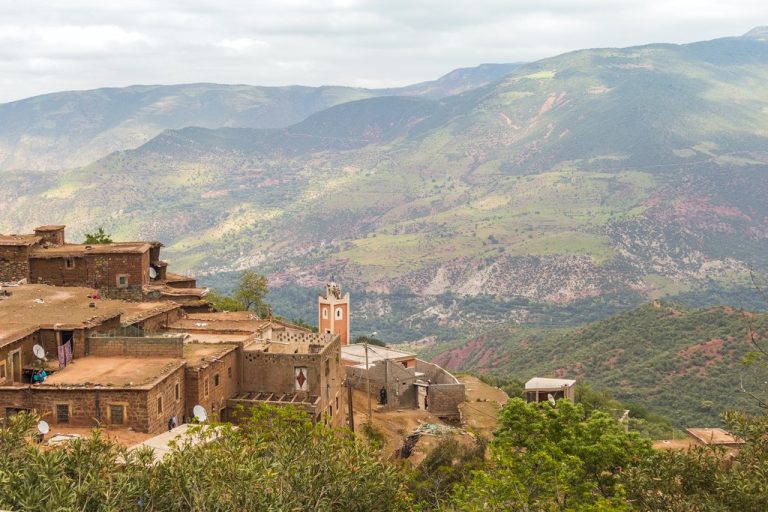
Expedition two is gentler and, for many, deeper: an hour south to the Amizmiz foothills, then an afternoon walk between Berber villages — mule paths, walnut shade, irrigation channels centuries old — ending at a family home for dinner, conversation and a night as a guest rather than a customer.

Day 8 Back to the city, at your pace
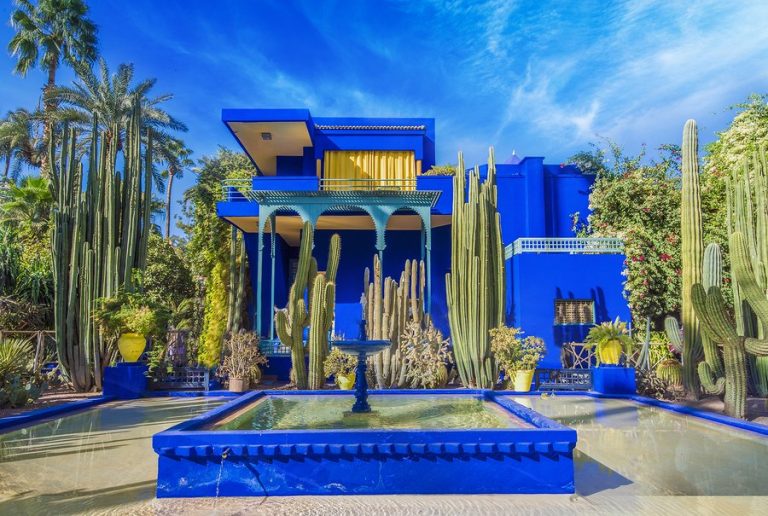
A village morning — bread from the communal oven, mint tea on the roof, the valley waking below — then the walk out and the drive back. The rest of the day in Marrakech is deliberately blank: museums, the Majorelle, more souk, or the noble art of the courtyard afternoon.

Day 9 Essaouira, the wind city
Expedition three smells of salt: the argan road west, a women's cooperative for the real oil, and Essaouira — ramparts, blue boats, gulls, sardines grilled beside the fleet that caught them. The flat, wind-scrubbed medina is the perfect last wander. Return by evening.

Day 10 Departure
The tenth day belongs to your flight and whatever fits before it — one final courtyard breakfast, one settled souk debt. Airport transfer on schedule. Ten days, three journeys, one base: Morocco in the round.
Because every leg returns to Marrakech, the route flexes easily: any expedition can stretch a day or swap order around weather. The family-home night is simple and warm — real hospitality, shared bathroom, unforgettable breakfast. October–April is prime.
Included in your tour
- Private air-conditioned 4×4 or minivan with English/French-speaking driver-guide — 10 days
- Pickup at Marrakech airport or your hotel
- Nights 1–2: Marrakech riad (2 nights) — half-board
- Night 3: Boumalne Dades hotel — half-board
- Night 4: luxury ensuite desert camp — half-board
- Night 5: kasbah hotel, Ait Ben Haddou — half-board
- Night 6: Marrakech riad — half-board
- Night 7: Amizmiz hotel — half-board
- Night 8: Marrakech riad — half-board
- Night 9: Essaouira riad — half-board
- Guided visit of Marrakech with a licensed local guide (Day 2)
- Guided visit of the Aït Ben Haddou ksar (UNESCO)
- Camel trek in the dunes
- Traditional hammam session
- Drop-off at your Marrakech hotel or at the airport
Not included
- International flights
- Lunches and beverages
- Entrance fees to monuments and historical sites (optional — pay directly)
- Tips for guide and driver
- Personal expenses
- Travel insurance (recommended)
Explore more
Desert tours Hiking & trekking Marrakech Merzouga & the Sahara High Atlas Essaouira Ouarzazate
Questions travellers ask
How much does Marrakech Tour 10 Days: Sahara, Atlas Hiking & Essaouira Coast cost?+
From €1500 per person, per person. The price includes private air-conditioned 4×4 or minivan with english/french-speaking driver-guide — 10 days, pickup at marrakech airport or your hotel, nights 1–2: marrakech riad (2 nights) — half-board. You receive a written itemised quote before paying anything — no hidden fees.
How long is this tour and when does it depart?+
10 Days, departing on the dates you choose — there is no fixed schedule, because every departure is arranged for you alone.
Is this a group tour or private?+
Fully private: your own vehicle, driver and licensed guide, never seat-in-coach and never mixed with other travellers. The daily pace flexes around you.
Where is the desert in Morocco?+
South and east of the Atlas mountains. The named destinations, in order of distance from Marrakech: the Agafay stone desert 45 minutes away (no sand dunes), the Zagora dunes down the Draa valley at 360 km, Erg Chigaga beyond M'Hamid where the tarmac ends, and the great Erg Chebbi dune sea at Merzouga, 560 km out — the Sahara of the photographs.
How much of Morocco is desert?+
Broadly, everything south and east of the Atlas watershed is arid or Saharan — roughly half the country by area. The photogenic sand seas are actually small pockets of that expanse: Erg Chebbi and Erg Chigaga are each a day's drive apart, islands of dunes in a vast landscape of stone, oases and kasbah valleys.
What should I wear on a Morocco desert tour?+
Layers, always: desert days can hit 30°C while nights drop near freezing outside summer. The working formula is light long sleeves and trousers for sun and camels, a warm fleece or jacket for the camp evening, closed shoes for sand and stones, sunglasses, and a scarf (a cheche) — bought in any souk for a few dirhams — for sun, wind and the photograph. Luggage stays in the vehicle; you carry a small overnight bag to the camp.
How far is the Sahara desert from Marrakech?+
The honest ladder: the Agafay stone desert is 45 minutes away (no sand dunes, but real desert scenery); the first true Sahara dunes at Zagora are 360 km — about 6 hours over the Tizi n'Tichka; the great Erg Chebbi dunes at Merzouga are 560 km — 8 to 9 hours, which is why serious itineraries take 3–4 days. There is no Sahara 'day trip' from Marrakech worth the name — anyone selling one is selling Agafay.
More answers in the “The desert experience” chapter of our Travel FAQ →
Itinerary and prices last updated October 2026.