★★★★★ Rated 4.5/5 — 204 Google reviews · 576 reviews · 5.0/5 on Tripadvisor · Written by a licensed Marrakech tour operator, on the road since 2011
Morocco makes most sense once you hear its rhythms — the daily and weekly beats that organise everything from bread to bureaucracy. Tune into them and the country stops feeling chaotic and starts feeling composed.
The daily beat
Five calls to prayer structure the day without stopping it — dawn’s call is the country’s shared alarm clock. Mornings mean errands and the communal oven’s first batch; the déjeuner pause is real and generous; late afternoon revives the streets; and evenings belong to the promenade — families out walking, cafés filling, squares performing. Moroccan nights start late and gently.
The weekly beat
Friday is the pivot: couscous at family tables, the long midday prayer, a slower afternoon — plan museums for other days and accept the invitation if one comes. Souk towns each keep their market day (Asni’s is Saturday); knowing it is knowing when a town is most itself.
The café institution
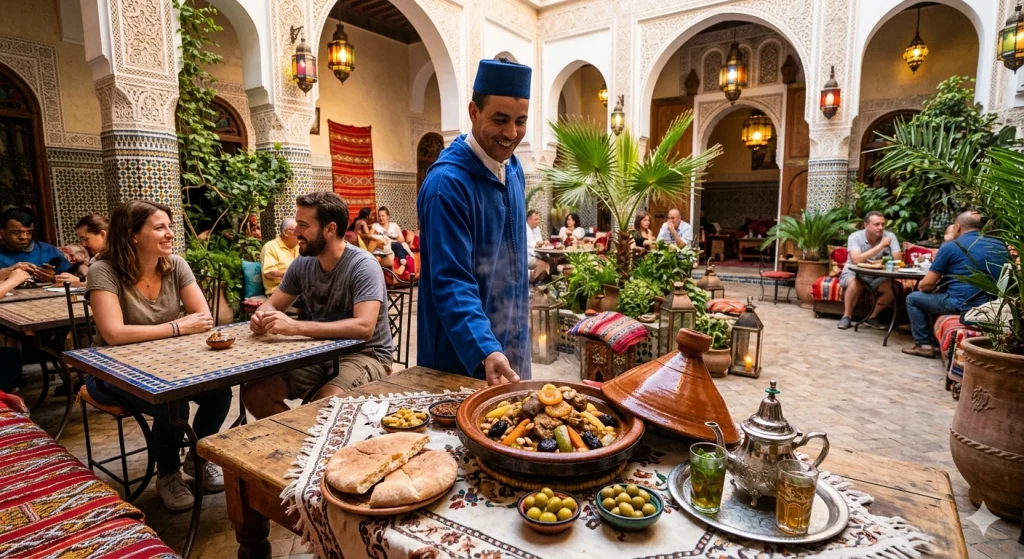
The café is Morocco’s parliament, office and theatre box — nurse one espresso for two hours facing the street like everyone else; that is not loitering, it is participation. Mint tea remains the handshake of every negotiation and welcome.
The year’s beat
Ramadan reverses day and night (a visitor’s guide); the Eids empty cities toward family; summer moves life to the coast; harvests — olives, dates, roses — set the countryside’s festival calendar.
Travelling to the rhythm
Our routes are built on these beats — souk days caught, Fridays gentled, evenings free for the promenade — because a private itinerary can dance to the country instead of over it. The deeper code is in the culture FAQ.
Everything on this page can be woven into a private itinerary — start from historical sites of Morocco or book the 7-day Imperial Cities circuit, and we shape the rest around you.
Abdellah Naciri — Abdellah covers culture and etiquette — the guest's guide to Moroccan life. His pieces explain the things locals rarely think to say out loud: how tea is offered and refused, what to wear where, how a moussem festival works, why Friday changes a town's rhythm. He writes them so that a first-time visitor can move through Morocco with ease rather than anxiety.