★★★★★ Rated 4.5/5 — 204 Google reviews · 576 reviews · 5.0/5 on Tripadvisor · Written by a licensed Marrakech tour operator, on the road since 2011
Shake hands in Morocco and watch what follows: your counterpart’s right hand rises briefly to their chest. That small gesture — hand to heart — is one of the country’s most eloquent habits, and understanding it will change how every greeting you exchange here feels.
What the gesture says
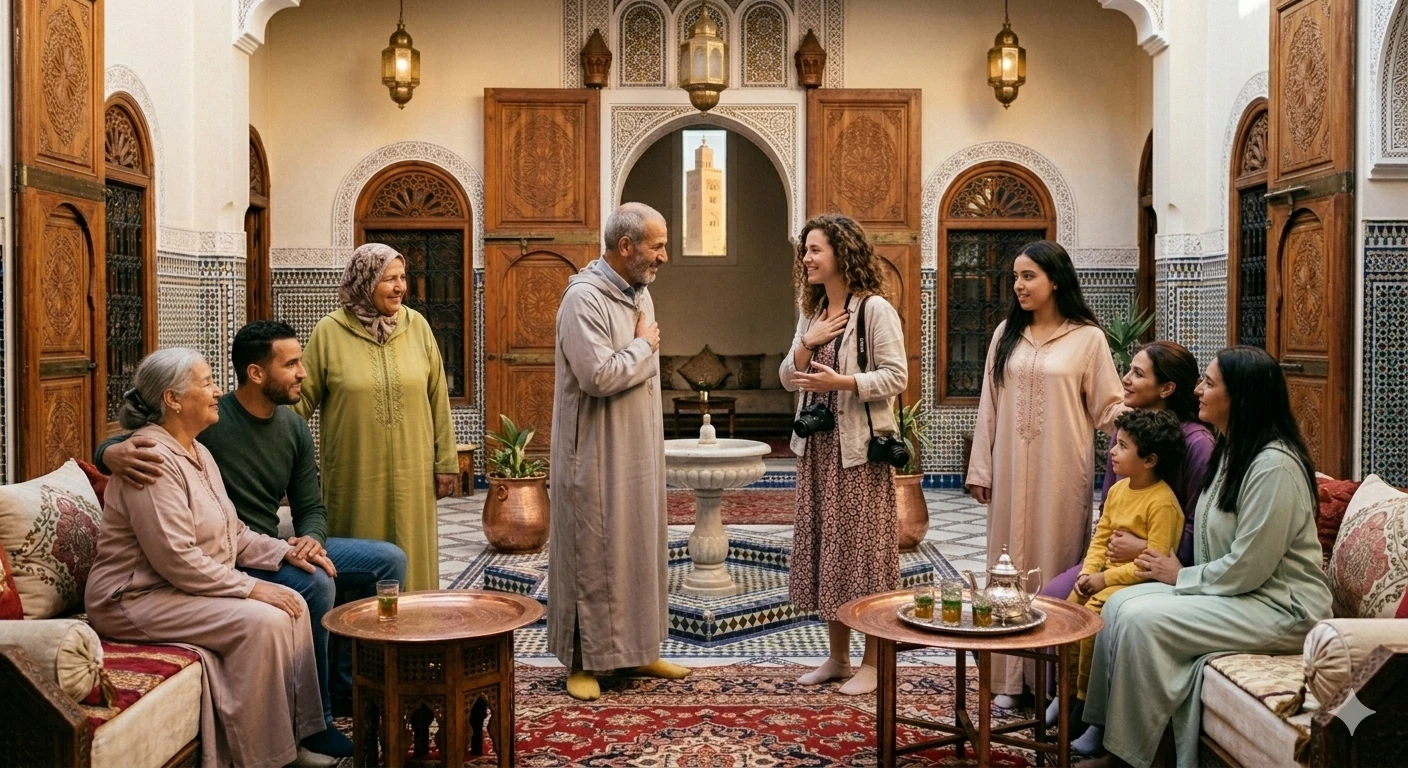
Touching the heart after a handshake means, roughly, “I receive you sincerely” — the greeting is not just protocol between hands but taken inward. It softens and personalises the exchange: respect made visible. You will see it between old friends, between shopkeeper and customer, between strangers asking directions — a whole ethics of encounter in half a second.
Should you do it back?
Yes, if it feels natural — the gesture returned is always warmly read, never mocked as imitation. Nobody expects it of visitors; everybody notices it kindly. Pair it with the standard “salam alaykoum” and you have graduated from tourist to guest in most rooms.
The greeting’s wider grammar
Moroccan greetings run long by design — health, family, the road, repeated in loops — because the greeting is the relationship being maintained. Related notes: same-gender cheek kisses among friends (count varies by region, follow their lead); some observant Moroccans prefer not to shake hands across genders — a hand on the heart instead of a handshake is that preference expressed politely, and mirroring it is the graceful response.
Why this matters on the road
Travel here runs on small courtesies: the driver greeted properly drives happier, the souk negotiation opened warmly ends better, the village tea invitation begins with exactly this gesture. It is also, honestly, the souvenir most guests take home in their own reflexes. More of the everyday courtesies live in the etiquette FAQ, and our private tours come with guides who narrate this grammar as you meet it.
Everything on this page can be woven into a private itinerary — start from historical sites of Morocco or book the 7-day Imperial Cities circuit, and we shape the rest around you.
Abdellah Naciri — Abdellah covers culture and etiquette — the guest's guide to Moroccan life. His pieces explain the things locals rarely think to say out loud: how tea is offered and refused, what to wear where, how a moussem festival works, why Friday changes a town's rhythm. He writes them so that a first-time visitor can move through Morocco with ease rather than anxiety.