Two Weeks in Morocco: Casablanca to Essaouira Itinerary – 15 Days
- Private vehicle & driver — Pick-up at your riad, pace set by you
- Local licensed guide — Licensed guide nº2898 · since 2011
- Book on WhatsApp — Reply within 1 hour · no payment at this stage
- A full day on foot in the Skoura palm oasis — the route's quiet star
- Two desert days at the Erg Chebbi with camp night
- Guided days in Fes, Marrakech and Essaouira

Two weeks in Morocco, solved: this 15-day private itinerary from Casablanca costs from €2250 per person — €150 per day with vehicle, driver, licensed guides and all fourteen nights half-board included, which undercuts assembling the same trip yourself and removes every logistic. The route breathes on purpose: a guided day and a free day in each anchor city (Fes, Marrakech, Essaouira), a full desert day at Merzouga’s Erg Chebbi, and its quiet signature — two nights in the Skoura oasis, walking the palm groves other itineraries drive past. Chefchaouen, Volubilis, the Todra road and Aït Ben Haddou connect the chapters. Since your driver handles every kilometre, it is also the definitive two-week Morocco itinerary without self-driving: no rentals, no night buses. The day-by-day quote, hotels named, arrives within the hour on WhatsApp.
| Duration | 15 Days |
| Price | From €2250 per person — car, driver and accommodation included |
| Departures | Your dates — every departure is private, never a shared group |
| Languages | English- and French-speaking driver-guides; licensed city guides where included |
| Booking | WhatsApp +212 661 454 738 — written quote within 1 hour, no payment at this stage |
Fifteen days from Casablanca to Essaouira that string Morocco’s headline acts on one line — with a twist the standard grand tours miss: the Skoura oasis, where a full day on foot among the palms and kasbahs replaces yet another drive. Blue Chefchaouen, Fes in depth, two Erg Chebbi days, the gorges, then Skoura’s green sea, Marrakech guided, and a three-night Essaouira finale.
The shape favours depth over collection: two-night stays at the desert, the oasis rhythm at Skoura, and the longest seaside ending of any route we run. It suits travellers on a second visit as much as a first — the classics are all here, but so are the quiet days that make them land.
Private vehicle and driver-guide throughout; licensed guides in Fes, Marrakech and Essaouira; ensuite camp at the erg.
Fifteen days from Casablanca to Essaouira with the desert done in depth, from €2250 per person: Rabat and Chefchaouen, Volubilis and Meknes into a guided Fes, then Midelt to Merzouga for a full desert day around the erg, the gorges to Skoura — including the oasis on foot — Aït Ben Haddou, a guided Marrakech, and two closing days in Essaouira by the Atlantic.
The Skoura day is the quiet signature: a million-palm oasis walked rather than driven past, kasbahs still lived in, no crowds. Paired with the double desert day, this is the 15-day route that treats the south as a place to be, not a corridor to cross.
It ends at the ocean deliberately — after the dunes, Essaouira’s wind feels like a reward. Private on your dates, never a group: WhatsApp us and the day-by-day quote comes back within the hour.
Planning two weeks in Morocco on a budget, or without a car? This itinerary answers both: at €150 per day all-in it undercuts assembling the trip yourself, and since your private driver handles every kilometre, it is the definitive 2-week Morocco itinerary without self-driving — no rentals, no night buses, no logistics.
Where the Best of Morocco loop chases the perimeter, this two-weeks itinerary buys breathing room: a guided day and a free day in each anchor city, a full desert day at Merzouga, and — its quiet signature — two nights in the Skoura oasis, walking the palm groves while other itineraries drive past them. It is the version for travellers who measure a trip in unhurried mornings rather than map coverage.
- A full day on foot in the Skoura palm oasis — the route's quiet star
- Two desert days at the Erg Chebbi with camp night
- Guided days in Fes, Marrakech and Essaouira
- Chefchaouen overnight on the northern leg
- Three Essaouira nights to finish — guided day plus a free one
Photos from the tour
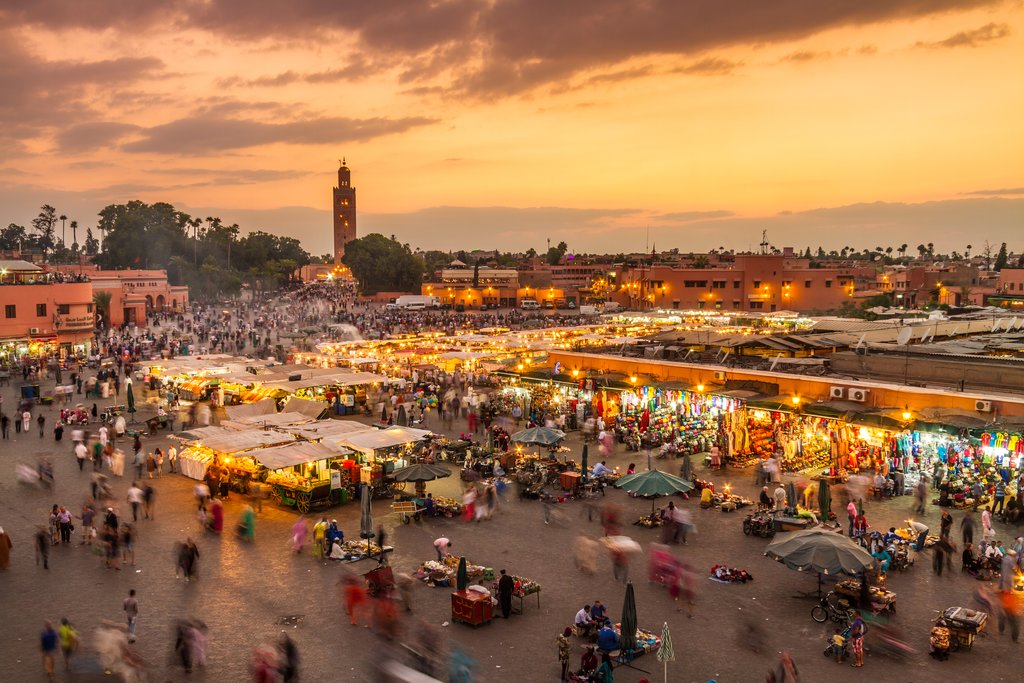
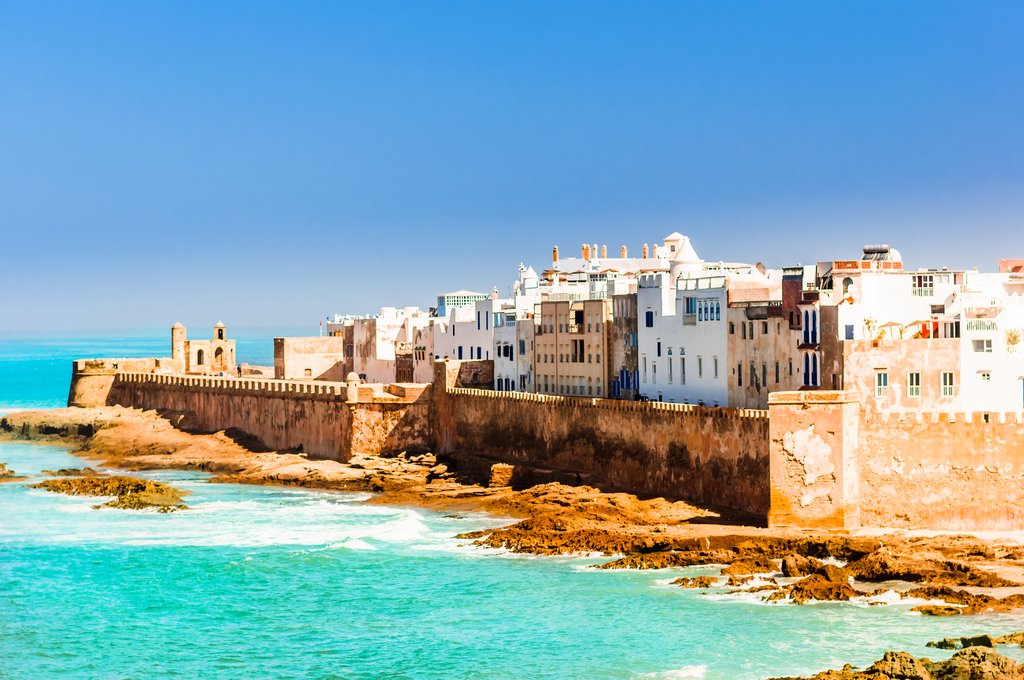
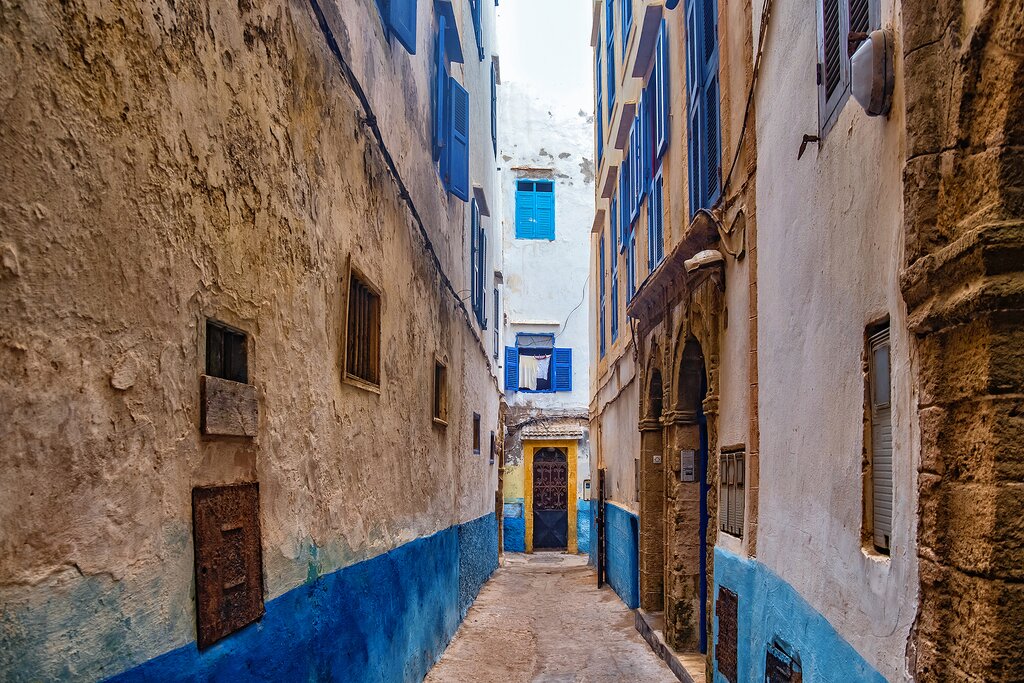
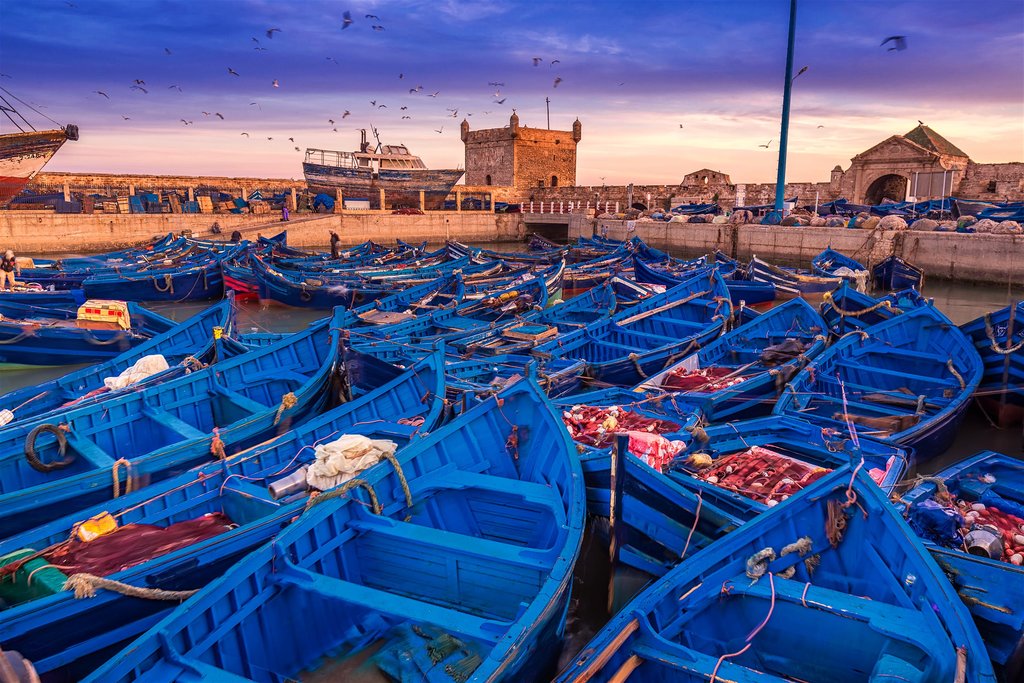
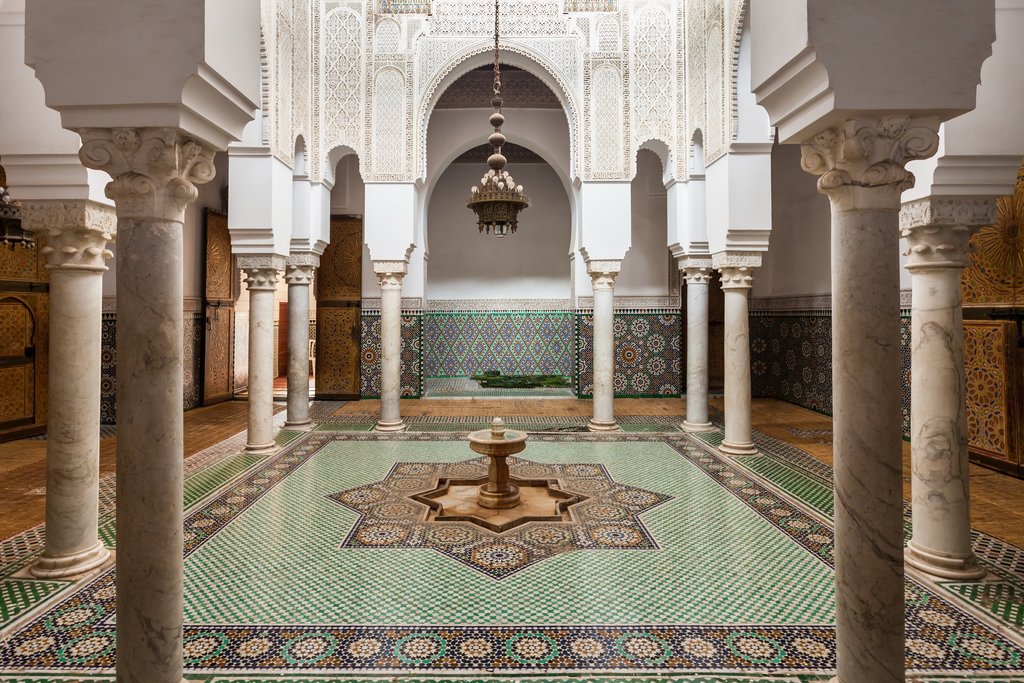
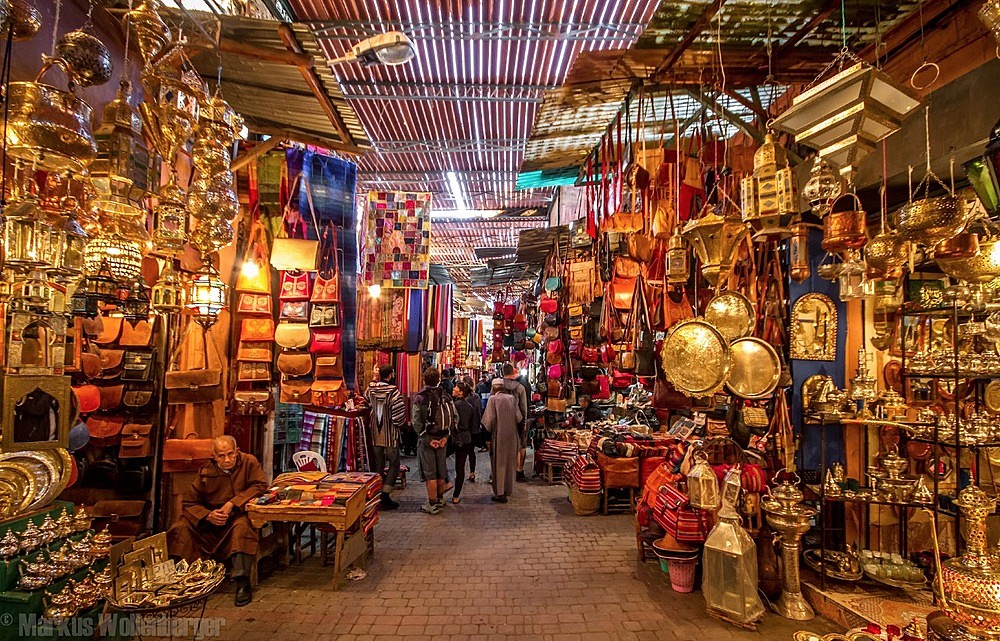
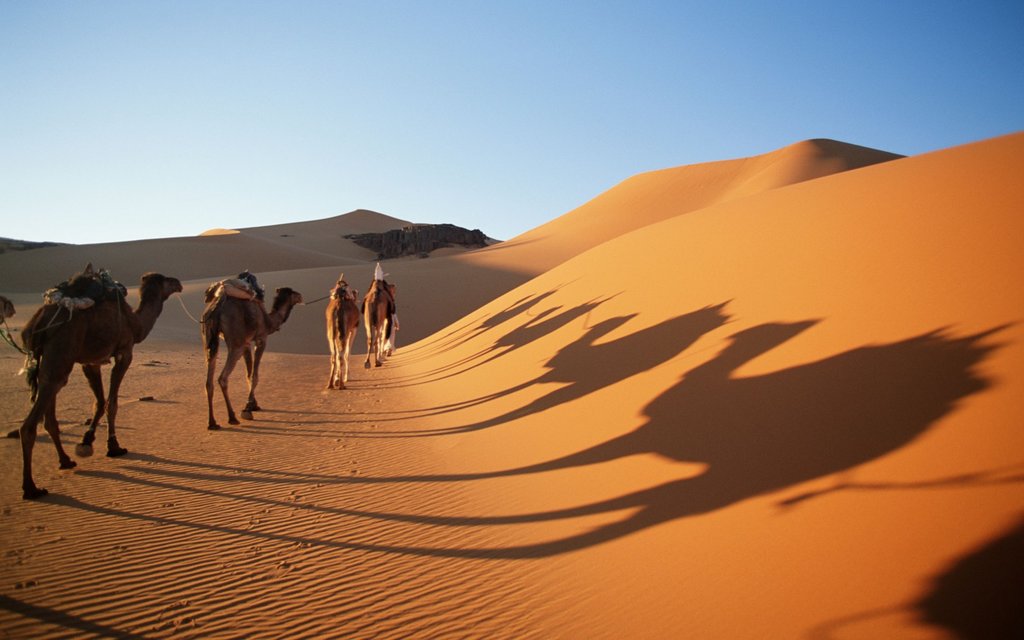
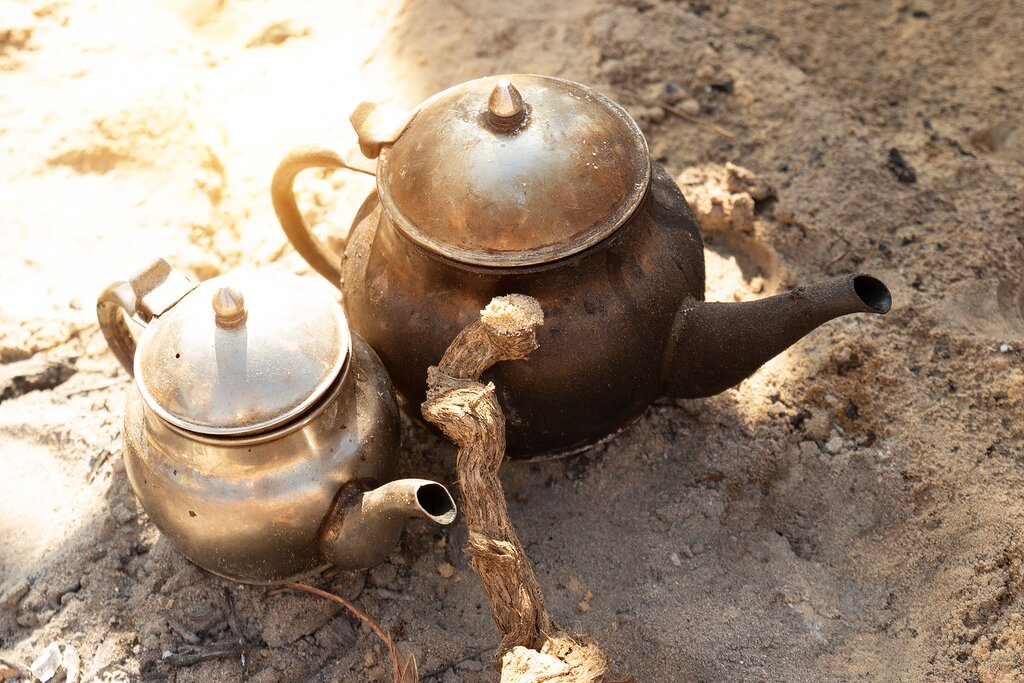
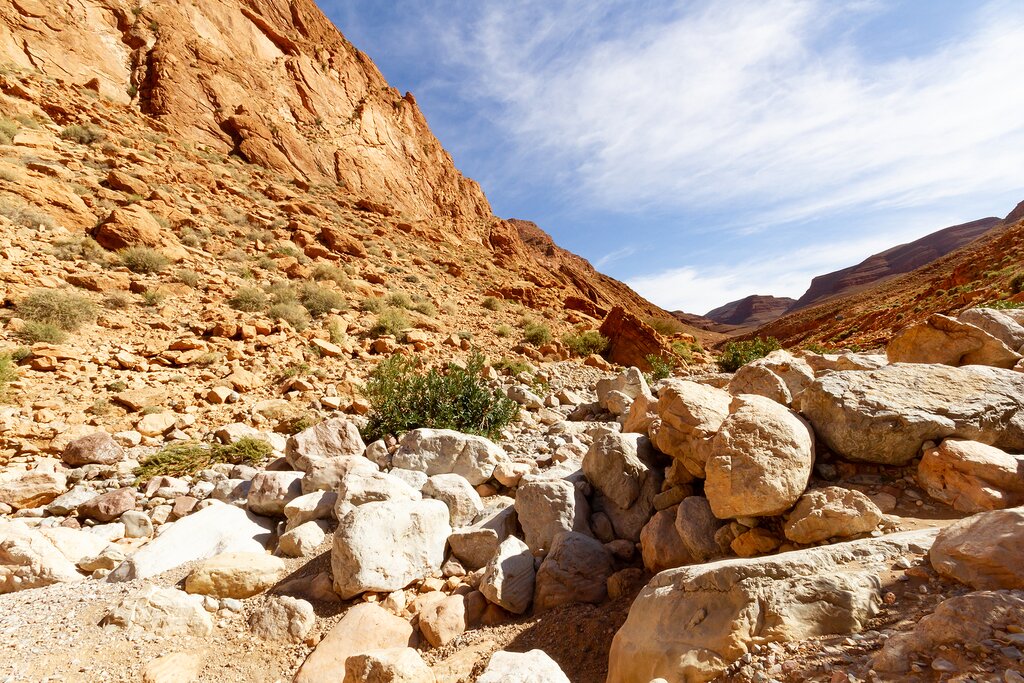
Itinerary
Open a day to see the detail: transport, accommodation, meals and activity time.
Day 1 Casablanca — Rabat
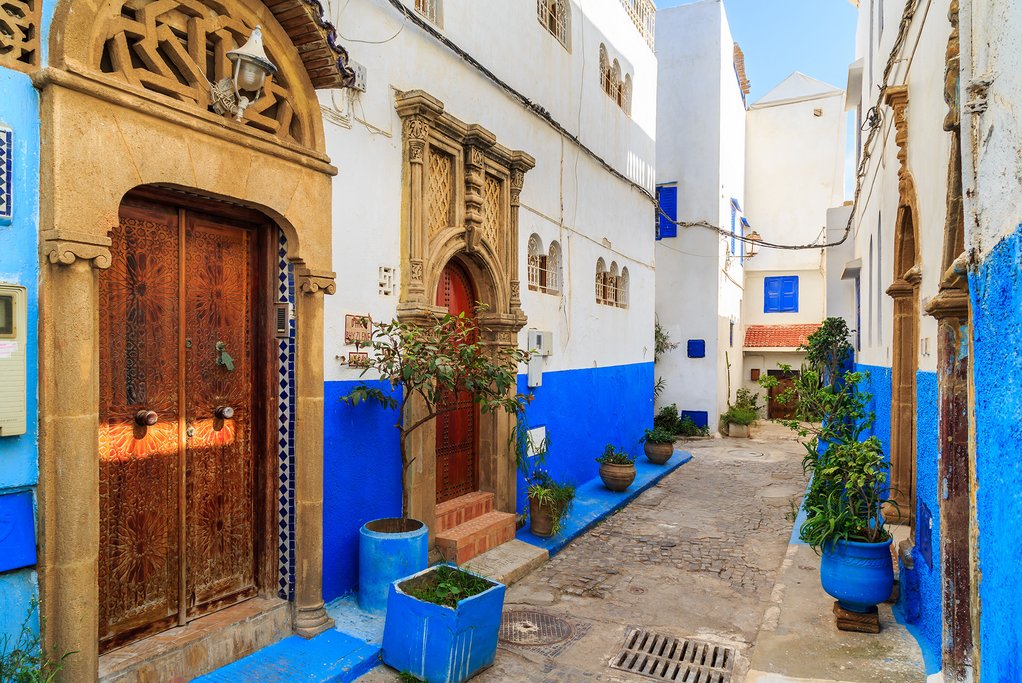
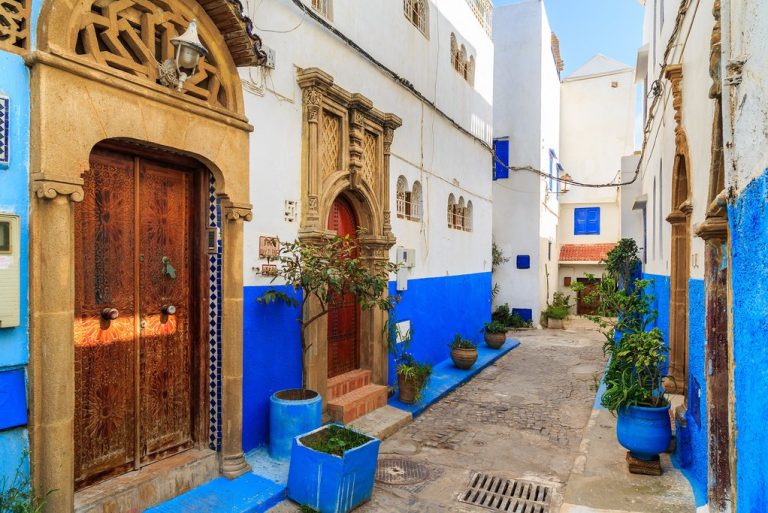
Casablanca to Rabat, gently. If your landing allows, the Hassan II Mosque's guided interior opens the trip at full scale — 25,000 places under a cedar roof that slides open, glass floor panels with the Atlantic moving beneath. Then the short coast road to the capital for the Kasbah of the Oudayas: blue-and-white lanes above the river mouth, an Andalusian garden hidden behind the gate, and the ocean wall for a first-evening walk before dinner near the medina.
Day 2 Rabat — Chefchaouen
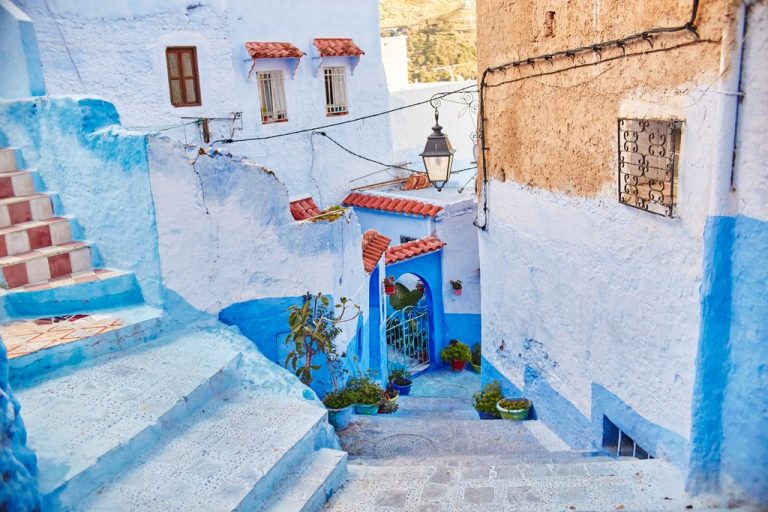
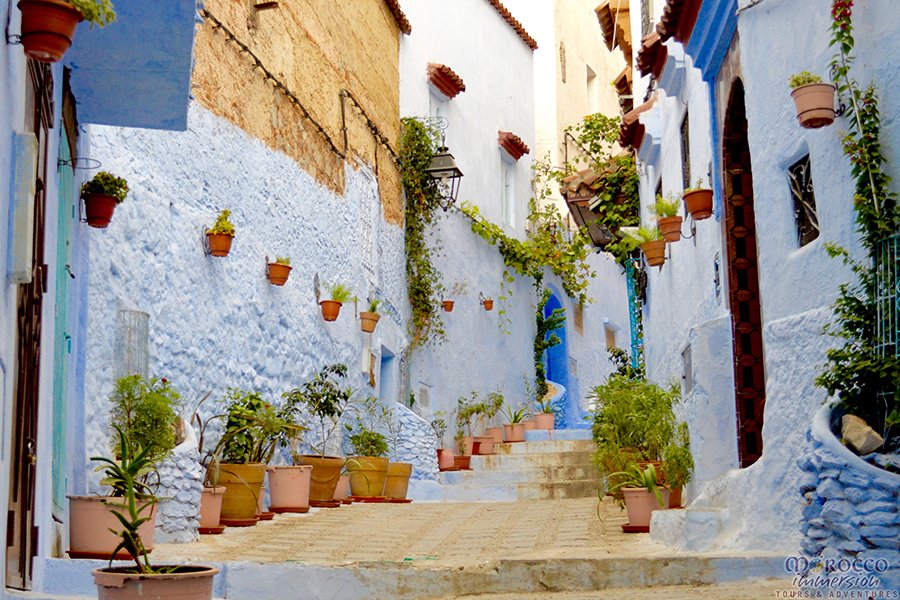
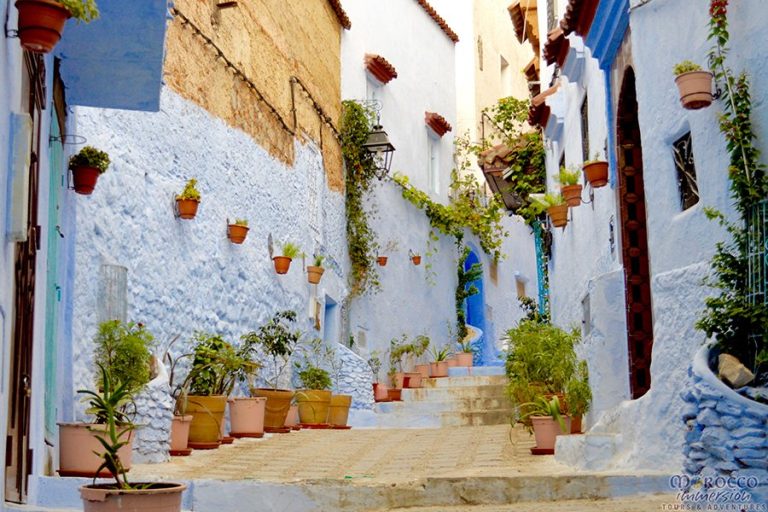
North and inland to the Rif. The road climbs through Ouazzane's endless olive terraces before Chefchaouen appears, stacked powder-blue against its mountainside at exactly the hour the colour deepens. Check into a riad inside the lanes, climb to the Spanish Mosque viewpoint for the sunset panorama, and take dinner on the Uta el-Hammam square beneath the kasbah's crenellations — sleeping here, rather than day-tripping, is the entire secret of this town.
Day 3 Chefchaouen — Volubilis — Meknes — Fes
A last blue morning in the empty lanes, then the corridor of history: Volubilis first, the best-preserved Roman city in Morocco, where floor mosaics of Orpheus and the seasons lie open to the sky and storks nest on second-century columns. Whitewashed Moulay Idriss watches from its holy hills; Meknes adds Bab Mansour, the most beautiful gate in the kingdom. Fes receives you at dusk, its medina humming behind your riad's studded door.
Day 4 Fes, guided
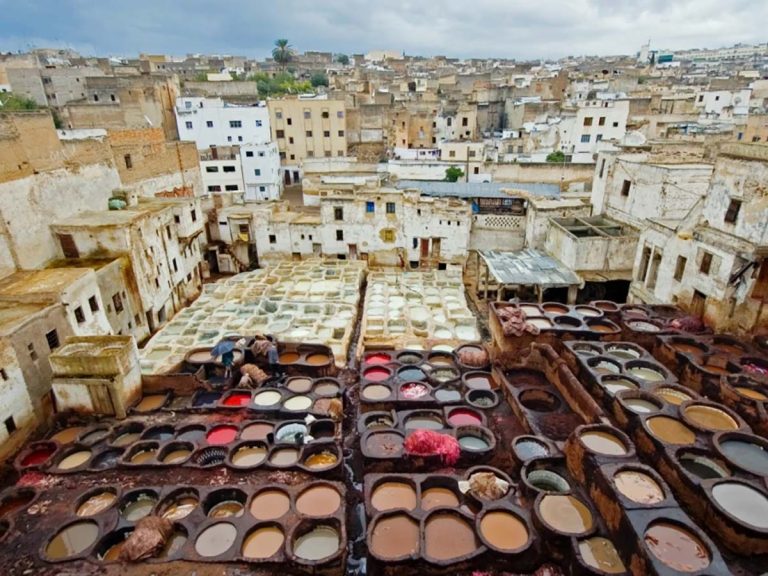
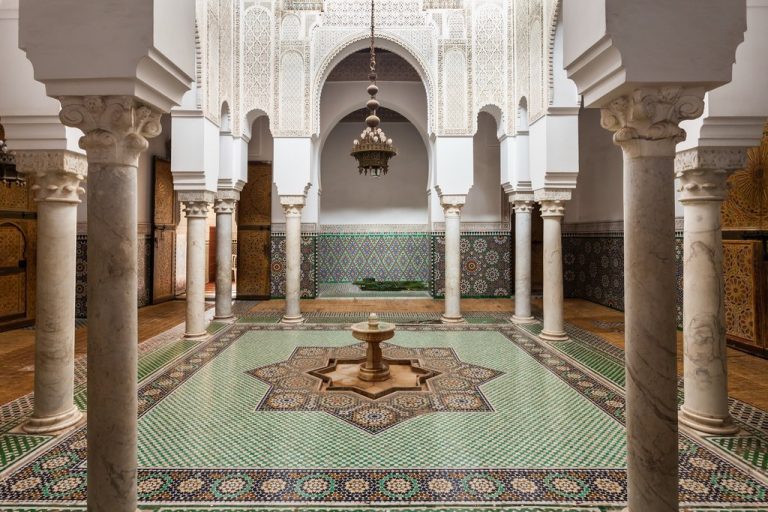
Fes el-Bali deserves a full guided day and gets one: through Bab Boujeloud's blue tiles to the Bou Inania madrasa's carved cedar, past the doorway views into Al-Qarawiyyin — founded in 859 and often called the world's oldest university — into the coppersmiths' square ringing like a gamelan, and up to a leather terrace above the Chouara tannery, mint sprig in hand against the smell. Evening free; the Marinid tombs at sunset frame the whole smoking city.
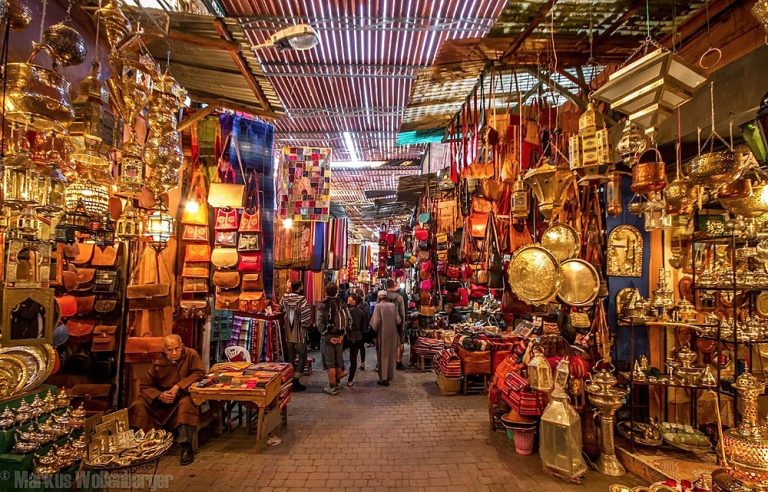
Day 5 Fes — Midelt — Erfoud — Merzouga
The great crossing south: over the Middle Atlas past Ifrane's alpine chalets and the cedar forests where Barbary macaques patrol the roadside, across the Midelt plain beneath Jbel Ayachi, and down the Ziz gorges where a river of palms threads between cliffs. The sand arrives on schedule at Merzouga: camels saddle at golden hour and carry you swaying into the Erg Chebbi, where your ensuite camp waits with lantern-lit dinner, firewood drums and a sky beyond audit.
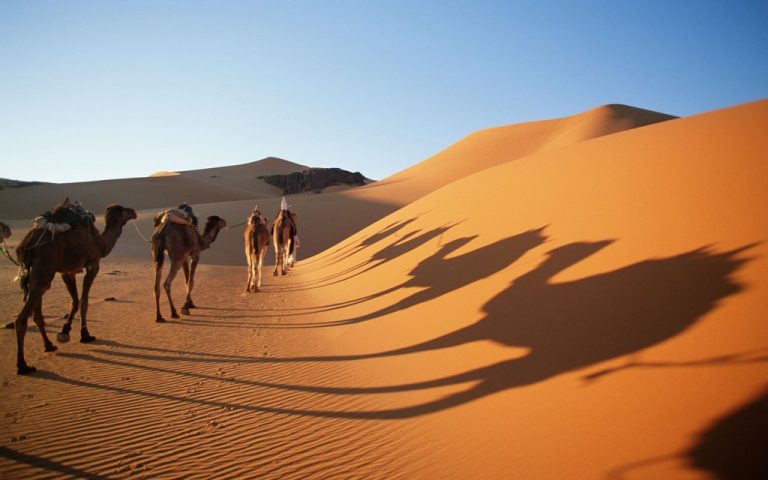
Day 6 Desert day around Merzouga
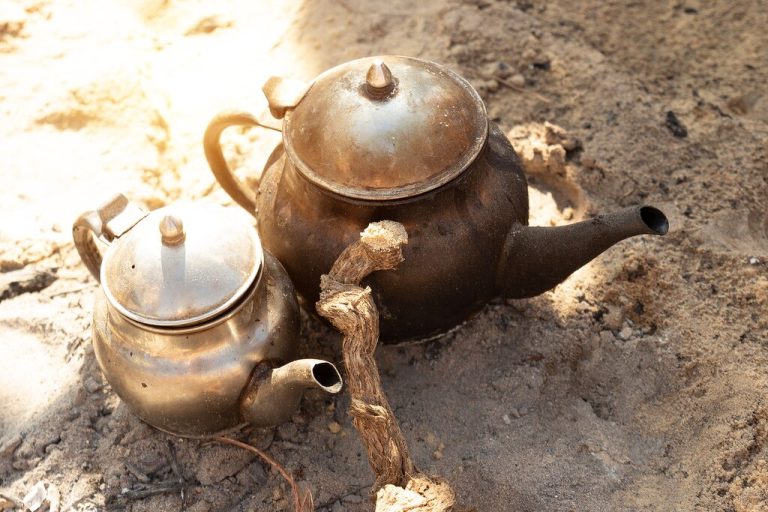
The desert's full day — the difference between a photo stop and an experience. Sunrise from the crest costs one sandy climb and repays it for years; then 4×4 lines through the dune sea, gnawa rhythms with the musicians of Khamlia village, tea with a nomad family out on the black reg, and time to do absolutely nothing in the shade of camp. The second night is when the silence stops being novel and starts being company.
Day 7 Merzouga — the gorges — Skoura
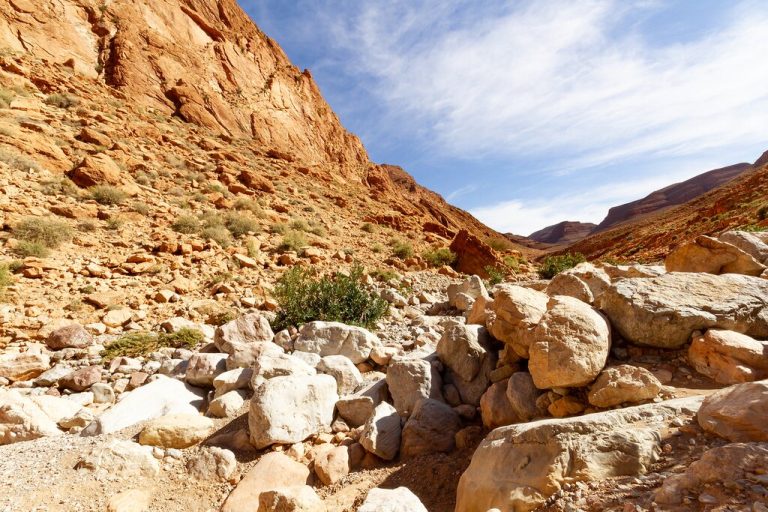
Westward through water-carved country: the Todra Gorge first, for the classic walk between 300-metre walls where the river and road share a ribbon of shade, then the Dadès valley's parade of mudbrick fortresses. The day ends somewhere greener than everything before it: Skoura, an oasis of a million palms freckled with kasbahs, where the evening arrives scented with dates and woodsmoke.
Day 8 Skoura oasis on foot
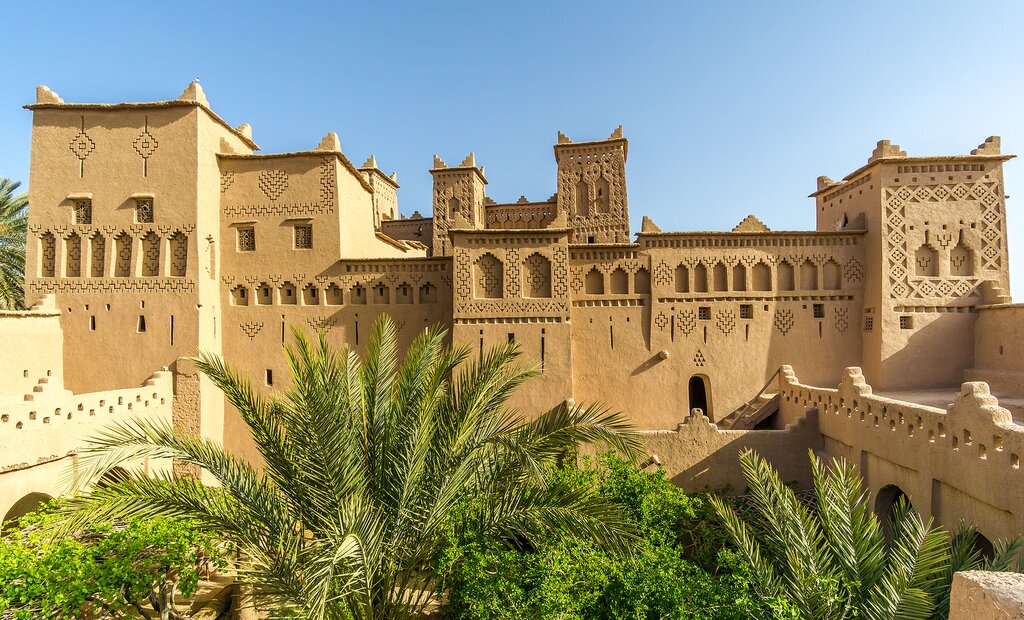
Skoura on foot, all morning: flat sandy paths wind through the palmery from kasbah to kasbah — Amerhidil, the grandest, rises from the green like a sandcastle by a master — with birdsong for traffic and dates overhead. The afternoon is deliberately idle: the pool, the gardens, a slow rooftop tea. The oasis sets the tempo, and after a week on the road the tempo is exactly right.
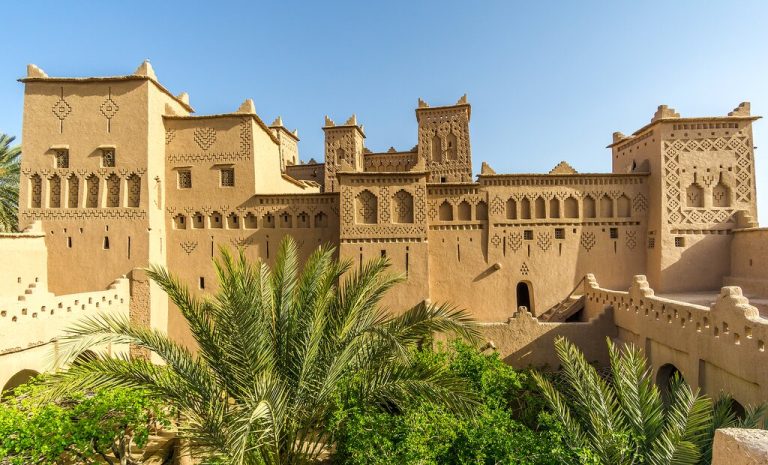
Day 9 Skoura — Ouarzazate — Aït Ben Haddou — Marrakech
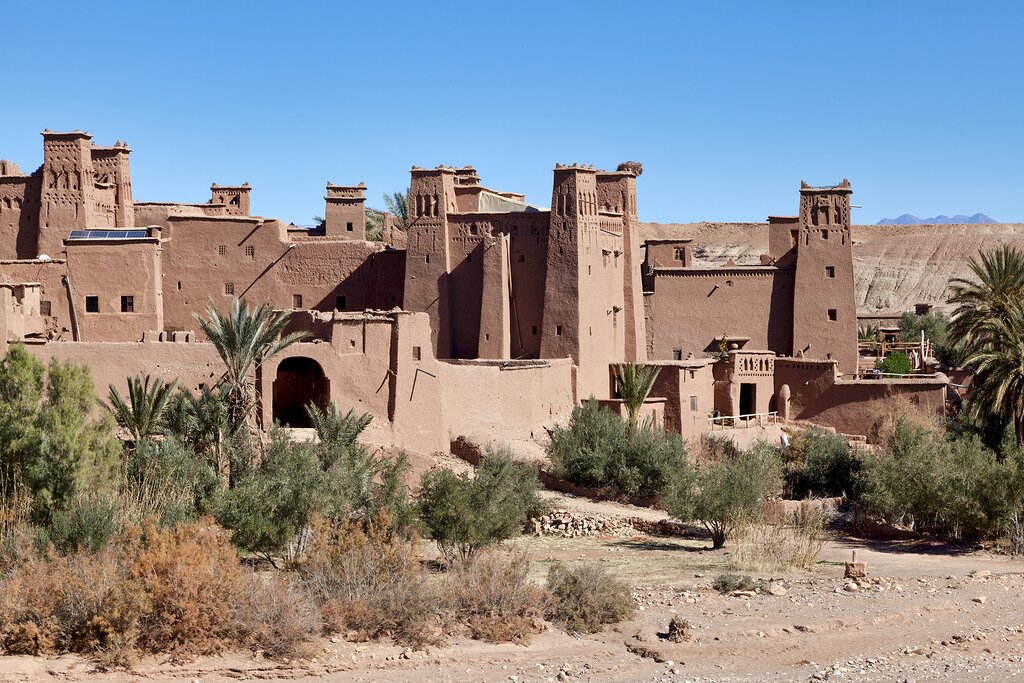
The kasbah road's grand finale in one sweep: Ouarzazate's film studios and Taourirt kasbah, then Aït Ben Haddou — the UNESCO ksar climbed lane by earthen lane to the granary viewpoint, with the river oasis spread below. The Tizi n'Tichka closes the day: 2,260 m of switchbacks, mint tea at the belvederes, and the long descent into Marrakech's pink evening haze.
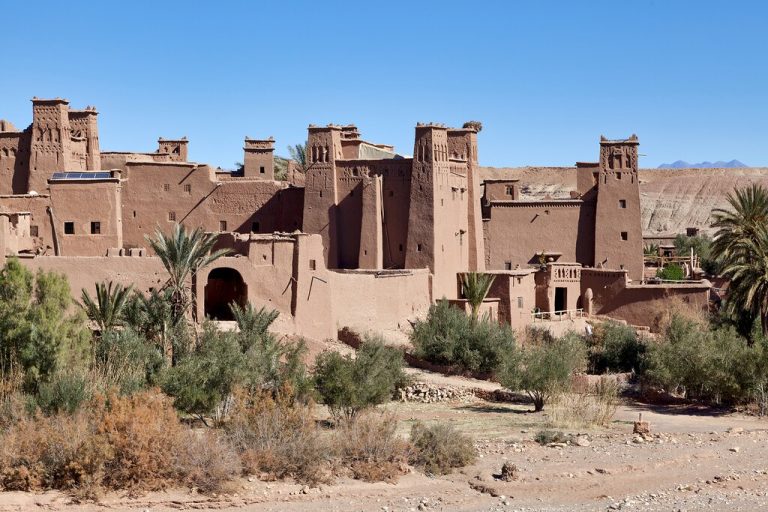
Day 10 Marrakech, guided
Marrakech unlocked with a licensed guide: the Bahia Palace's painted ceilings and courtyards, the Saadian Tombs hidden behind their kasbah wall, the Koutoubia's gardens, and the souk system decoded until browsing becomes sport rather than survival. The afternoon offers Majorelle with pre-arranged tickets, a first hammam, or a rooftop with the Atlas on the horizon — all correct answers.
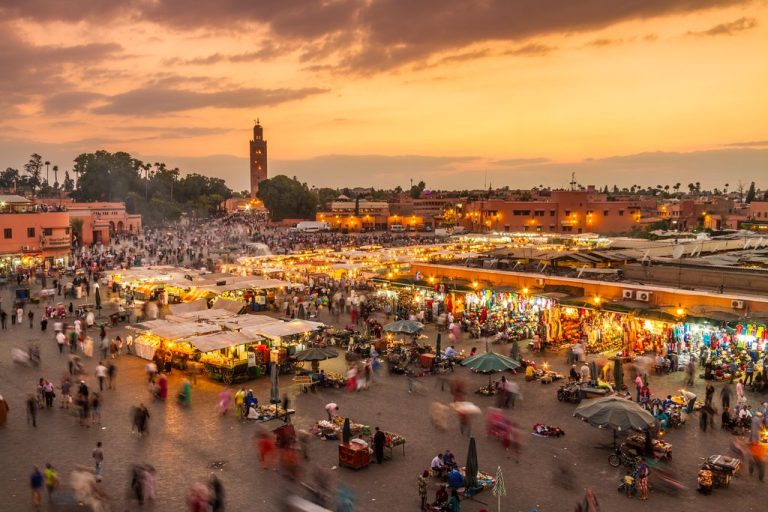
Day 11 Marrakech — Essaouira
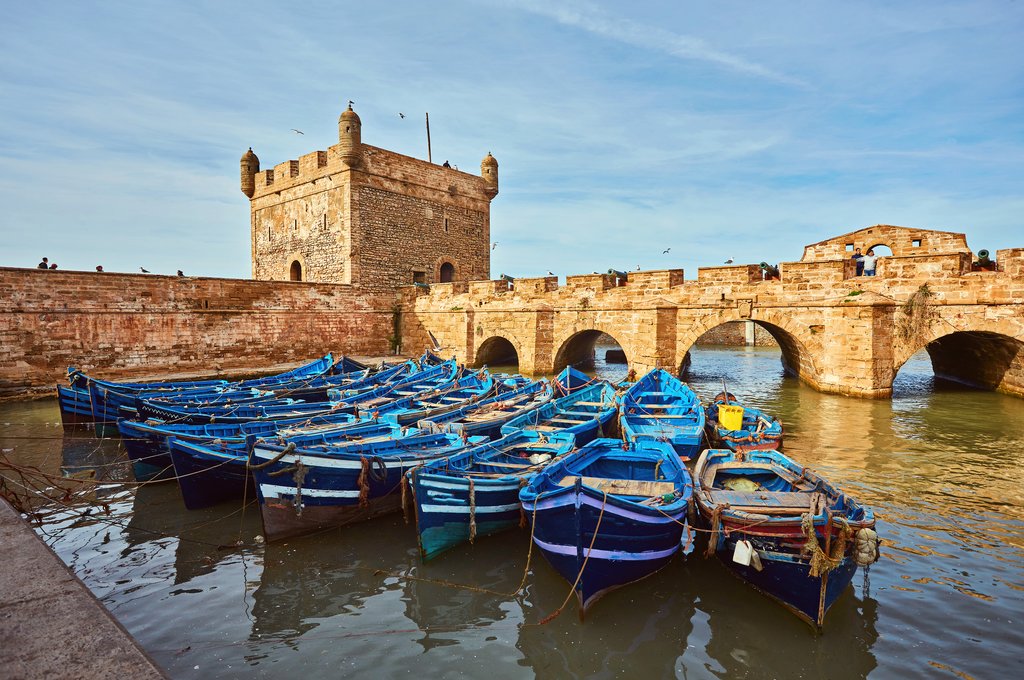
West on the argan road: the trees that grow nowhere else on earth line the route, and a women's cooperative shows the cracking, grinding and pressing before selling the genuine oil at honest prices. Essaouira announces itself with wind and gulls — ramparts, blue boats, an 18th-century grid of white lanes — and three nights begin. The first evening belongs to the sea walls and sardines grilled beside the fleet that caught them.
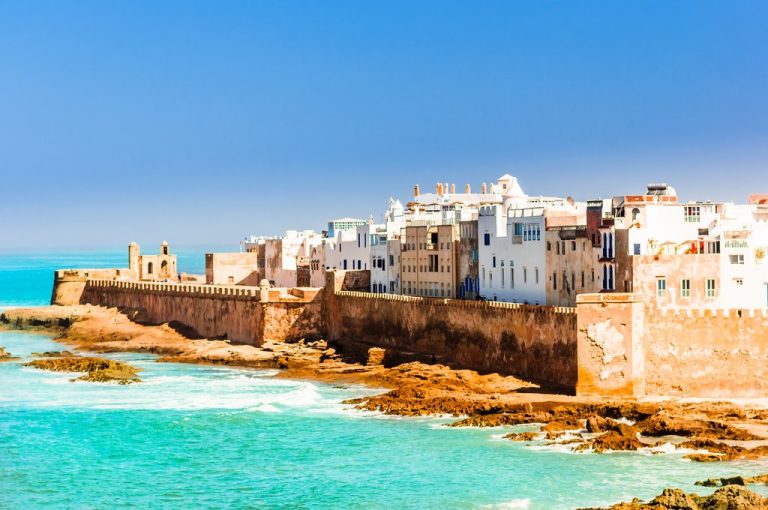
Day 12 Essaouira, guided
Essaouira guided, because this small city carries an outsized story: the sqala's cannons still aimed at vanished corsairs, the mellah and its merchant history, thuya-wood workshops perfuming whole alleys, the fish auction's theatre at the port. Between chapters, café stops on the ramparts — the town's true civic institution — and lunch wherever the grill smoke smells best.
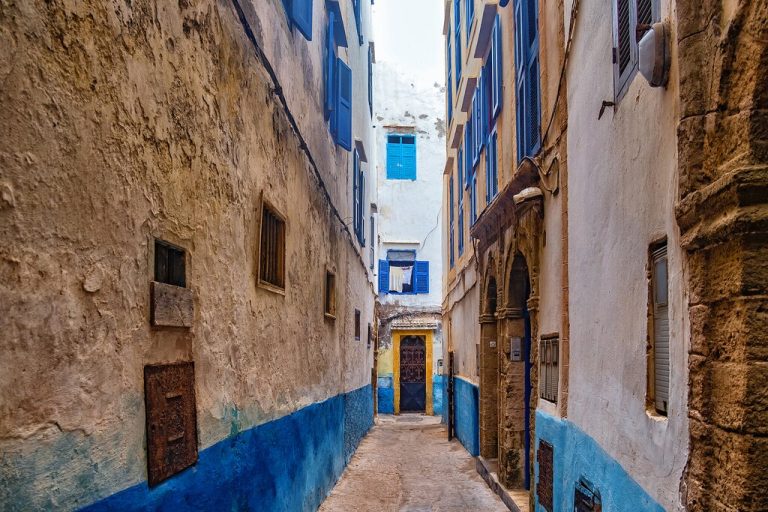
Day 13 Essaouira, free day
The free day a three-night stay earns: beach miles on the long curve south, a morning horse ride for the willing, gallery-hopping through the medina's arcades, windsurf lessons if the trade winds tempt — or the noble discipline of rampart-café rotation with a book. No vehicle, no schedule, no regrets on record.
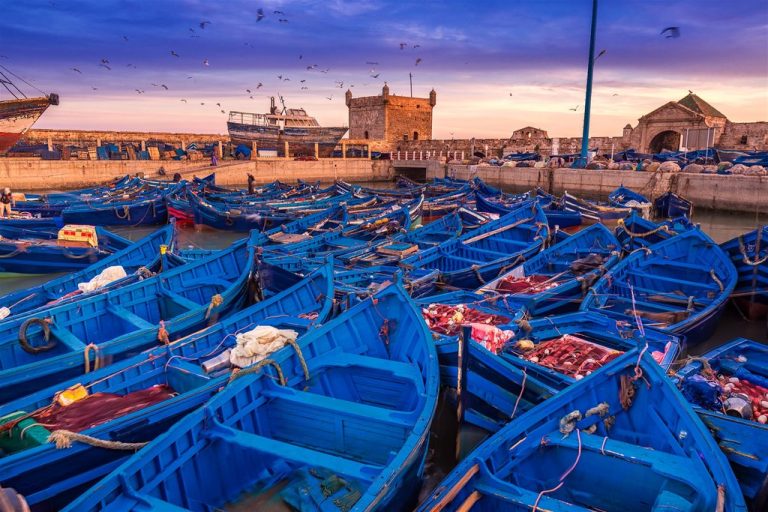
Day 14 Essaouira — Casablanca
Up the Atlantic with the trip's last discoveries: Oualidia's lagoon for an oyster lunch on the water if the timing smiles, El Jadida's Portuguese city with its famous cistern — light shafting onto a mirror of water — and the coast road into Casablanca by evening for a final ocean-side dinner.
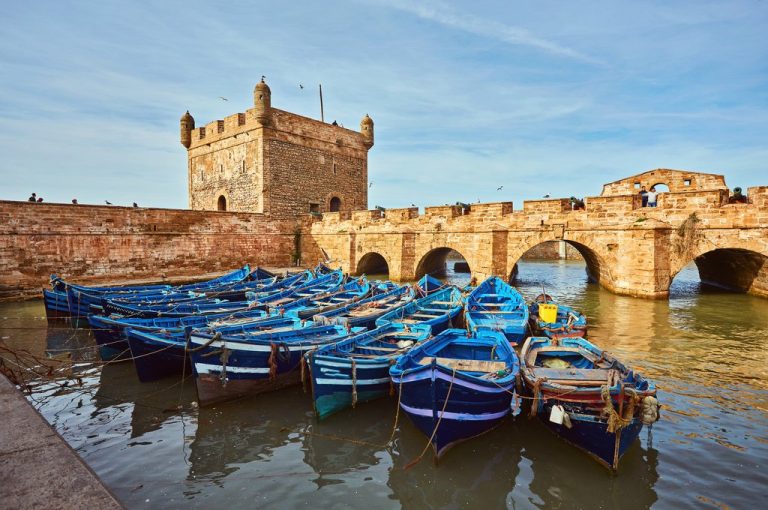
Day 15 Departure
Departure from Casablanca with the ocean still in your ears: fifteen days from coast to desert and back, the classics all collected — and the quiet days at Skoura and Essaouira that made them land.
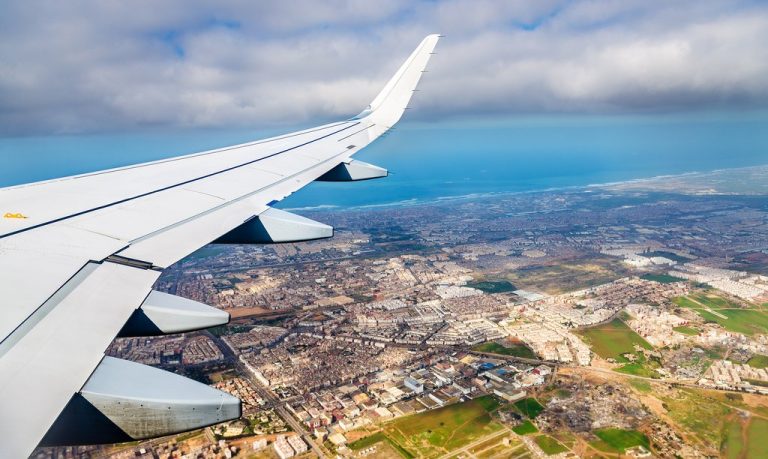
Skoura's palmery is walked in the morning cool — flat paths, kasbahs at intervals, birdlife everywhere. The Essaouira finale suits flights out of Casablanca (3 h up the coast) or Marrakech (3 h inland); tell us which and we shape day fourteen.
Included in your tour
- Private air-conditioned 4×4 or minivan with English/French-speaking driver-guide — 15 days
- Pickup at Casablanca airport or your hotel
- Night 1: Rabat riad — half-board
- Night 2: Chefchaouen riad — half-board
- Nights 3–4: Fes riad (2 nights) — half-board
- Nights 5–6: luxury ensuite desert camp (2 nights) — half-board
- Nights 7–8: kasbah hotel, Skoura (2 nights) — half-board
- Nights 9–10: Marrakech riad (2 nights) — half-board
- Nights 11–13: Essaouira riad (3 nights) — half-board
- Night 14: Casablanca hotel — half-board
- Guided visit of Fes with a licensed local guide (Day 4)
- Guided visit of Marrakech with a licensed local guide (Day 10)
- Guided visit inside the Hassan II Mosque, Casablanca
- Guided visit of the Aït Ben Haddou ksar (UNESCO)
- Camel trek in the dunes
- 4×4 desert excursion
- Gnawa music visit in Khamlia
- Drop-off at your Casablanca hotel or at the airport
Not included
- International flights
- Lunches and beverages
- Entrance fees to monuments and historical sites (optional — pay directly)
- Tips for guide and driver
- Personal expenses
- Travel insurance (recommended)
Explore more
Questions travellers ask
How much does Two Weeks in Morocco: Casablanca to Essaouira Itinerary – 15 Days cost?+
From €2250 per person, per person. The price includes private air-conditioned 4×4 or minivan with english/french-speaking driver-guide — 15 days, pickup at casablanca airport or your hotel, night 1: rabat riad — half-board. You receive a written itemised quote before paying anything — no hidden fees.
How long is this tour and when does it depart?+
15 Days, departing on the dates you choose — there is no fixed schedule, because every departure is arranged for you alone.
Is this a group tour or private?+
Fully private: your own vehicle, driver and licensed guide, never seat-in-coach and never mixed with other travellers. The daily pace flexes around you.
How many hours is it from Marrakech to Essaouira?+
About 2 and a half to 3 hours for the 190 km, on a good road through argan country — most trips break it at a women's argan cooperative. It works as a day trip, but one night in the medina shows you the town after the day-trippers leave.
What is Essaouira like?+
A flat, walled, gallery-lined medina on the Atlantic — windier, calmer and cooler than Marrakech in every sense. The rhythm is fishing port plus artists' town: blue boats unloading the catch, gulls in the rigging, ramparts with cannon, and no motorbikes in the lanes. It is where trips go to exhale.
What should you buy in Essaouira?+
Two things above all: thuya-wood marquetry, the local craft worked from the burl of a tree that grows only in this region, and argan oil bought at a cooperative rather than a tourist stall. The gallery scene is also real — Essaouira sells art, not just souvenirs — and the sales pressure is famously gentler than Marrakech.
What does Essaouira mean?+
The Arabic name is usually translated as 'the little rampart' or 'the well-walled' — fitting for a town defined by its 18th-century fortifications. Europeans long knew it by its Portuguese-era name, Mogador.
More answers in the “Essaouira & the Atlantic coast” chapter of our Travel FAQ →
Itinerary and prices last updated October 2026.