Marrakech to Essaouira Tour – 7 Days with the Sahara Desert
- Private vehicle & driver — Pick-up at your riad, pace set by you
- Local licensed guide — Licensed guide nº2898 · since 2011
- Book on WhatsApp — Reply within 1 hour · no payment at this stage
- A Sahara camp night at Zagora — closer, gentler, family-friendly
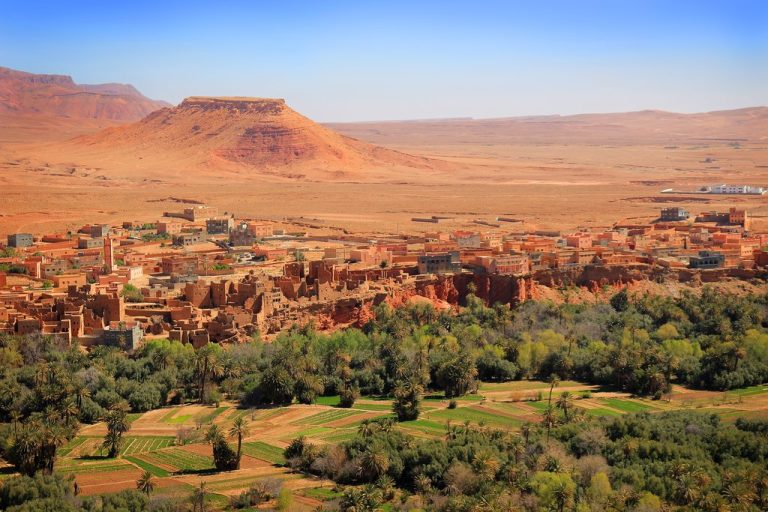
- The Draa valley — Morocco's great river of palms
- Aït Ben Haddou given its own unhurried day


A private 7-day itinerary starting in Marrakech — from €1050 per person with accommodation and guiding included, never shared with a group. You will see Ouarzazate, Zagora and Draa along the route.
| Duration | 7 Days |
| Price | From €1050 per person — car, driver and accommodation included |
| Departures | Your dates — every departure is private, never a shared group |
| Languages | English- and French-speaking driver-guides; licensed city guides where included |
| Booking | WhatsApp +212 661 454 738 — written quote within 1 hour, no payment at this stage |
Desert and ocean in one week, without the marathon: this route takes the nearer Zagora dunes for its Sahara night — trading the long Merzouga haul for a gentler rhythm — and spends the dividend on Essaouira, where the trip exhales into sea wind, ramparts and grilled sardines. It is the balanced week: one camp night, one coast day, and more Marrakech than any other 7-day desert itinerary we run.
Honesty first: Zagora’s sands are smaller than the Erg Chebbi’s. What you get in exchange is the Draa — Morocco’s greatest palm valley — a shorter road, and a schedule that suits families, first-timers and anyone allergic to six-hour drives. For maximum dunes, our Merzouga circuits wait; for maximum balance, this is the one.
Private vehicle and driver-guide throughout; desert camp at Zagora; day trip structure for the coast.
A week that pairs the desert with the ocean, from €1050 per person: Marrakech, the High Atlas crossing to Ouarzazate, the Draa valley’s palms to a Zagora desert camp, UNESCO-listed Aït Ben Haddou on the return, then two days in Essaouira — the wind city — before the Marrakech finale.
Choosing Zagora over Merzouga is the trick that makes this itinerary work: the Zagora dunes are a half-day closer to Marrakech, which frees the time most 7-day desert tours spend driving and gives it to the Atlantic instead. Camel ride, camp night under the stars, and sea air in the same week.
It suits couples and families who want variety without long-haul driving days. Private throughout, departures on your dates — send them on WhatsApp and the full quote, hotels named, comes back within the hour.
The clever trade at the heart of this week: the Sahara happens at Zagora, down the Draa valley — a shorter desert approach than the Erg Chebbi marathon — and the two days saved go to the Atlantic. You still get the camp, the campfire and the Berber music; you also get Essaouira’s Portuguese ramparts, fresh seafood and trade-wind air before the Marrakech finale. For travellers torn between dunes and coast in seven days, this is the route that refuses to choose.
- A Sahara camp night at Zagora — closer, gentler, family-friendly
- The Draa valley — Morocco's great river of palms
- Aït Ben Haddou given its own unhurried day
- A full Essaouira day — ramparts, port, argan road
- Three Marrakech nights across the week
Photos from the tour


Itinerary
Open a day to see the detail: transport, accommodation, meals and activity time.
Day 1 Marrakech arrival
Marrakech opens the account: airport pickup, riad check-in, and an evening introduction to the city's nightly opera — Jemaa el-Fna from a rooftop, orange-juice carts below, the Koutoubia lit against the last blue. Nothing scheduled, everything available.

Day 2 Over the High Atlas to Ouarzazate
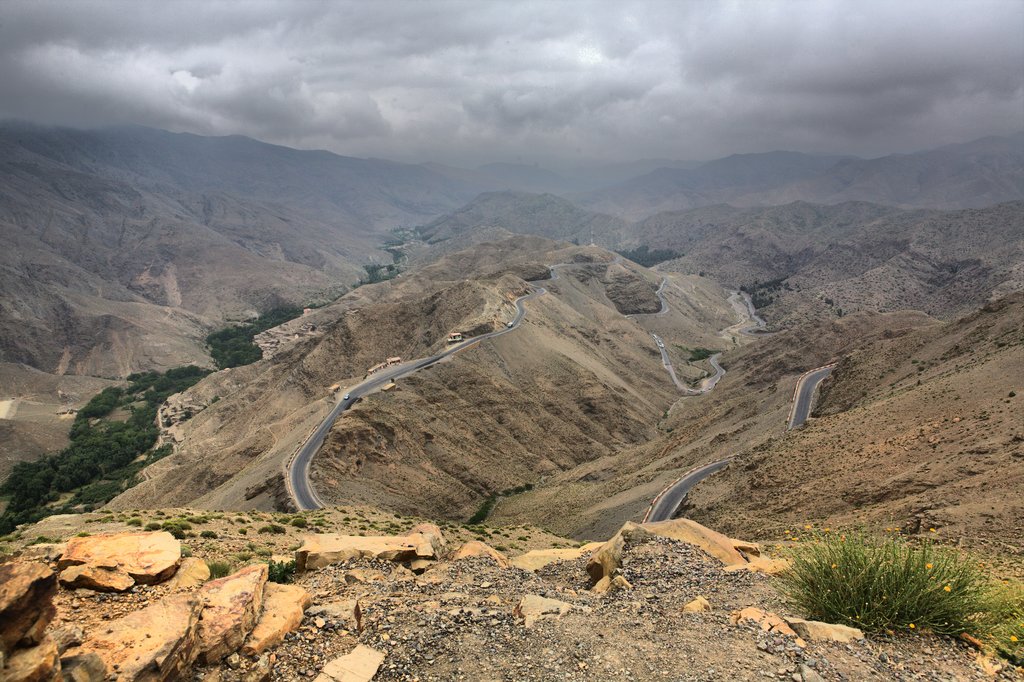
Over the High Atlas by the Tizi n'Tichka, viewpoints and mint tea as altitude demands, then down into film country. Ouarzazate — the studios that stood in for Egypt and Rome, the Taourirt kasbah — and an evening at the desert's doorstep. Tomorrow, the palms.

Day 3 The Draa valley to a Zagora camp
South into the Draa: a hundred kilometres of palm groves threading between kasbahs, the road Morocco's caravans used for centuries. Zagora by afternoon, camels by golden hour, and the night under canvas — dinner with drums, blankets against the desert chill, and a sky that makes city stars look rationed.

Day 4 Aït Ben Haddou
Dawn on the sand, breakfast at camp, then north with the day's crown jewel held for the right light: Aït Ben Haddou, the UNESCO ksar, taken slowly — the river crossing, the climbing lanes, the granary panorama. A night within sight of the walls means golden hour AND blue hour, photographers take note.

Day 5 Return to Marrakech
The pass once more — different light, different mountain — and Marrakech by early afternoon, which leaves real time: souks with intent, a palace or garden, or the hammam that has been patiently waiting since day one. Evening free in the lanes.

Day 6 Essaouira, the wind city
West on the argan road to the Atlantic. A cooperative stop shows the nut-to-oil alchemy (and sells the genuine article), then Essaouira: sea walls with cannons, blue boats unloading, gulls running the sky, sardines grilled to order at the port. The medina is flat, calm and gallery-lined — the country's easiest wander.

Day 7 Marrakech and departure
Back to Marrakech with salt still in the air, and the last hours yours: a courtyard breakfast, a final lane, the purchase you have been circling for six days. Airport transfer on your schedule. One week: dunes, ocean, and the red city holding both ends.

Choose this route for balance; choose the Merzouga circuits for maximum sand. The Zagora leg suits children from about four. Essaouira is breezy by design — pack a light layer even in August.
Included in your tour
- Private air-conditioned 4×4 or minivan with English/French-speaking driver-guide — 7 days
- Pickup at Marrakech airport or your hotel
- Night 1: Marrakech riad — half-board
- Night 2: kasbah hotel, Ouarzazate — half-board
- Night 3: luxury ensuite desert camp — half-board
- Night 4: kasbah hotel, Ait Ben Haddou — half-board
- Night 5: Marrakech riad — half-board
- Night 6: Essaouira riad — half-board
- Guided visit of the Aït Ben Haddou ksar (UNESCO)
- Camel trek in the dunes
- Drop-off at your Marrakech hotel or at the airport
Not included
- International flights
- Lunches and beverages
- Entrance fees to monuments and historical sites (optional — pay directly)
- Tips for guide and driver
- Personal expenses
- Travel insurance (recommended)
Explore more
Desert tours Marrakech Zagora & the Draa High Atlas Essaouira Ouarzazate
Questions travellers ask
How much does Marrakech to Essaouira Tour – 7 Days with the Sahara Desert cost?+
From €1050 per person, per person. The price includes private air-conditioned 4×4 or minivan with english/french-speaking driver-guide — 7 days, pickup at marrakech airport or your hotel, night 1: marrakech riad — half-board. You receive a written itemised quote before paying anything — no hidden fees.
How long is this tour and when does it depart?+
7 Days, departing on the dates you choose — there is no fixed schedule, because every departure is arranged for you alone.
Is this a group tour or private?+
Fully private: your own vehicle, driver and licensed guide, never seat-in-coach and never mixed with other travellers. The daily pace flexes around you.
Where is the desert in Morocco?+
South and east of the Atlas mountains. The named destinations, in order of distance from Marrakech: the Agafay stone desert 45 minutes away (no sand dunes), the Zagora dunes down the Draa valley at 360 km, Erg Chigaga beyond M'Hamid where the tarmac ends, and the great Erg Chebbi dune sea at Merzouga, 560 km out — the Sahara of the photographs.
How much of Morocco is desert?+
Broadly, everything south and east of the Atlas watershed is arid or Saharan — roughly half the country by area. The photogenic sand seas are actually small pockets of that expanse: Erg Chebbi and Erg Chigaga are each a day's drive apart, islands of dunes in a vast landscape of stone, oases and kasbah valleys.
What should I wear on a Morocco desert tour?+
Layers, always: desert days can hit 30°C while nights drop near freezing outside summer. The working formula is light long sleeves and trousers for sun and camels, a warm fleece or jacket for the camp evening, closed shoes for sand and stones, sunglasses, and a scarf (a cheche) — bought in any souk for a few dirhams — for sun, wind and the photograph. Luggage stays in the vehicle; you carry a small overnight bag to the camp.
How far is the Sahara desert from Marrakech?+
The honest ladder: the Agafay stone desert is 45 minutes away (no sand dunes, but real desert scenery); the first true Sahara dunes at Zagora are 360 km — about 6 hours over the Tizi n'Tichka; the great Erg Chebbi dunes at Merzouga are 560 km — 8 to 9 hours, which is why serious itineraries take 3–4 days. There is no Sahara 'day trip' from Marrakech worth the name — anyone selling one is selling Agafay.
More answers in the “The desert experience” chapter of our Travel FAQ →
Itinerary and prices last updated October 2026.