Morocco Cities & Nature Tour – 15 Days: Chefchaouen to the Sahara
- Private vehicle & driver — Pick-up at your riad, pace set by you
- Local licensed guide — Licensed guide nº2898 · since 2011
- Book on WhatsApp — Reply within 1 hour · no payment at this stage
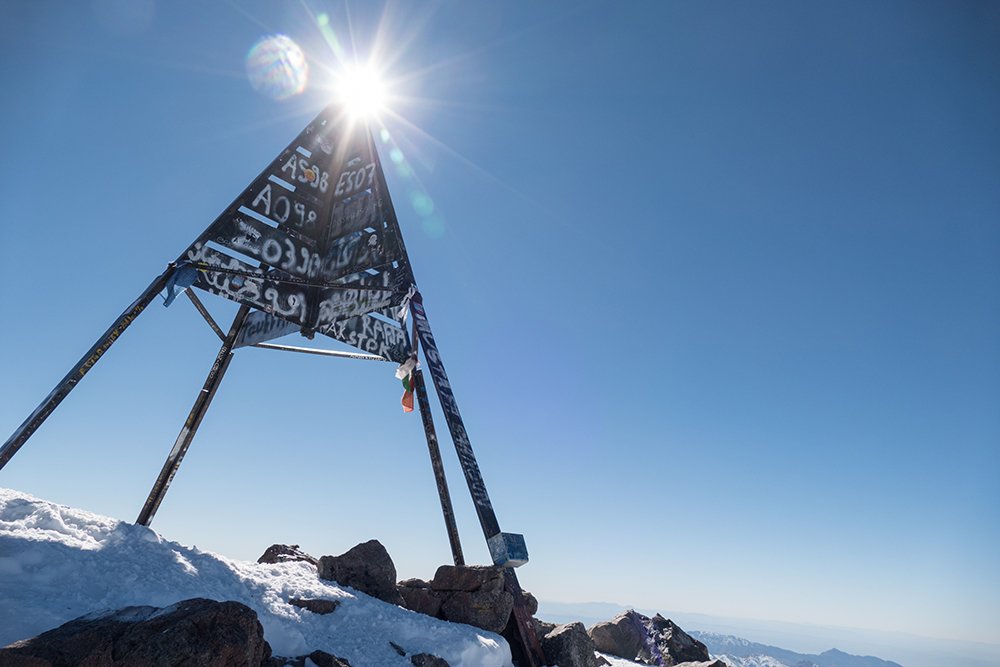
- The Toubkal summit (4,167 m) with refuge night and mountain guides
- Akchour falls hike below Chefchaouen
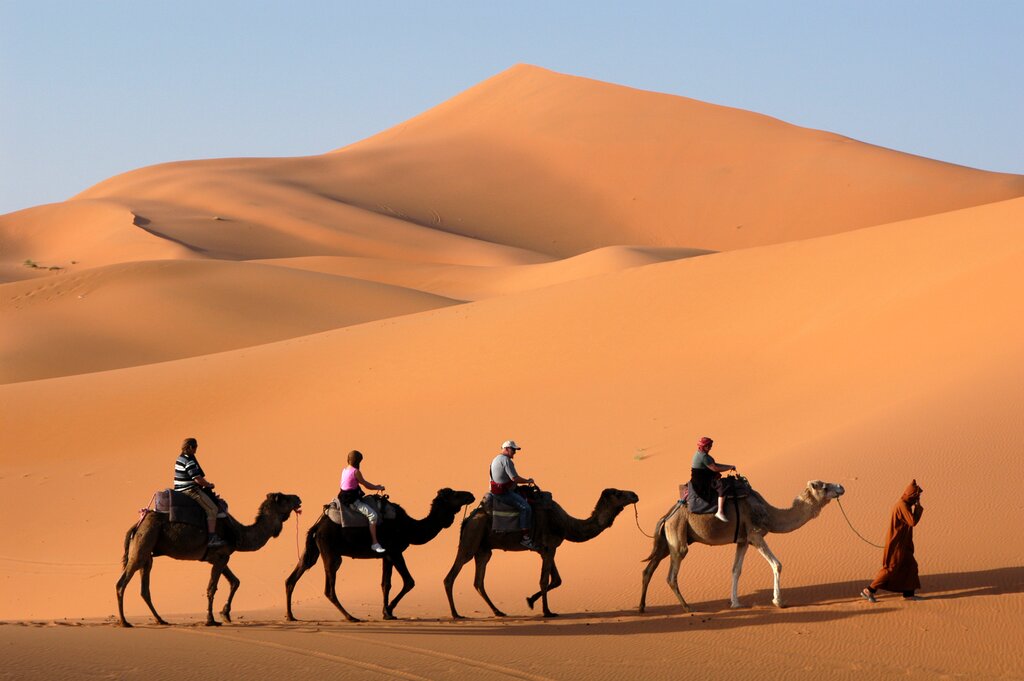
- Erg Chebbi camel trek and camp night

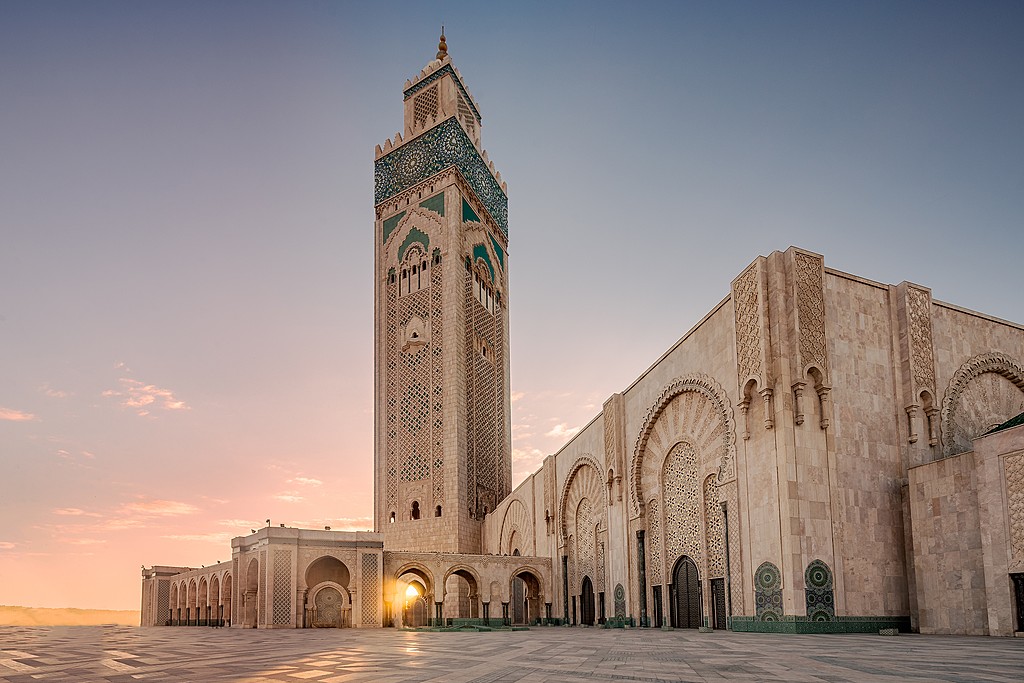
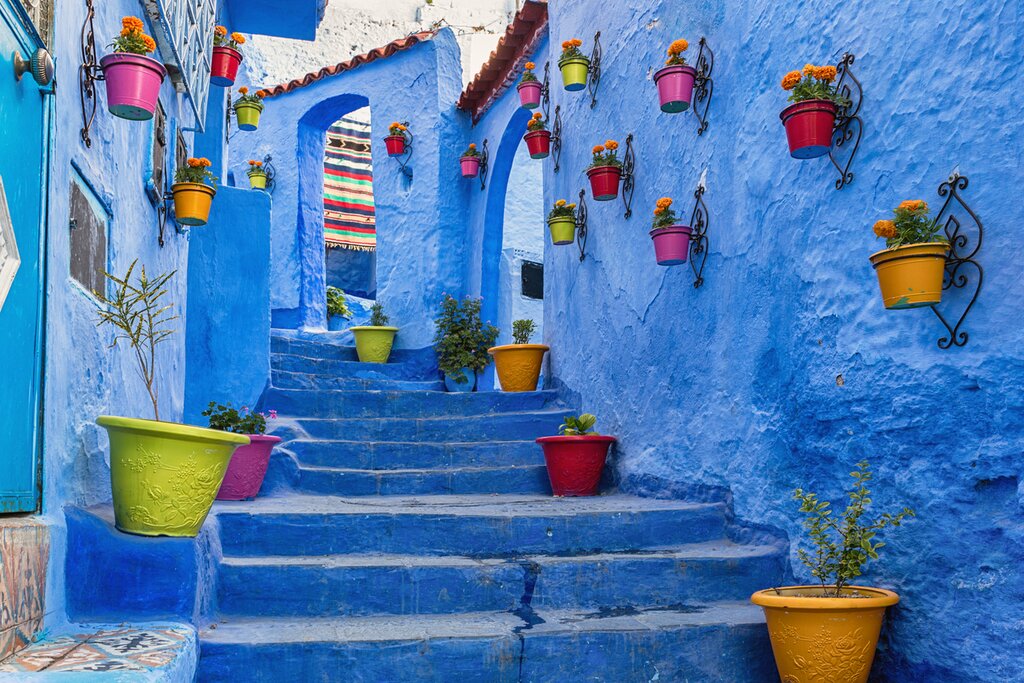
A private 15-day itinerary starting in Casablanca — from €2250 per person with accommodation and guiding included, never shared with a group. You will see Chefchaouen, Fes and Meknes along the route.
| Duration | 15 Days |
| Price | From €2250 per person — car, driver and accommodation included |
| Departures | Your dates — every departure is private, never a shared group |
| Languages | English- and French-speaking driver-guides; licensed city guides where included |
| Booking | WhatsApp +212 661 454 738 — written quote within 1 hour, no payment at this stage |
Fifteen days that alternate city and wilderness like a well-planned menu: Rabat then Chefchaouen with the Akchour falls; Fes then the Sahara camp; the Todra, the Dadès and the Valley of Roses; Marrakech — and then the route’s boldest stroke: a two-day ascent of Mount Toubkal, North Africa’s highest summit, before Essaouira’s sea air cools the triumph.
This is the route for travellers who want their cities earned and their summits real. The Toubkal leg is a genuine trek — refuge night, dawn start, 4,167 m — run with licensed mountain guides and honest briefings; everything around it stays at classic touring comfort. Few itineraries anywhere pair a UNESCO medina week with a summit certificate.
Private vehicle and driver-guide throughout; licensed medina and mountain guides; ensuite desert camp; refuge night on the mountain.
Fifteen days that put a summit in the middle of the grand tour, from €2250 per person: Rabat, a guided Chefchaouen with the Akchour falls hike, Volubilis to Fes, then a camel trek to the Sahara camp, the Todra Gorge, the Valley of Roses, Marrakech — and the finale: Imlil, a night at the Toubkal refuge, and the summit of North Africa at 4,167 m.
No other itinerary we run combines the full cultural circuit with a genuine Toubkal ascent. The mountain days come last by design: you acclimatise gradually through the trip, and the trek is supported — licensed mountain guide, mules, refuge night — so a fit hiker needs no technical skill outside winter.
Book it if a view from the top of the Atlas belongs in your Morocco story. Dates on WhatsApp; the full plan, refuge included, comes back within the hour.
One number separates this tour from every other grand loop in the catalogue: 4,167. Between the cities and the Sahara, days eleven and twelve climb Mount Toubkal — refuge night, dawn summit, North Africa’s roof — inside an itinerary that still delivers Chefchaouen, Fes, the desert camp, the Valley of Roses and an Essaouira finish. Solid fitness is the entry fee; the trek runs with a licensed mountain guide and flexes to conditions.
- The Toubkal summit (4,167 m) with refuge night and mountain guides
- Akchour falls hike below Chefchaouen
- Erg Chebbi camel trek and camp night
- The Valley of Roses and Skoura's palm oasis
- Essaouira's free sea day after the summit
Photos from the tour
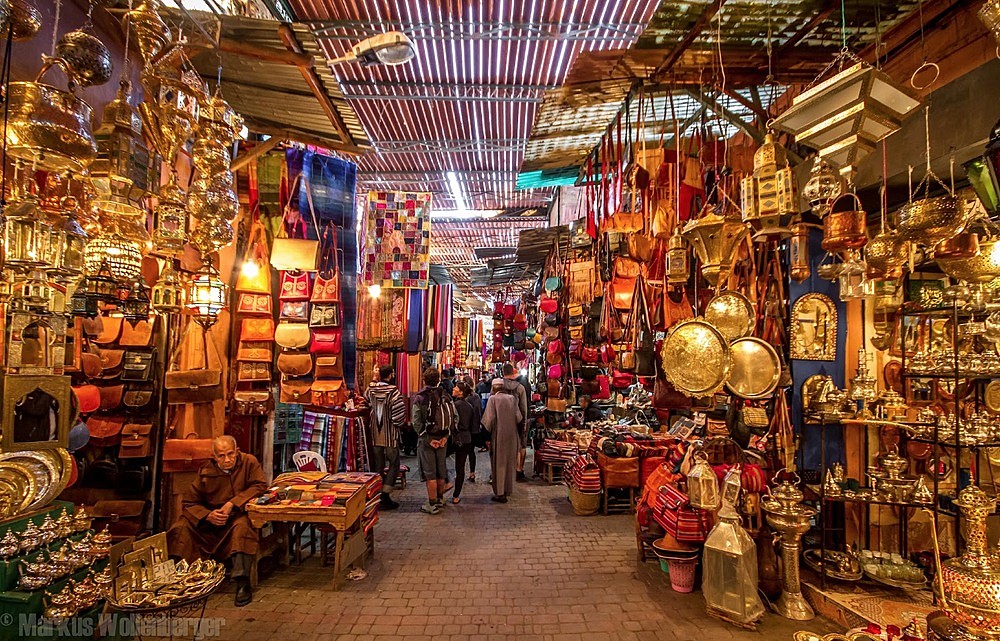
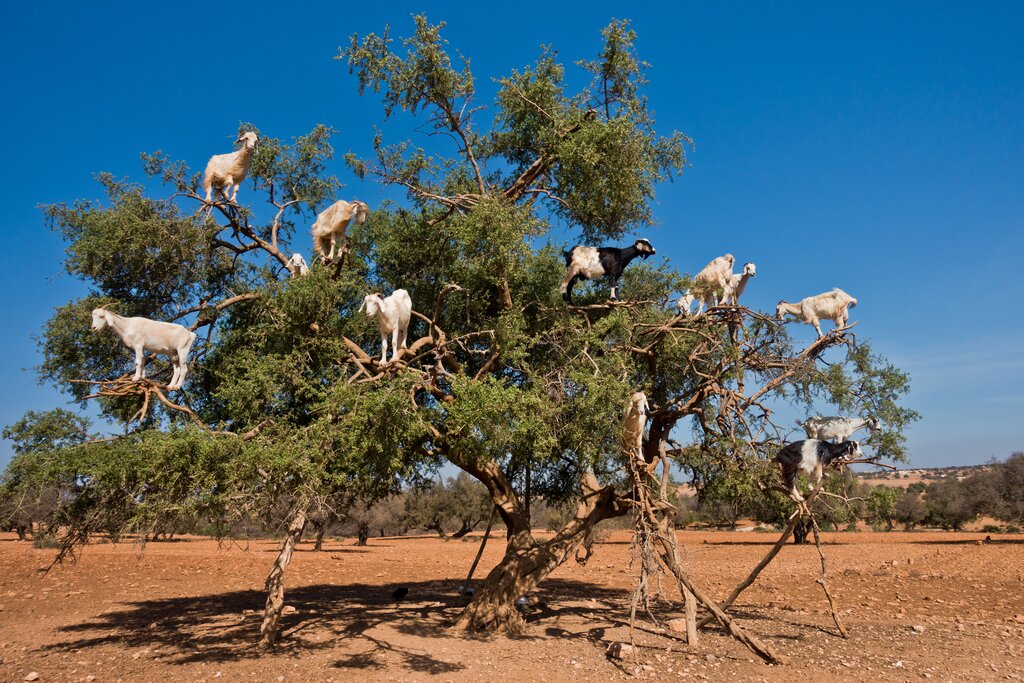
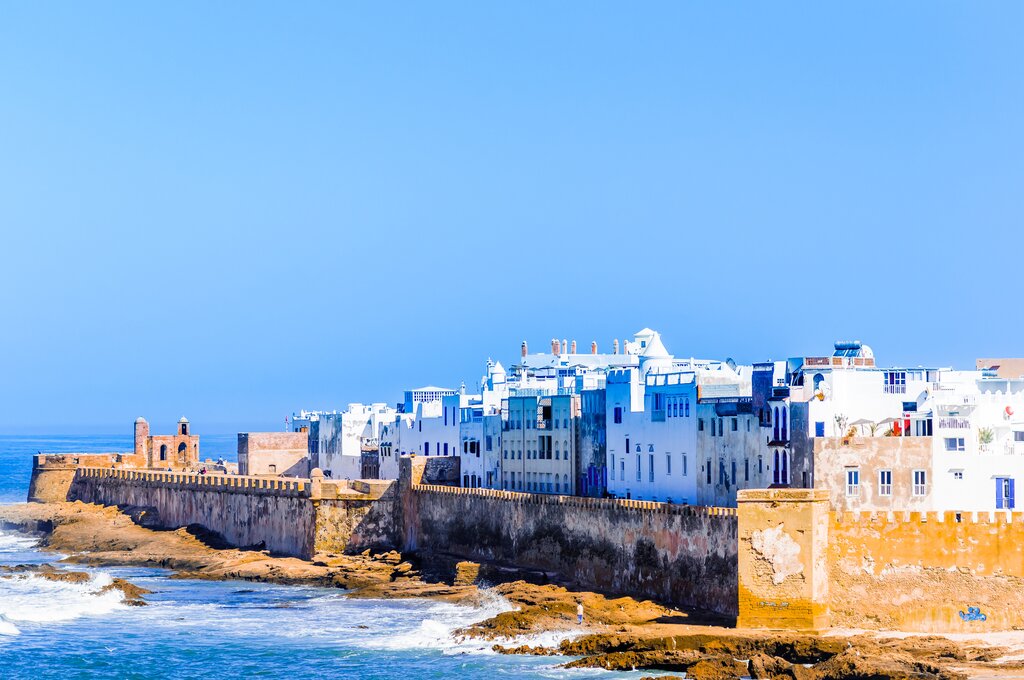
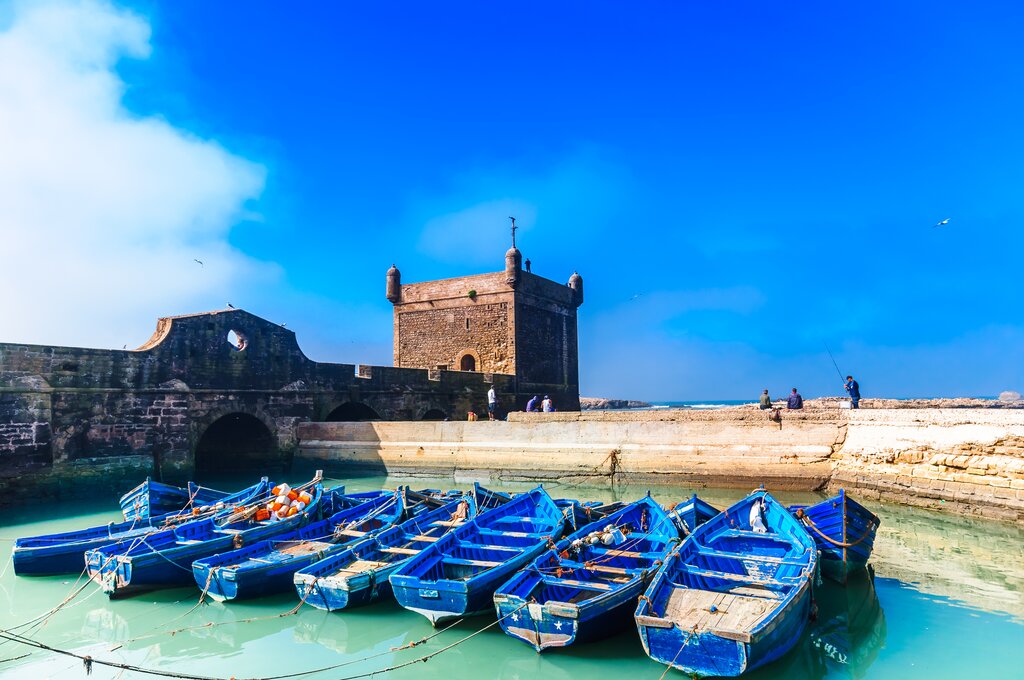
Itinerary
Open a day to see the detail: transport, accommodation, meals and activity time.
Day 1 Casablanca — Rabat
Casablanca to Rabat for the gentle opening: the Kasbah of the Oudayas' blue lanes above the river mouth, the Andalusian garden behind its gate, the ocean wall at dusk. Dinner near the medina, the capital's calm doing its quiet work — the fortnight's contrasts begin tomorrow.
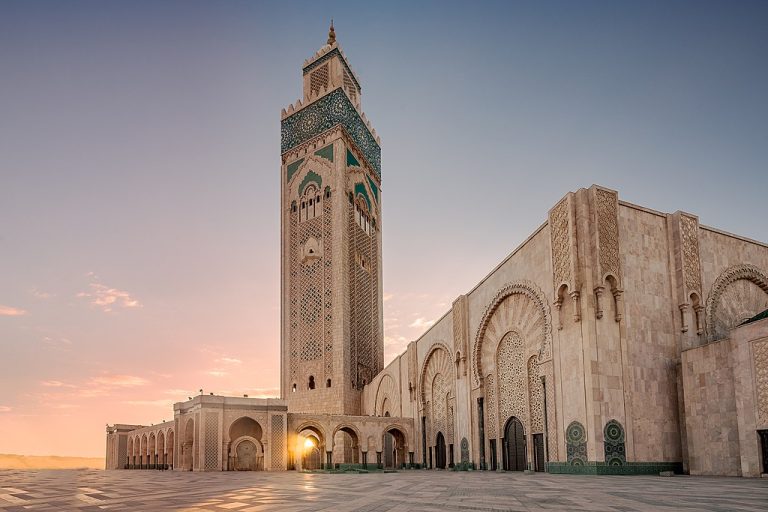
Day 2 Chefchaouen, guided
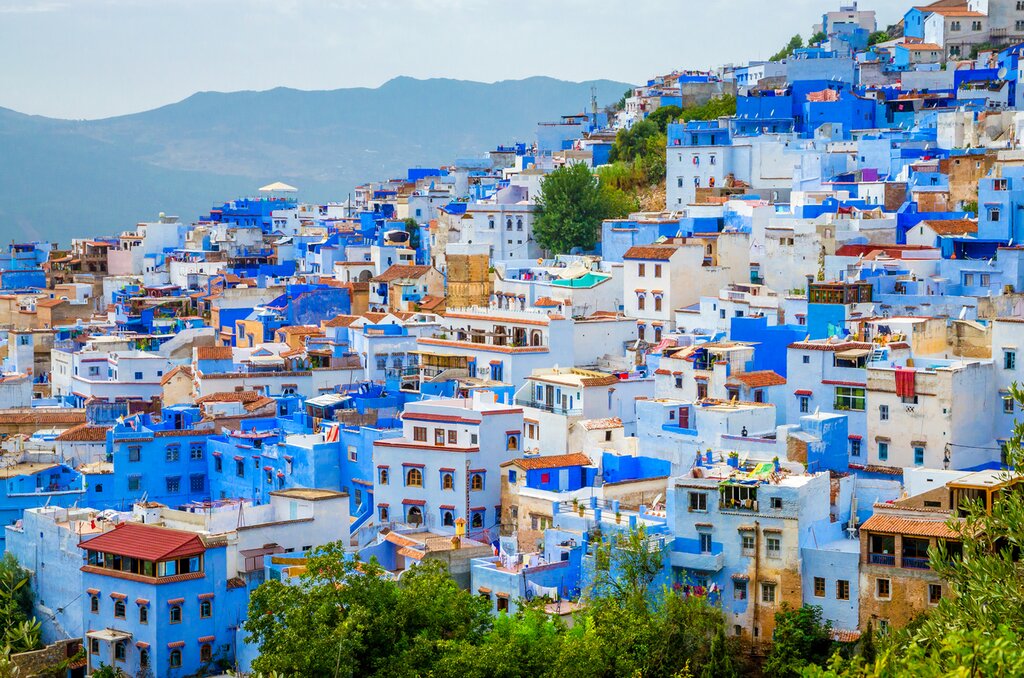
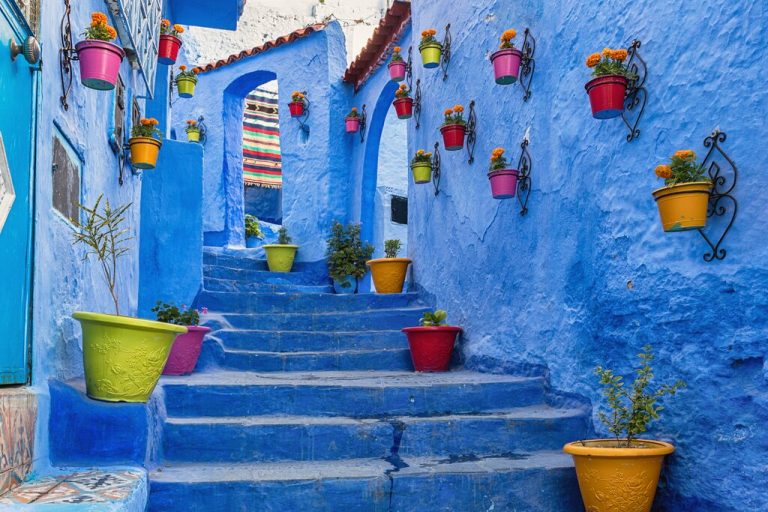
Into the Rif to Chefchaouen, with a guided afternoon in the blue: the kasbah and its little museum tower, the lane network's actual logic explained, the wool souks with the Rif's striped blankets — then the rooftops for the light show that closes every Chaouen day. Sleeping here is the whole secret.
Day 3 Akchour falls hike
Boots, round one: the Akchour trail in Talassemtane National Park — a river gorge of pools and oleander, path-side cafés pressing orange juice mid-hike, and the great cascade at the walk's end. Three to four hours that preview the fortnight's rhythm: honest effort, immediate reward, tea at both ends.
Day 4 Volubilis — Meknes — Fes
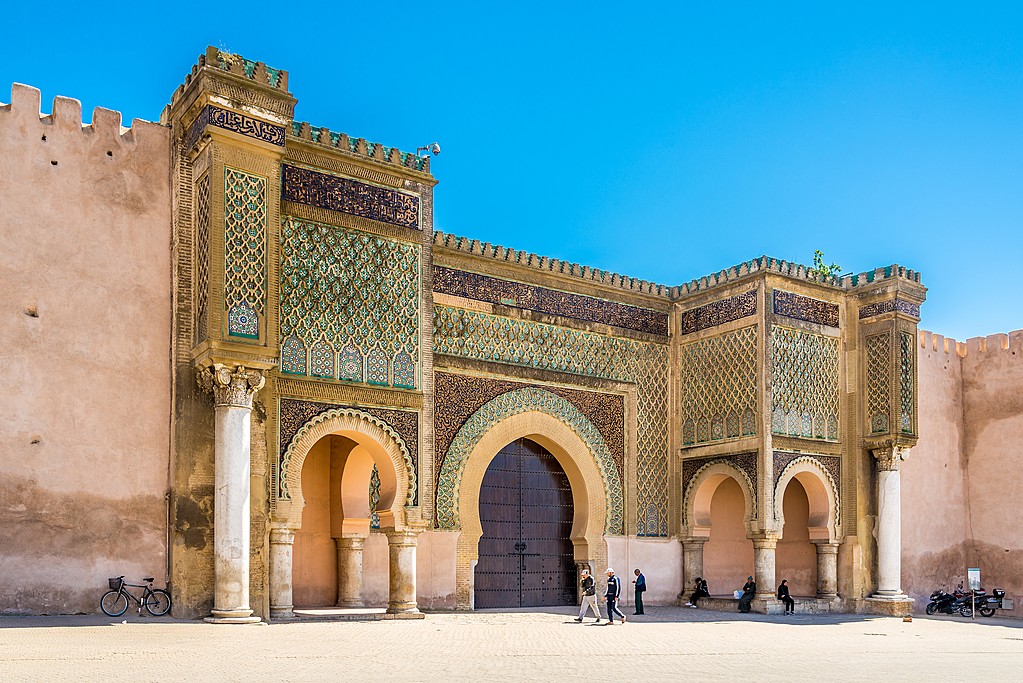
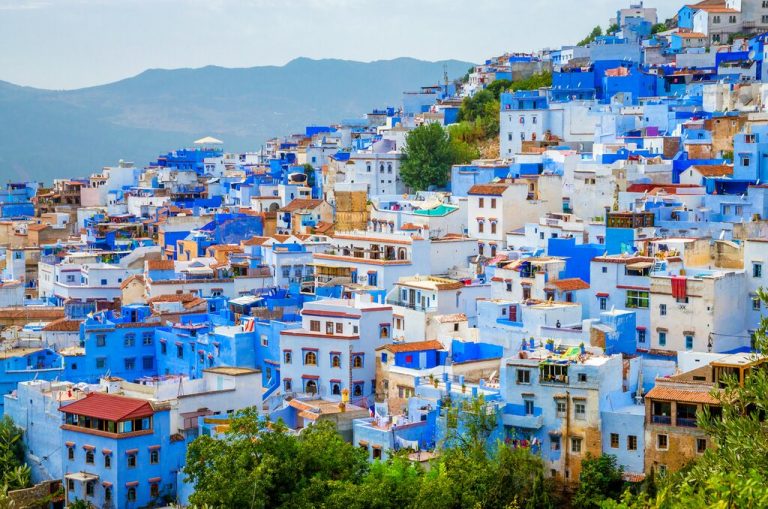
The historic corridor south: Volubilis' mosaics and storks, Meknes' triumphal gate — then Fes by evening, the world's most medieval city humming behind your riad's studded door, tomorrow's full day already whispering through the walls.
Day 5 Fes, guided
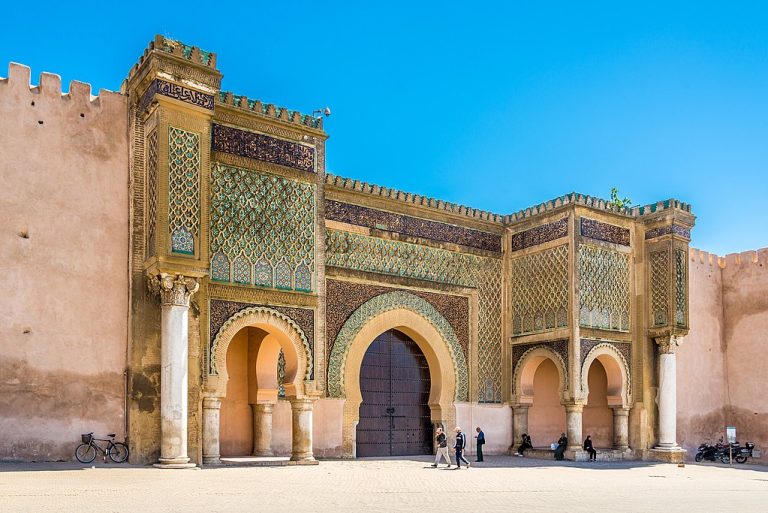
Fes guided end to end: Bab Boujeloud to the carved madrasas, the ancient university's doorways, the tannery terraces with their mint-sprig ritual, the artisan rows where crafts never became souvenirs. The world's largest car-free city converted from maze to map in one well-led day; rooftop evening to file it.
Day 6 Camel trek to the Sahara camp
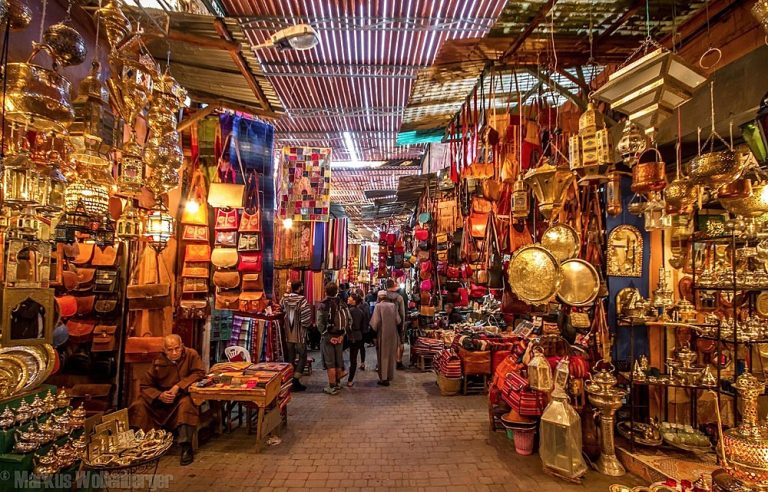
The crossing to the sand: the Middle Atlas cedars, Midelt's plain, the Ziz gorges' palm river — and at Merzouga the golden-hour camels into the Erg Chebbi. Camp night: ensuite tents, lantern-lit dinner, drums at the fire, and a sky that permanently resets your definition of 'stars'.

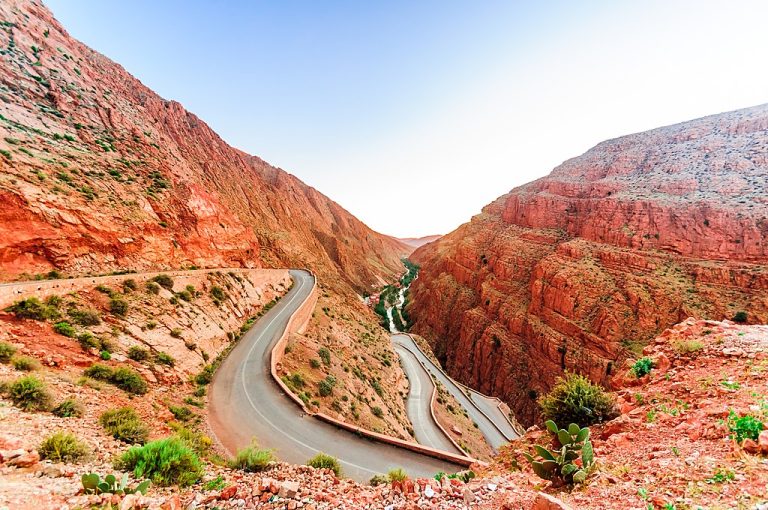
Day 7 Todra Gorge — the Dadès
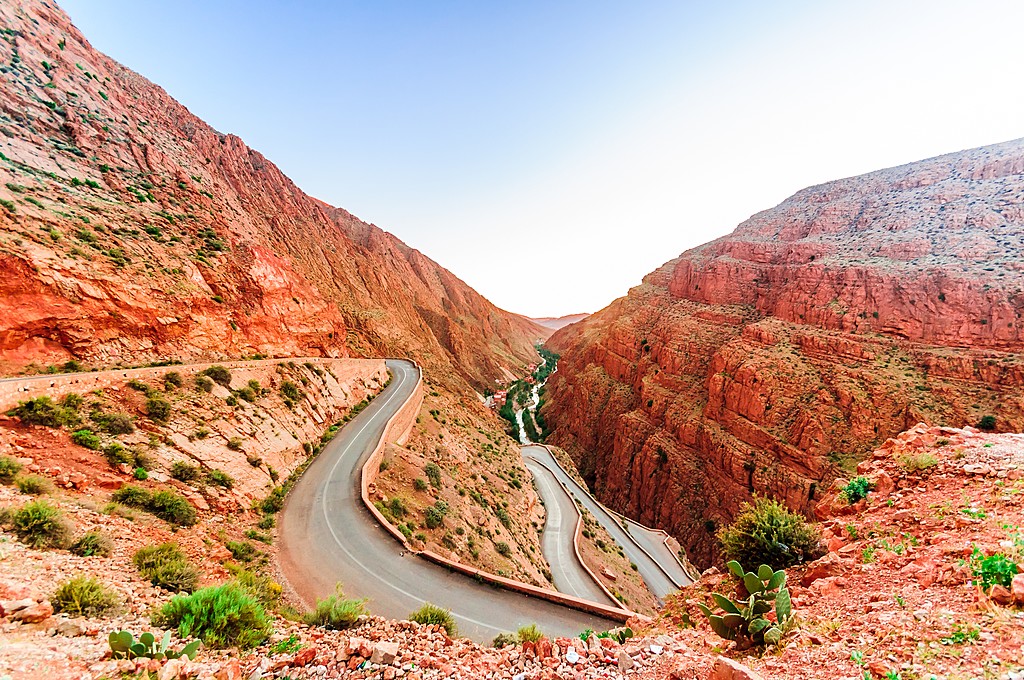
Westward at desert pace: sunrise from the crest for the early risers, the Todra Gorge's canyon-floor walk between sheer walls, and the Dadès valley's fortress parade to a kasbah-hotel night above the river, the rock formations doing their sunset act outside the window.
Day 8 A day in the Valley of Roses
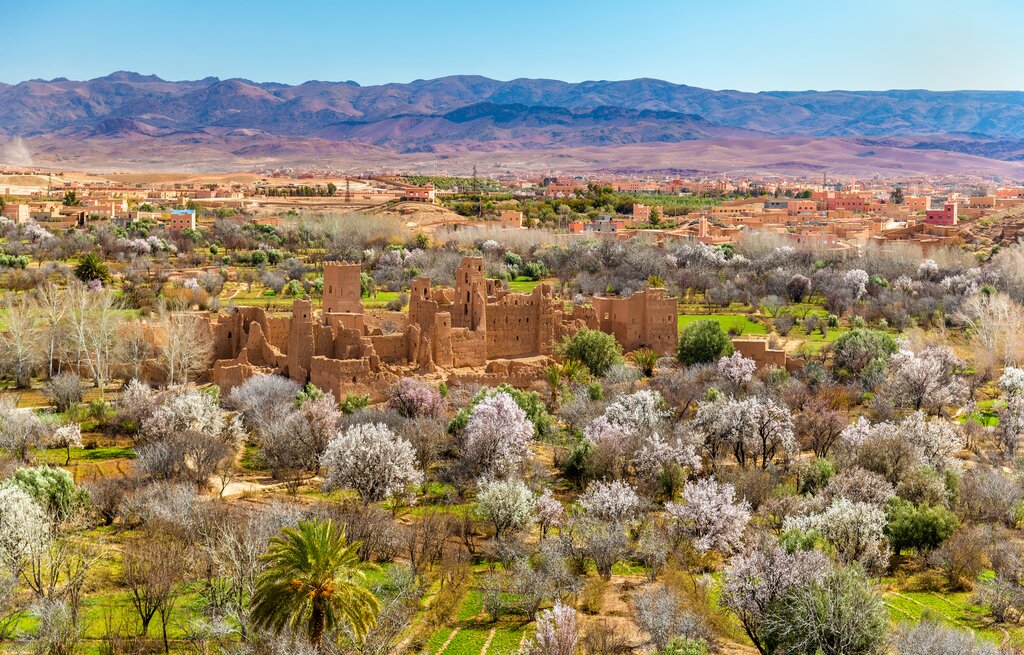
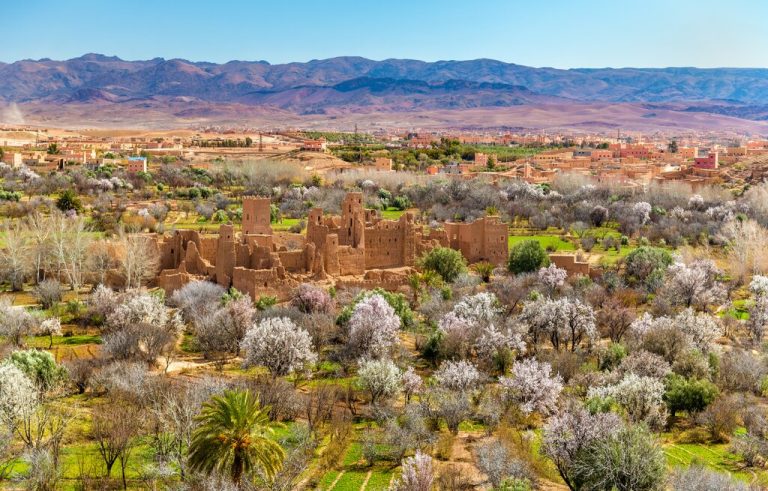
The soft day the middle deserves: the Valley of Roses around Kalaat M'Gouna — distilleries, rose-water stalls, pink fields if your dates land in the late-April bloom — and Skoura's million-palm oasis, where kasbah Amerhidil rises from the green like a mirage with paperwork. Idle afternoon by design.
Day 9 To Marrakech via Aït Ben Haddou
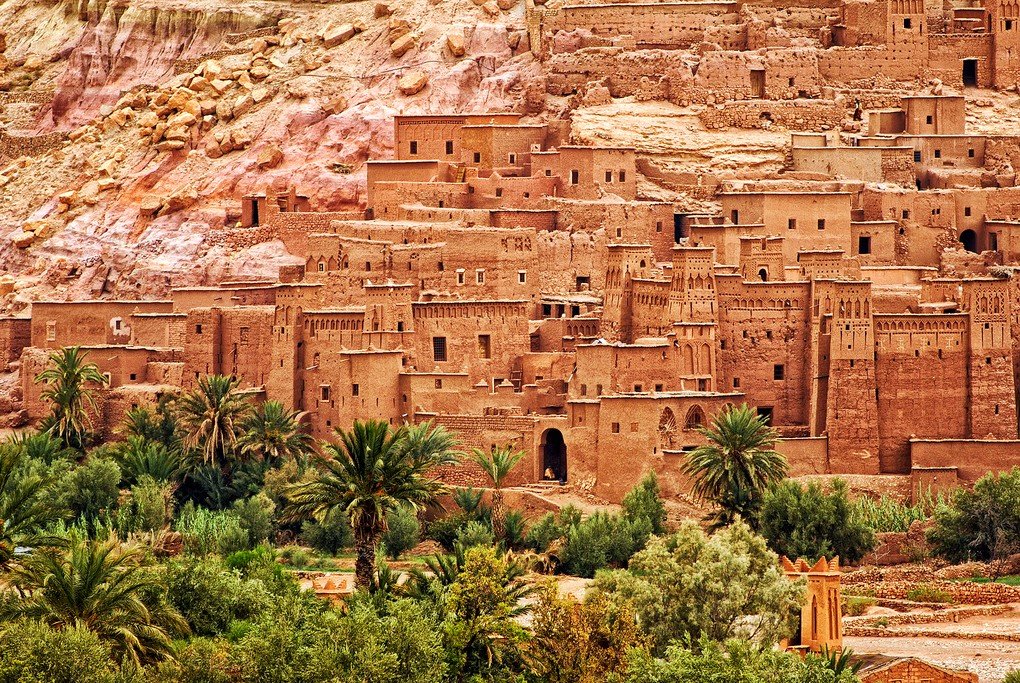
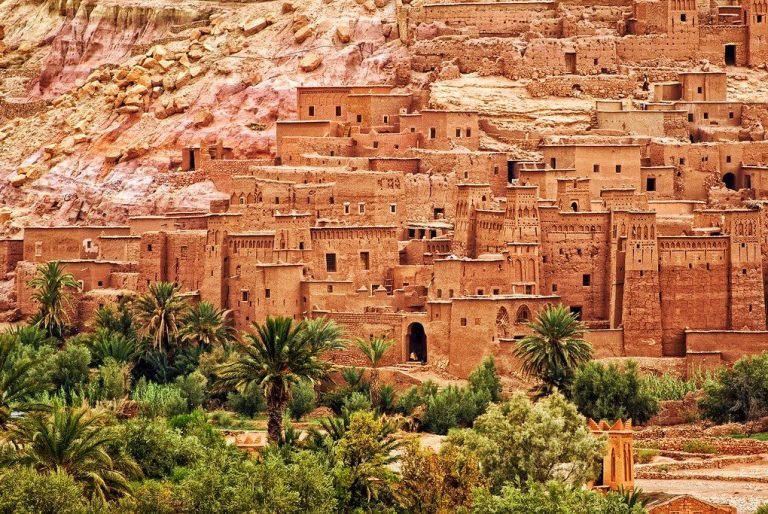
To Marrakech via the classics: Ouarzazate's studios in passing, Aït Ben Haddou climbed to its granary viewpoint in strong morning light, and the Tizi n'Tichka's mint-tea switchbacks delivering you to the Red City's evening hum. Jemaa el-Fna makes the introductions.
Day 10 Marrakech, the grand tour
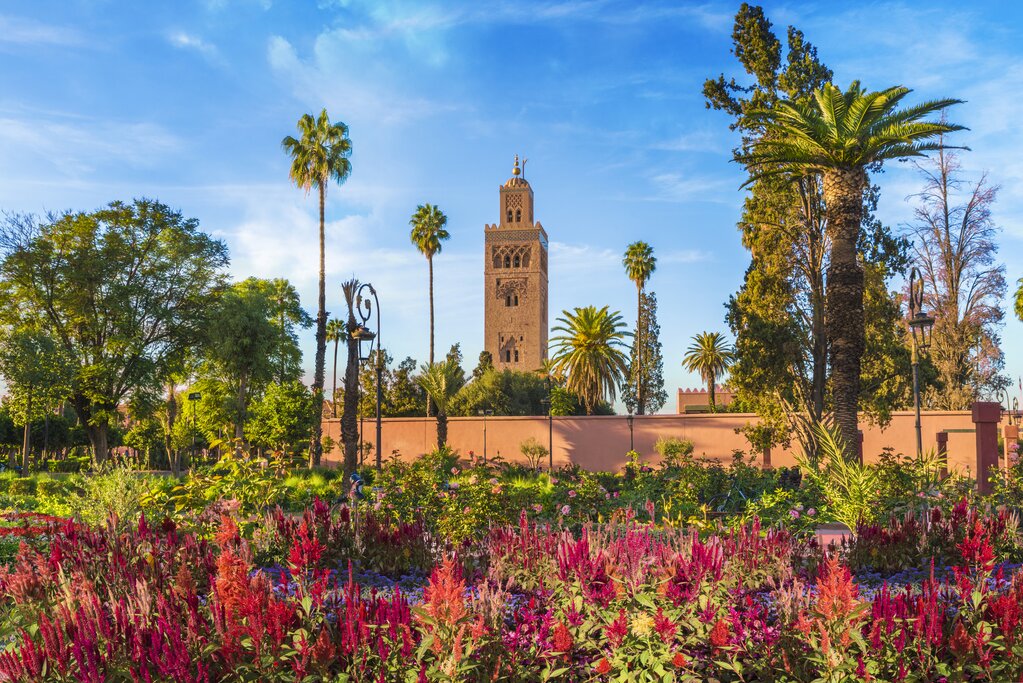
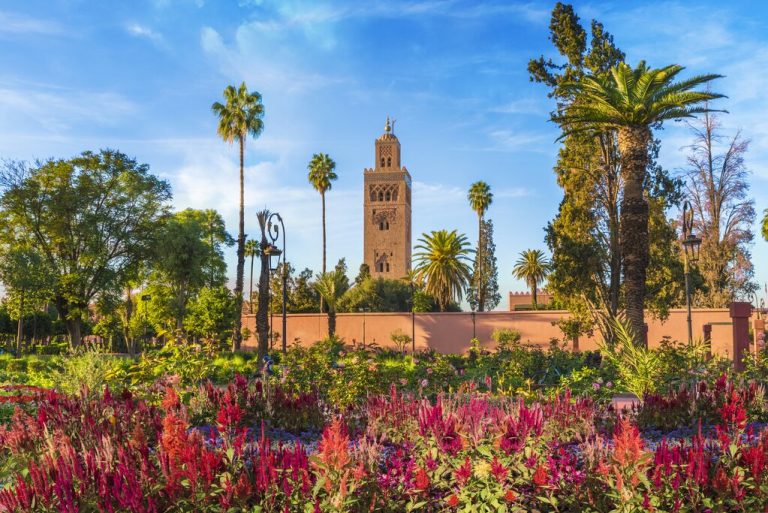
Marrakech, the grand tour: Bahia, the Saadian Tombs, the Koutoubia gardens, souks decoded with a licensed guide until browsing becomes sport. Then early to bed without apology — the mountain starts counting at dawn, and it counts in metres.
Day 11 Imlil — Toubkal refuge
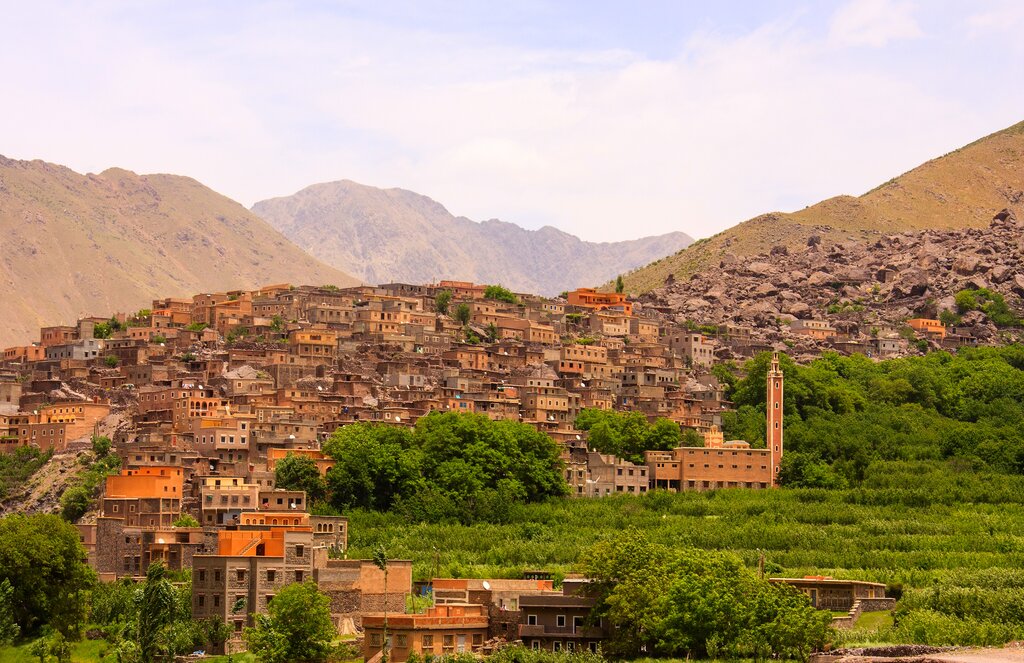
The ascent begins: to Imlil at 1,740 m, then on foot with mountain guides and mule support past Aroumd's terraces and the pilgrim shrine at Sidi Chamharouch to the Toubkal refuge at 3,207 m. Dinner early, kit checked, sleep earlier — the summit bell rings while the stars are still working.
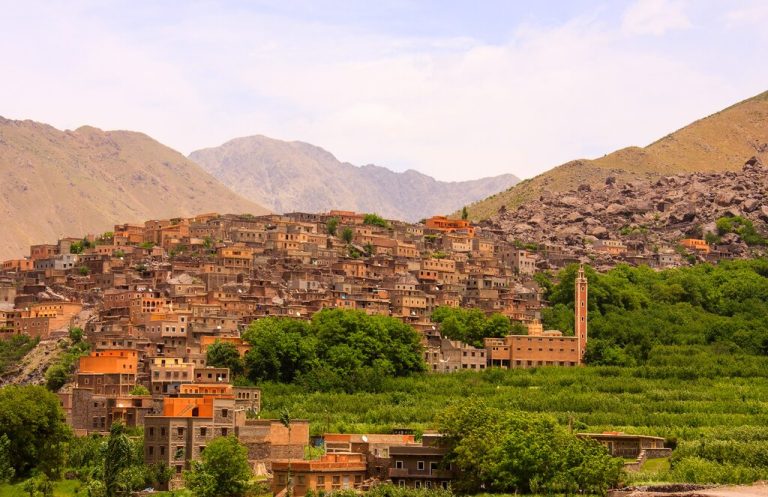
Day 12 Toubkal summit — return to Marrakech
Summit day: headlamps up the scree in the dark, breath rationed and rewarded, the ridge at first light — and North Africa at your feet from 4,167 metres, the Atlas rippling toward the Sahara's haze. Down to Imlil by mid-afternoon, back to Marrakech by evening, legs eloquent and certificate earned.
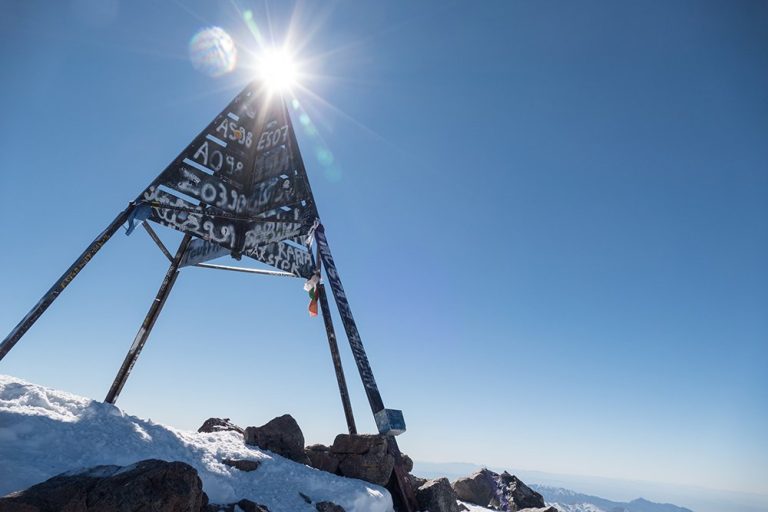
Day 13 Marrakech — Essaouira
Recovery by design: the easy argan road west — cooperative stop for the real oil — to Essaouira, where the trade winds applaud and the sardines are already grilling at the port. Sea level has never felt so thoroughly earned; the ramparts walk before dinner confirms it.
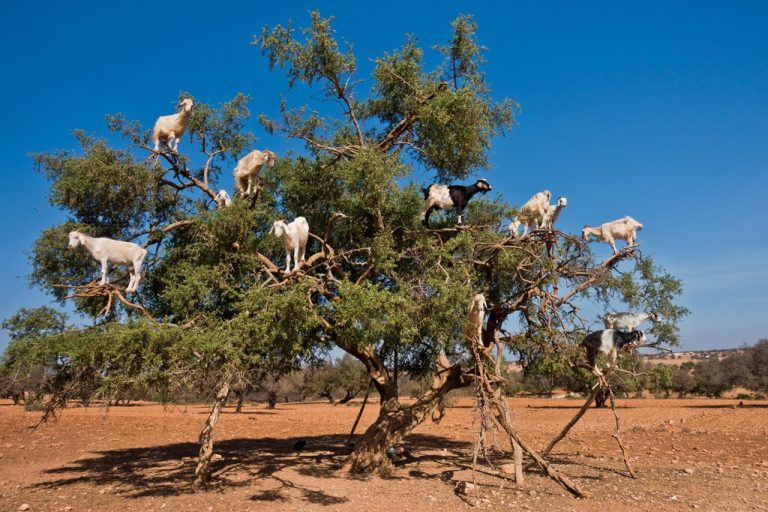
Day 14 Essaouira, free day
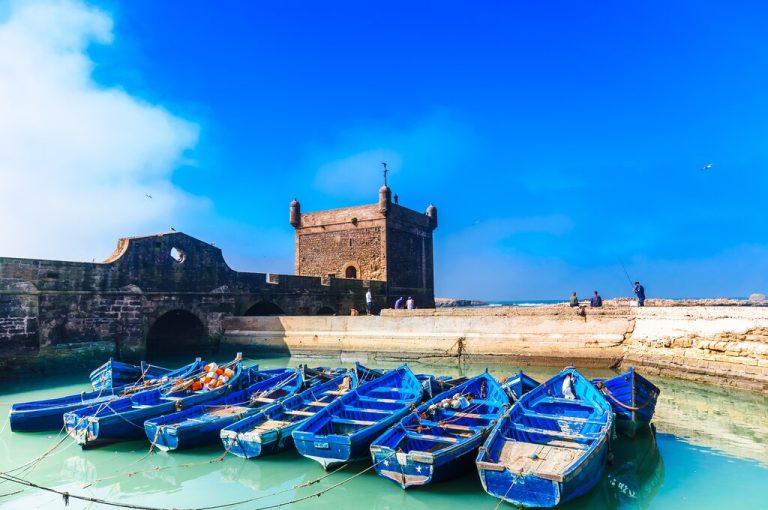
Essaouira free: the flat gallery-lined medina, the ramparts café circuit, the beach's long southern curve, a horse ride for those whose legs vote yes — or absolutely nothing, performed to a high standard. The summit photograph may be shown to strangers without shame.
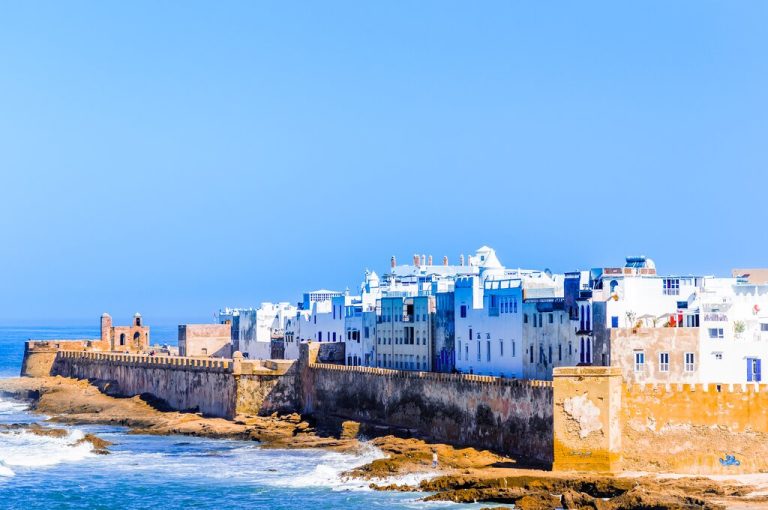
Day 15 Casablanca and departure
The coast road to Casablanca and departure: fifteen days holding cities, waterfalls, dunes, roses, one true summit and a sea — the full alternation of Morocco's urban and wild, closed in the city where it began.
The summit requires moderate mountain fitness and works May–October in normal conditions (winter ascents are alpine undertakings — ask us). The rose bloom peaks late April–May at Kalaat M'Gouna. Travel insurance covering trekking to 4,200 m is required for the Toubkal leg.
Included in your tour
- Private air-conditioned 4×4 or minivan with English/French-speaking driver-guide — 15 days
- Pickup at Casablanca airport or your hotel
- Night 1: Rabat riad — half-board
- Nights 2–3: Chefchaouen riad (2 nights) — half-board
- Nights 4–5: Fes riad (2 nights) — half-board
- Night 6: luxury ensuite desert camp — half-board
- Night 7: kasbah hotel, Dades Gorges — half-board
- Night 8: kasbah hotel, Skoura — half-board
- Nights 9–10: Marrakech riad (2 nights) — half-board
- Night 11: mountain lodge, Toubkal — half-board
- Night 12: Marrakech riad — half-board
- Nights 13–14: Essaouira riad (2 nights) — half-board
- Guided visit of Fes with a licensed local guide (Day 5)
- Guided visit of Marrakech with a licensed local guide (Day 10)
- Guided visit of Chefchaouen with a licensed local guide (Day 2)
- Guided visit of Rabat with a licensed local guide (Day 2)
- Guided visit of the Aït Ben Haddou ksar (UNESCO)
- Camel trek in the dunes
- Drop-off at your Casablanca hotel or at the airport
Not included
- International flights
- Lunches and beverages
- Entrance fees to monuments and historical sites (optional — pay directly)
- Tips for guide and driver
- Personal expenses
- Travel insurance (recommended)
Explore more
Questions travellers ask
How much does Morocco Cities & Nature Tour – 15 Days: Chefchaouen to the Sahara cost?+
From €2250 per person, per person. The price includes private air-conditioned 4×4 or minivan with english/french-speaking driver-guide — 15 days, pickup at casablanca airport or your hotel, night 1: rabat riad — half-board. You receive a written itemised quote before paying anything — no hidden fees.
How long is this tour and when does it depart?+
15 Days, departing on the dates you choose — there is no fixed schedule, because every departure is arranged for you alone.
Is this a group tour or private?+
Fully private: your own vehicle, driver and licensed guide, never seat-in-coach and never mixed with other travellers. The daily pace flexes around you.
Where is the desert in Morocco?+
South and east of the Atlas mountains. The named destinations, in order of distance from Marrakech: the Agafay stone desert 45 minutes away (no sand dunes), the Zagora dunes down the Draa valley at 360 km, Erg Chigaga beyond M'Hamid where the tarmac ends, and the great Erg Chebbi dune sea at Merzouga, 560 km out — the Sahara of the photographs.
How much of Morocco is desert?+
Broadly, everything south and east of the Atlas watershed is arid or Saharan — roughly half the country by area. The photogenic sand seas are actually small pockets of that expanse: Erg Chebbi and Erg Chigaga are each a day's drive apart, islands of dunes in a vast landscape of stone, oases and kasbah valleys.
What should I wear on a Morocco desert tour?+
Layers, always: desert days can hit 30°C while nights drop near freezing outside summer. The working formula is light long sleeves and trousers for sun and camels, a warm fleece or jacket for the camp evening, closed shoes for sand and stones, sunglasses, and a scarf (a cheche) — bought in any souk for a few dirhams — for sun, wind and the photograph. Luggage stays in the vehicle; you carry a small overnight bag to the camp.
How far is the Sahara desert from Marrakech?+
The honest ladder: the Agafay stone desert is 45 minutes away (no sand dunes, but real desert scenery); the first true Sahara dunes at Zagora are 360 km — about 6 hours over the Tizi n'Tichka; the great Erg Chebbi dunes at Merzouga are 560 km — 8 to 9 hours, which is why serious itineraries take 3–4 days. There is no Sahara 'day trip' from Marrakech worth the name — anyone selling one is selling Agafay.
More answers in the “The desert experience” chapter of our Travel FAQ →
Itinerary and prices last updated October 2026.


