★★★★★ Rated 4.5/5 — 204 Google reviews · 576 reviews · 5.0/5 on Tripadvisor · Written by a licensed Marrakech tour operator, on the road since 2011
Ask Marrakech regulars for the city’s most beautiful interior and many will skip the famous palaces entirely: Dar el Bacha, the 1910 residence of Pasha Thami El Glaoui, now the Musée des Confluences — and home to a coffee house people cross the city for.
The palace
The Glaoui — the “Lord of the Atlas” who ruled southern Morocco for the French protectorate — built to intimidate through beauty: courtyards of orange trees, zellij in colour combinations you will not see elsewhere, painted cedar ceilings, and marble that photographs like an architecture textbook. Its scale is intimate compared with the Bahia, which is precisely its charm — an hour covers it unhurried.
The museum
The Confluences programme rotates exhibitions on Moroccan and cross-cultural craft — worth taking as it comes; the building outranks whatever hangs in it.
The coffee ritual
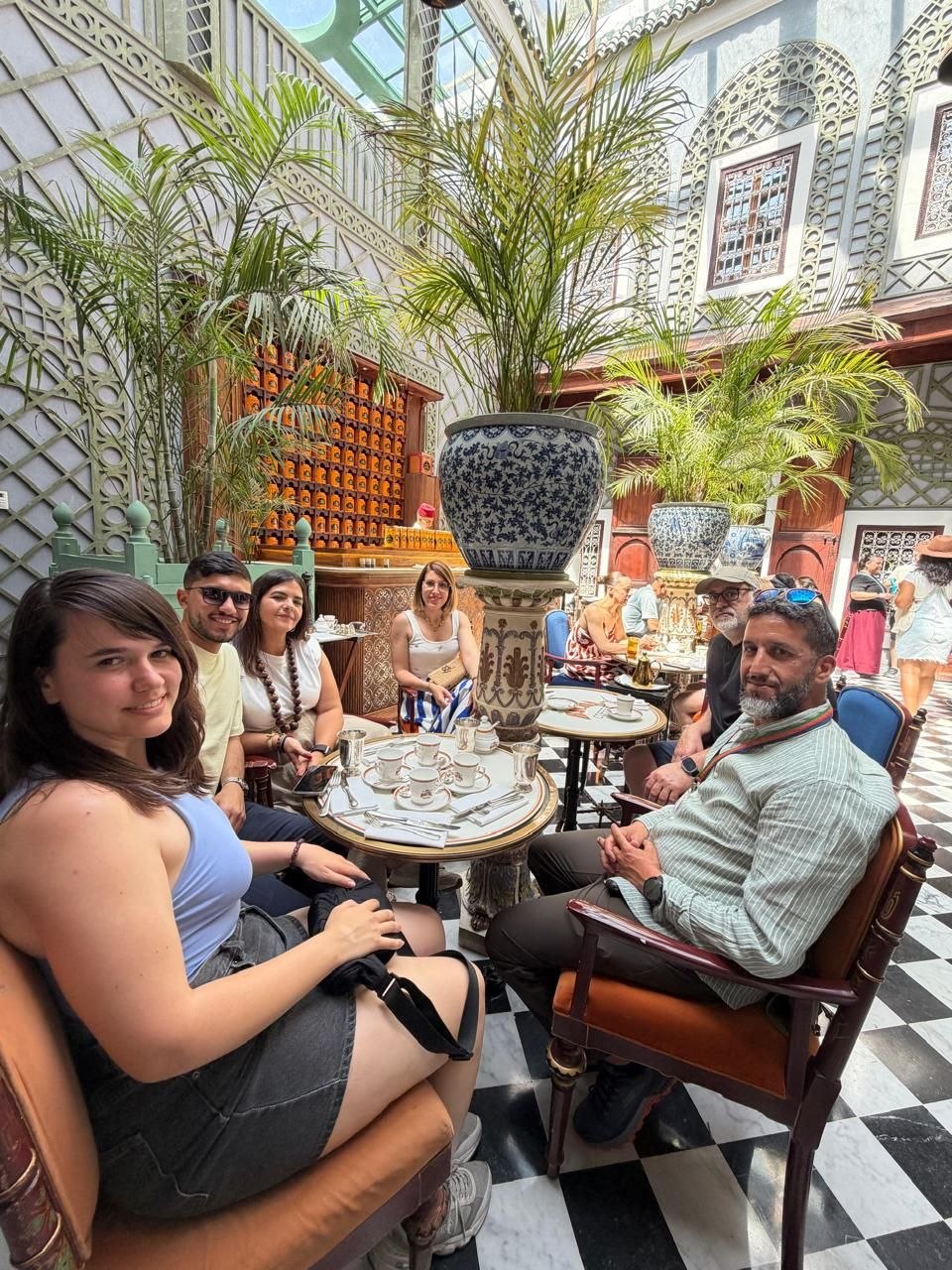
Inside sits an outpost of a famous heritage coffee house: single-origin pots served with ceremony, gold-rimmed cups, and pastries in a courtyard the Pasha kept for himself. Queues form by mid-morning — go at opening or accept the wait as part of the theatre. It is Marrakech’s best coffee moment, full stop.
The palace of the Pacha
Dar el Bacha — literally “the Pacha’s house” — was the residence of Thami El Glaoui, the Pacha of Marrakech from 1912 to 1956 and one of the most powerful, most controversial figures of the French protectorate era. The palace he kept in the medina was built to impress visiting dignitaries, and it still does: courtyards of zellige tilework in improbable colour combinations, carved cedar ceilings, painted doors, and an orange-tree garden arranged around a marble fountain. After decades closed to the public, it reopened in 2017 as the Museum of Confluences, staging exhibitions on the cultures that meet in Morocco — and housing the famous Bacha Coffee house, where arabica is served in the salon the Pacha once used for guests.
Visiting, practically
Opening days, tickets and the best time to beat the coffee-house queue are on our Dar el Bacha visitor page — and if you are structuring a full day in the medina, any of our private Marrakech days can build the palace in with a licensed guide who tells the Glaoui story properly, unvarnished.
Fitting it in
Dar el Bacha anchors the medina’s north-west quarter — pair it with the Secret Garden and the medersa for the city’s finest interiors morning, exactly how our guides sequence it on a guided Marrakech day. History context comes with the licence: this palace is where our guides’ Glaoui stories finally get their setting. More city planning in the Marrakech FAQ.
Dar el Bacha is an easy petit-taxi ride from Jemaa el-Fna — Marrakech taxi tips covers fair fares — and if its patterned interiors catch you, the Hand of Fatima explains the region’s most repeated motif.
Everything on this page can be woven into a private itinerary — start from Morocco city breaks or book the 7-day Imperial Cities circuit, and we shape the rest around you.
Youssef El Amrani — Youssef grew up a few streets from Bab Doukkala and has watched Marrakech reinvent itself several times over without ever quite changing. He covers the city for our guides — the palaces and museums, yes, but mostly the practical texture of it: which gate to enter the souks by, when Jemaa el-Fna is worth your evening, how much a taxi should actually cost. His rule for every piece he writes: if a reader follows it on foot, it has to work.