Five fingers, an open palm, often an eye at the centre: the khamsa — Hand of Fatima — is Morocco’s most beloved protective symbol, hanging over doorways, swinging from rear-view mirrors and filling entire souk stalls. Here is what it means and how to buy one well.
What it protects against
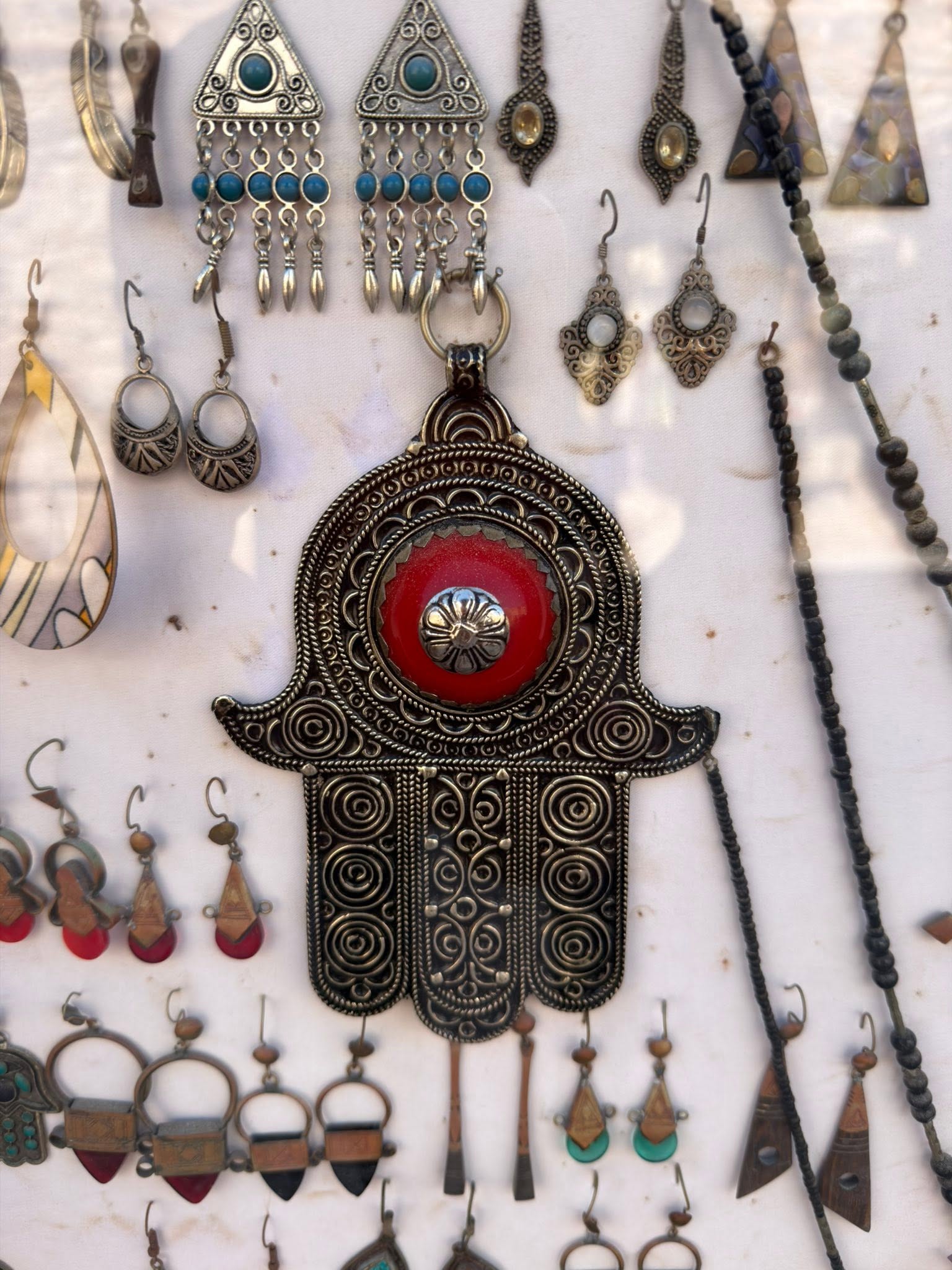
The khamsa (Arabic for “five”) wards off the evil eye — envy’s glance — a belief shared across the Mediterranean for millennia. In Islamic tradition the hand is linked to Fatima, daughter of the Prophet; in Jewish tradition the same symbol is the Hand of Miriam — one emblem, two names, both at home in Morocco’s layered history (that story here).
Reading the variations
Fingers up or down (both protective; down is often read as blessing), an eye or a fish or calligraphy at the palm’s centre, silver for tradition — Amazigh silverwork made the khamsa a jewellery staple centuries ago — or enamel colour for the modern souk. Old sahraoui and Berber pieces show wear and hand-cut detail; tourist-grade pieces are stamped and identical. Both are legitimate; only the price should differ.
Buying one without regret
For meaningful pieces, the silver souks of Tiznit and the antique dealers of Marrakech and Fes reward patience; ask whether a piece is old or new and enjoy the storytelling either way (haggling manners here). A khamsa is one of the few souvenirs that carries its meaning openly — which makes it the classic gift that survives the flight home.
Spotting it in the wild
Door knockers across every medina are khamsa-shaped — protection cast in brass at the threshold, some worn smooth by centuries of hands. It makes a fine walking game through Fes or Chefchaouen, and a better one with a guide who knows which doors are oldest. Symbol questions welcome in the culture FAQ.
Zineb Lahlou — Zineb writes about Moroccan traditions, crafts and celebrations. She grew up between Fes and Casablanca in a family where every wedding involved three cities' worth of relatives, which turned out to be excellent training for explaining Moroccan social life to visitors. Her beat runs from zellij workshops to Gnaoua music to the etiquette of a hammam.