★★★★★ Rated 4.5/5 — 204 Google reviews · 576 reviews · 5.0/5 on Tripadvisor · Written by a licensed Marrakech tour operator, on the road since 2011
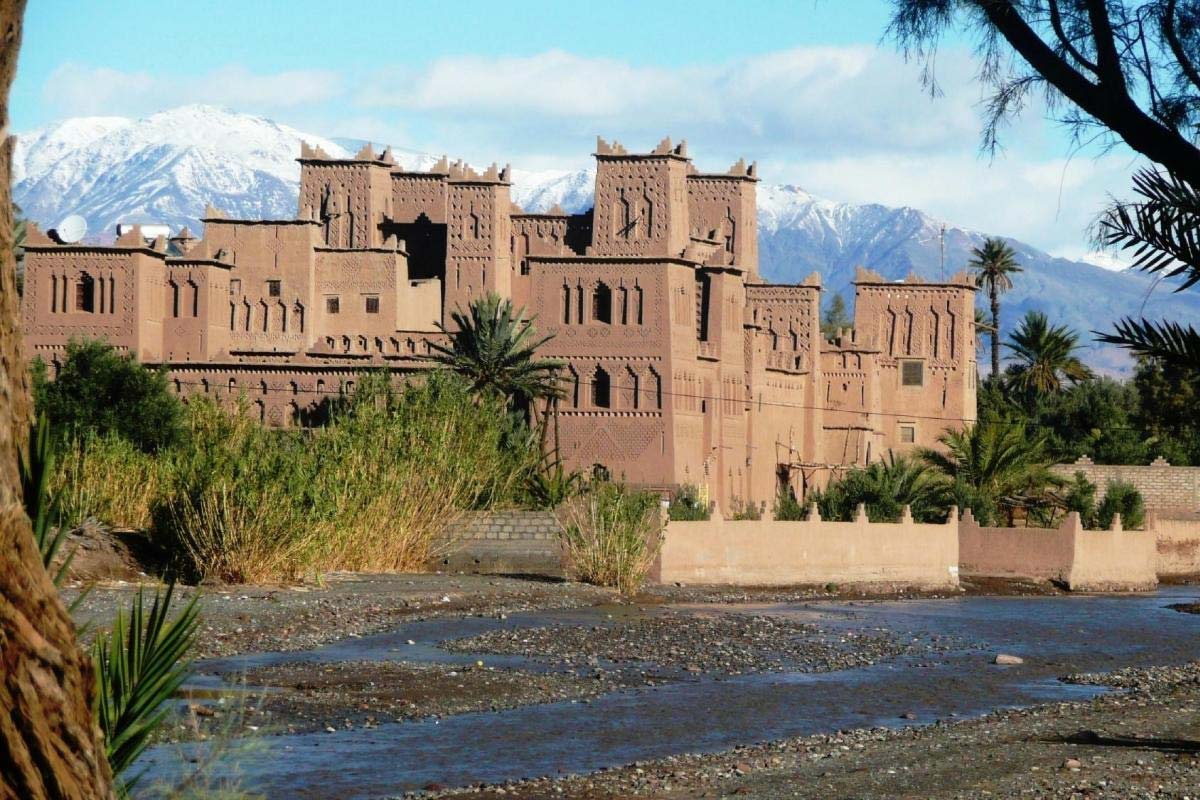
Kasbah Amridil is the one the connoisseurs pick: a 17th-century fortified residence in the Skoura palm oasis, so emblematic it appeared on Morocco’s old 50-dirham note, and restored just enough to explain itself without losing its dust. If you want to understand what a kasbah actually was, this is the classroom.
Why Amridil over the famous names
Aït Ben Haddou is a village and a spectacle; Amridil is a single great household you can read room by room — olive press, bread ovens, water systems, the caïd’s reception rooms, the logic of defence and hospitality in one building. Visits come with a family-linked guardian’s tour that is genuinely informative, and crowds are a fraction of the headline sites’.
The oasis around it
Skoura itself is the real secret: a palm grove the size of a town, threaded with walking paths between gardens, khettara channels and a scatter of other kasbahs in every state from restored to romantically melting. An hour’s walk with a local guide — pomegranates, almond plots, donkey traffic — is rural Morocco at its most intact (our oasis guide is here).
Practicalities
Skoura sits 40 minutes east of Ouarzazate on the Dades road — the natural first-or-last night of any gorges-and-desert loop. Entry to Amridil is modest and paid on site; allow an hour inside plus the oasis walk. Late afternoon light turns the walls copper.
Building it in
Amridil is a scheduled stop on our kasbah-country stages — the 4-day desert adventure (from €600 per person) passes its gates, and the slower Ouarzazate-to-Fes route gives Skoura the overnight it merits. Private departures only — which is what makes the extra oasis hour possible. More in the Ouarzazate FAQ.
Everything on this page can be woven into a private itinerary — start from Morocco desert tours, and we shape the rest around you.
Fatima Zahra Ouazzani — Fatima Zahra covers the desert south — Merzouga, Zagora, the Draa Valley and the oasis routes between them. Her writing keeps returning to the people of the region: the families who run the camps, the date harvest in autumn, the way a khettara irrigation channel organises an entire palm grove. She is our reference for travellers who want the Sahara with its context still attached.