★★★★★ Rated 4.5/5 — 204 Google reviews · 576 reviews · 5.0/5 on Tripadvisor · Written by a licensed Marrakech tour operator, on the road since 2011
Short answer: yes — Casablanca is a big, busy, working metropolis, and it asks of you exactly what Lyon or Manchester would: ordinary city sense, nothing more.
What safety actually looks like here
Violent incidents involving tourists are rare. What exists is big-city friction: pickpocketing in crowded spots, taxi drivers who forget the meter, and the odd overeager guide around the port. All three dissolve with the basics — bags zipped, prices agreed before the ride, a polite no thank you delivered while walking.
Neighbourhood notes
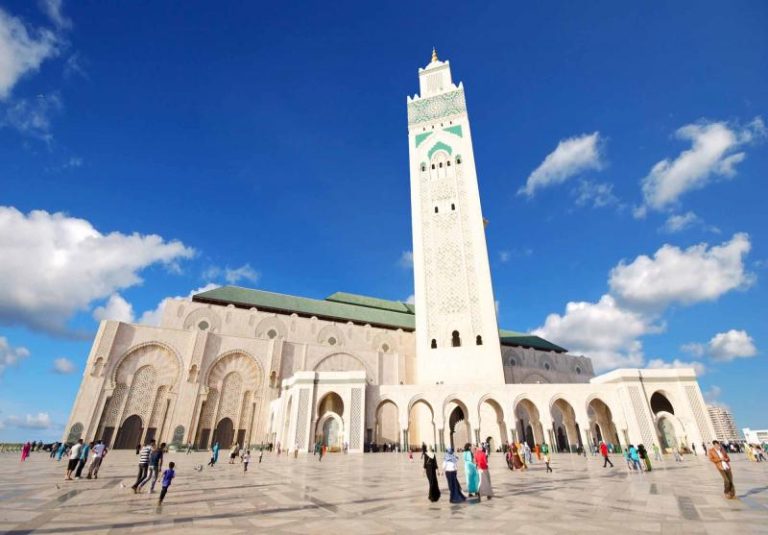
The Hassan II Mosque esplanade, the Corniche, the Art Deco centre and the Habous quarter are comfortable at any daylight hour and fine in the evening. Like every port city, some districts are simply uninteresting rather than unsafe — with a driver, the question never arises.
For women and solo travellers
Casablanca is Morocco’s most cosmopolitan city; local women fill its cafés, offices and trams. Solo visitors report less attention here than in the tourist medinas. Our solo travel FAQ covers the details honestly.
The sensible way to visit
Most travellers give Casablanca half a day — the mosque, a seafood lunch, the drive along the Corniche — as the opening chapter of a longer route. That is precisely how our 7-day grand tour and 9-day Casablanca-to-Marrakech treat it: arrive, see the great mosque properly, and let the road unfold from there.
Two useful follow-ons: common tourist scams in Morocco — most are Marrakech tricks, but the taxi chapter applies here too — and our petit-taxi tips for meters and fair fares.
Everything on this page can be woven into a private itinerary — start from Morocco city breaks or book the 7-day Imperial Cities circuit, and we shape the rest around you.
Nadia Berrada — Nadia's beat is the imperial cities — Rabat and Fes above all. She came to travel writing from a family of Rbati craftsmen, which shows in what she notices: zellij patterns, cedar ceilings, the difference between a restored fondouk and a rebuilt one. Her guides lean practical — opening hours that are actually current, quarters worth staying in, and the train timings that make a two-city itinerary painless.