Morocco Tour 10 Days: Imperial Cities & Sahara Desert Grand Tour
- Private vehicle & driver — Pick-up at your riad, pace set by you
- Local licensed guide — Licensed guide nº2898 · since 2011
- Book on WhatsApp — Reply within 1 hour · no payment at this stage
- All four imperial cities — Rabat, Fes, Meknes (en route) and Marrakech
- Chefchaouen overnight on the northern leg
- Guided days in both Fes and Marrakech


The 10-day Imperial Cities & Sahara grand tour is a private loop from Casablanca costing from €1500 per person, with every hotel night, your own vehicle, driver and licensed city guides included — never a group. The route holds all four imperial capitals in one trip: Rabat on day two, Fes with a full guided day, and Marrakech guided near the end, with Meknes and Roman Volubilis threaded between. In the middle sits the Sahara chapter — the Atlas crossing, a night in an elegant Bedouin-style tent at Erg Chebbi, then the Todra Gorge, the Dades and Aït Ben Haddou on the kasbah road. Nine nights split between riads, kasbah hotels and the desert camp, all half-board. Closing the circle in Casablanca keeps flights simple: one airport in, the same airport out. A written day-by-day quote, hotels named, arrives within the hour on WhatsApp.
| Duration | 10 Days |
| Price | From €1500 per person — car, driver and accommodation included |
| Departures | Your dates — every departure is private, never a shared group |
| Languages | English- and French-speaking driver-guides; licensed city guides where included |
| Booking | WhatsApp +212 661 454 738 — written quote within 1 hour, no payment at this stage |
Ten days that lock together Morocco’s two great itineraries — the imperial cities and the Sahara — into one loop from Casablanca. Rabat and blue Chefchaouen open it, Fes gets its full guided day, then the route drops south to the Erg Chebbi for a camp night before riding the kasbah road through Todra, the Dadès and Aït Ben Haddou to a guided Marrakech and home.
The balance is the design: four royal cities, one desert night, and no day wasted on repositioning. If you have ten days and want to see why Morocco has four capitals and one Sahara, this is the cleanest possible answer.
Private vehicle and driver-guide throughout; licensed guides in Fes and Marrakech; ensuite camp at the erg; riads in the medinas.
This is our most requested route: the four imperial cities and the Sahara in ten days, from €1500 per person all-in. Casablanca to Rabat and the blue city of Chefchaouen, Volubilis and Meknes on the way to Fes, a guided day in the Fes medina, then over the Middle Atlas to the dunes — a camel at dusk, a night in a desert camp — before the Todra Gorge, the Dades, Ouarzazate and Aït Ben Haddou, the Tichka pass, and a guided finale in Marrakech. The loop closes back in Casablanca, so one airport serves both ends.
People searching for a 10-day Morocco grand tour or a 10-day tour from Casablanca usually end up choosing between cities-only and desert-only itineraries. This route refuses the choice: every capital and the erg, in one arc, without a single flight or a repeated road.
Private departure on your dates with the same driver throughout and licensed local guides in each city. Send your dates on WhatsApp and the full quote — day by day, hotels named — comes back within the hour.
Who this tour is for: the definitive first grand tour — all four imperial cities and the Sahara in ten days, one airport. For the same route staged in luxury (riads reserved, balloon at dawn), take the Luxury Morocco Tour – 10 Days; entering via Spain, the Morocco Itinerary 10 Days runs Tangier to Marrakech instead of a loop.
Searching for the best Morocco itinerary 10 days can offer, or a 10-day Morocco tour from Casablanca specifically? This is that route: the loop starts and ends at Casablanca airport, covers what to see in Morocco in 10 days — all four imperial capitals, Chefchaouen and the Erg Chebbi — and runs as a complete private package, hotels named in the written quote.
The quiet superpower of this loop is comparison: it is one of the few routes that holds all four imperial capitals — Rabat, Meknes, Fes and Marrakech — in a single trip, so you taste how differently each wears the same crown. Around them: Chefchaouen’s blue, Volubilis’s Roman stones, and a night in an elegant Bedouin-style tent at Erg Chebbi. Closing the circle in Casablanca keeps the flights simple — one airport in, same airport out. Marinid Tombs at dusk and an early-morning Chefchaouen are the two timings worth protecting.
- All four imperial cities — Rabat, Fes, Meknes (en route) and Marrakech
- Chefchaouen overnight on the northern leg
- Guided days in both Fes and Marrakech
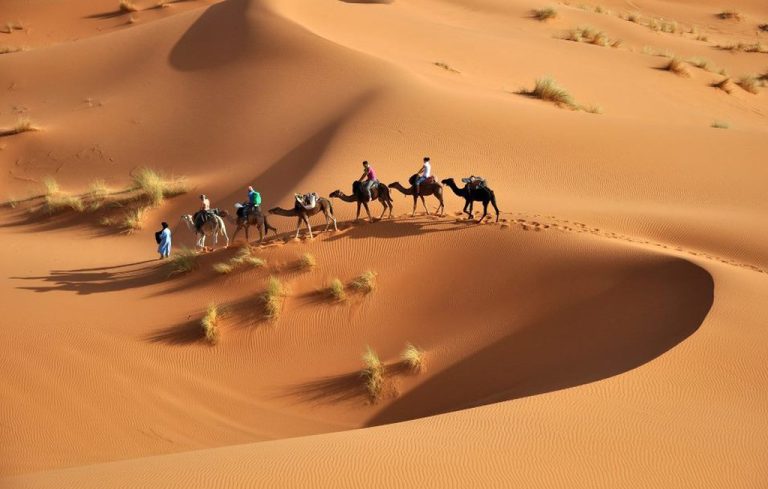
- Erg Chebbi camel trek and ensuite camp night
- Todra, the Dadès and Aït Ben Haddou strung on the return
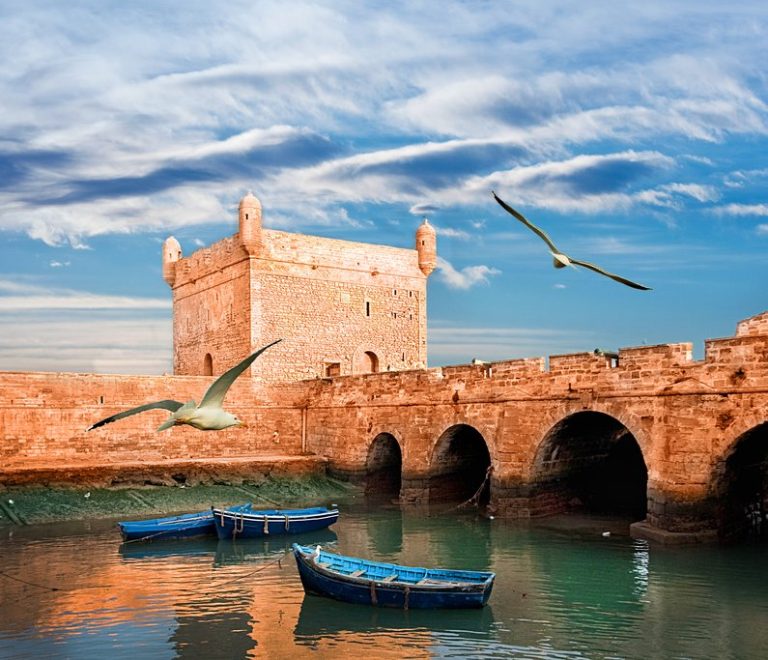
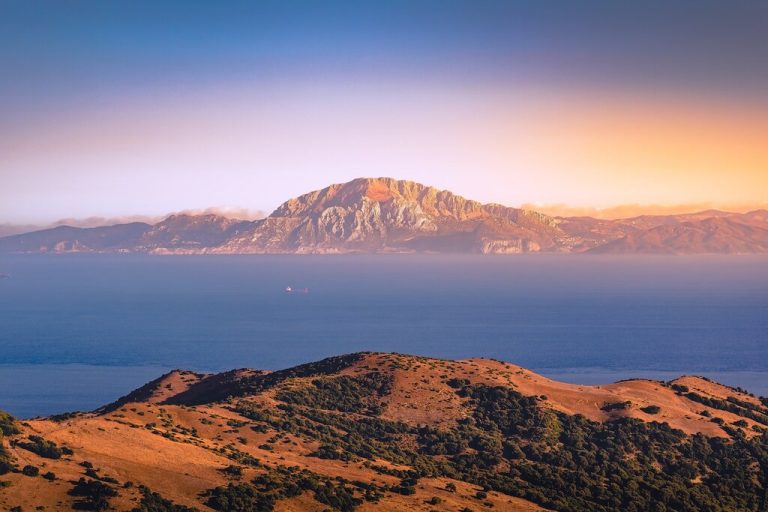
Photos from the tour




Itinerary
Open a day to see the detail: transport, accommodation, meals and activity time.
Day 1 Casablanca arrival
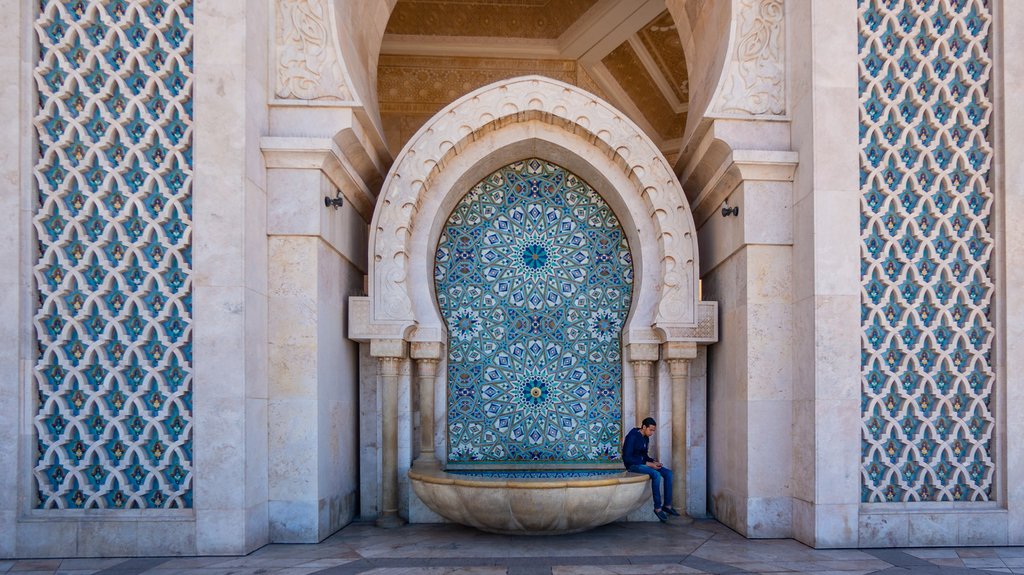
Casablanca first — and one visit that repays the whole stop: the Hassan II Mosque, guided, inside, with the Atlantic moving under the glass floor panels and a minaret you can navigate by. The evening is a soft landing: the Corniche, a seafood dinner, and the trip's map spread mentally over dessert.

Day 2 Rabat, then the blue city
Two cities before dinner: Rabat at midday for the Oudayas kasbah and the Hassan Tower — the calm capital nobody expects to love and everybody does — then the climb into the Rif. Chefchaouen turns on its blue for your arrival; the evening in the lanes is the day's dessert.

Day 3 Volubilis and Meknes to Fes
The blue city at dawn for those who set alarms, then the historic road south: Volubilis' Roman stones and storks, Meknes' imperial gate, and Fes by late afternoon. Behind your riad door, the world's largest car-free city is already murmuring.
Day 4 Fes, guided
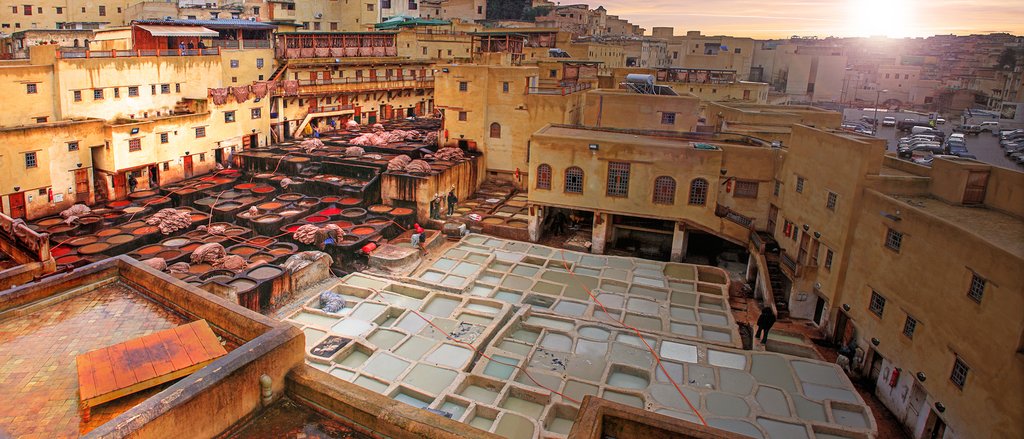
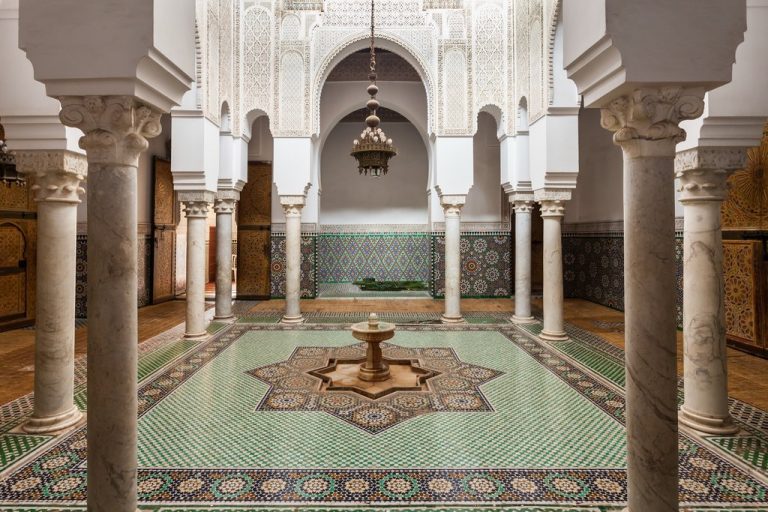
Fes gets its due: a full guided day through Bab Boujeloud, the madrasas' cedar and zellige, the tannery terraces, the artisan rows where crafts never became souvenirs. Ten centuries in eight hours, then a rooftop evening to let them settle.

Day 5 Over the Atlas to the Sahara
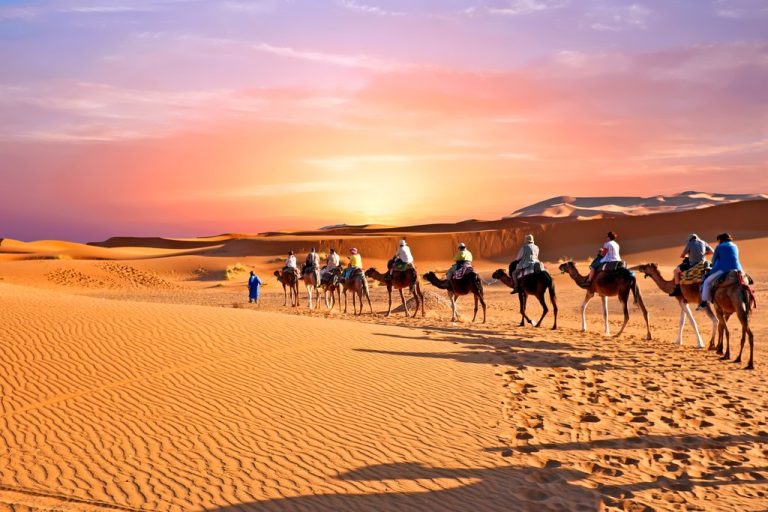
The crossing: Middle Atlas cedars, the Midelt plain, the Ziz palm gorges, and the sand arriving on cue at Merzouga. Camels at golden hour, the hour's sway into the Erg Chebbi, and camp — ensuite tents, dinner under lanterns, drums, and a sky that refuses to be photographed accurately.
Day 6 Oases and the Todra Gorge
Sunrise from the crest, then westward through the oasis belt: Tinghir stacked above its palmery and the Todra Gorge for the walk between 300-metre walls. The afternoon eases along the gorge country to a kasbah-style night, rock faces doing their colour show at dusk.

Day 7 Dades, Ouarzazate and Aït Ben Haddou
The Road of a Thousand Kasbahs earns its name all day: the Dadès fortresses, Ouarzazate's studios and Taourirt kasbah, and the finale at Aït Ben Haddou — the UNESCO ksar climbed lane by lane to the granary while golden hour holds. Night within sight of the walls.

Day 8 The Tichka pass to Marrakech
Over the Tizi n'Tichka — 2,260 m, viewpoints, the ritual mint tea — and down into Marrakech by afternoon. First souk contact at dusk; Jemaa el-Fna, ten minutes from your riad, provides the soundtrack for as long as you let it.
Day 9 Marrakech, guided
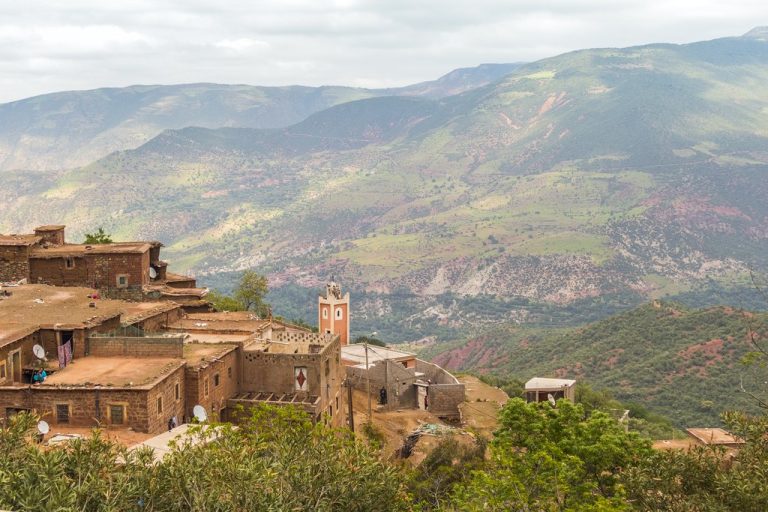
Marrakech unlocked with a licensed guide: Bahia Palace, the Saadian Tombs, the Koutoubia gardens and the souk system decoded. The afternoon offers Majorelle (tickets arranged) or the hammam; the evening offers rooftops. All answers are correct.

Day 10 Return to Casablanca
The motorway north to Casablanca, timed to your flight — with, if the schedule smiles, a last café on the Corniche to close the loop where it opened. Ten days: four capitals, one desert, zero repetition.

Casablanca in, Casablanca out — the loop suits single-airport tickets and closes without repetition. Two longer driving days frame the desert, both on the country's most beautiful roads. October–April is prime; the desert night wants a warm layer year-round.
Included in your tour
- Private air-conditioned 4×4 or minivan with English/French-speaking driver-guide — 10 days
- Pickup at Casablanca airport or your hotel
- Night 1: Casablanca hotel — half-board
- Night 2: Chefchaouen riad — half-board
- Nights 3–4: Fes riad (2 nights) — half-board
- Night 5: luxury ensuite desert camp — half-board
- Night 6: kasbah hotel, Todra Gorges — half-board
- Night 7: kasbah hotel, Ait Ben Haddou — half-board
- Nights 8–9: Marrakech riad (2 nights) — half-board
- Guided visit of Fes with a licensed local guide (Day 4)
- Guided visit of Marrakech with a licensed local guide (Day 9)
- Guided visit inside the Hassan II Mosque, Casablanca
- Guided visit of the Aït Ben Haddou ksar (UNESCO)
- Camel trek in the dunes
- Drop-off at your Casablanca hotel or at the airport
Not included
- International flights
- Lunches and beverages
- Entrance fees to monuments and historical sites (optional — pay directly)
- Tips for guide and driver
- Personal expenses
- Travel insurance (recommended)
Explore more
Desert tours Historical sites Marrakech High Atlas Fes Ouarzazate Casablanca
Questions travellers ask
How much does Morocco Tour 10 Days: Imperial Cities & Sahara Desert Grand Tour cost?+
From €1500 per person, per person. The price includes private air-conditioned 4×4 or minivan with english/french-speaking driver-guide — 10 days, pickup at casablanca airport or your hotel, night 1: casablanca hotel — half-board. You receive a written itemised quote before paying anything — no hidden fees.
How long is this tour and when does it depart?+
10 Days, departing on the dates you choose — there is no fixed schedule, because every departure is arranged for you alone.
Is this a group tour or private?+
Fully private: your own vehicle, driver and licensed guide, never seat-in-coach and never mixed with other travellers. The daily pace flexes around you.
Where is the desert in Morocco?+
South and east of the Atlas mountains. The named destinations, in order of distance from Marrakech: the Agafay stone desert 45 minutes away (no sand dunes), the Zagora dunes down the Draa valley at 360 km, Erg Chigaga beyond M'Hamid where the tarmac ends, and the great Erg Chebbi dune sea at Merzouga, 560 km out — the Sahara of the photographs.
How much of Morocco is desert?+
Broadly, everything south and east of the Atlas watershed is arid or Saharan — roughly half the country by area. The photogenic sand seas are actually small pockets of that expanse: Erg Chebbi and Erg Chigaga are each a day's drive apart, islands of dunes in a vast landscape of stone, oases and kasbah valleys.
What should I wear on a Morocco desert tour?+
Layers, always: desert days can hit 30°C while nights drop near freezing outside summer. The working formula is light long sleeves and trousers for sun and camels, a warm fleece or jacket for the camp evening, closed shoes for sand and stones, sunglasses, and a scarf (a cheche) — bought in any souk for a few dirhams — for sun, wind and the photograph. Luggage stays in the vehicle; you carry a small overnight bag to the camp.
How far is the Sahara desert from Marrakech?+
The honest ladder: the Agafay stone desert is 45 minutes away (no sand dunes, but real desert scenery); the first true Sahara dunes at Zagora are 360 km — about 6 hours over the Tizi n'Tichka; the great Erg Chebbi dunes at Merzouga are 560 km — 8 to 9 hours, which is why serious itineraries take 3–4 days. There is no Sahara 'day trip' from Marrakech worth the name — anyone selling one is selling Agafay.
More answers in the “The desert experience” chapter of our Travel FAQ →
Itinerary and prices last updated October 2026.