★★★★★ Rated 4.5/5 — 204 Google reviews · 576 reviews · 5.0/5 on Tripadvisor · Written by a licensed Marrakech tour operator, on the road since 2011
Morocco forgives visitors almost everything — but a handful of courtesies transform how the country receives you, turning transactions into welcomes. Here is the etiquette that actually matters, minus the myths.
Greetings carry weight
Begin interactions with salam alaykum and a smile before any request; handshakes are warm and frequent (follow the other person’s lead across genders — a hand on the heart is a graceful universal). Rushing past the greeting to business reads colder here than at home.
The tea contract
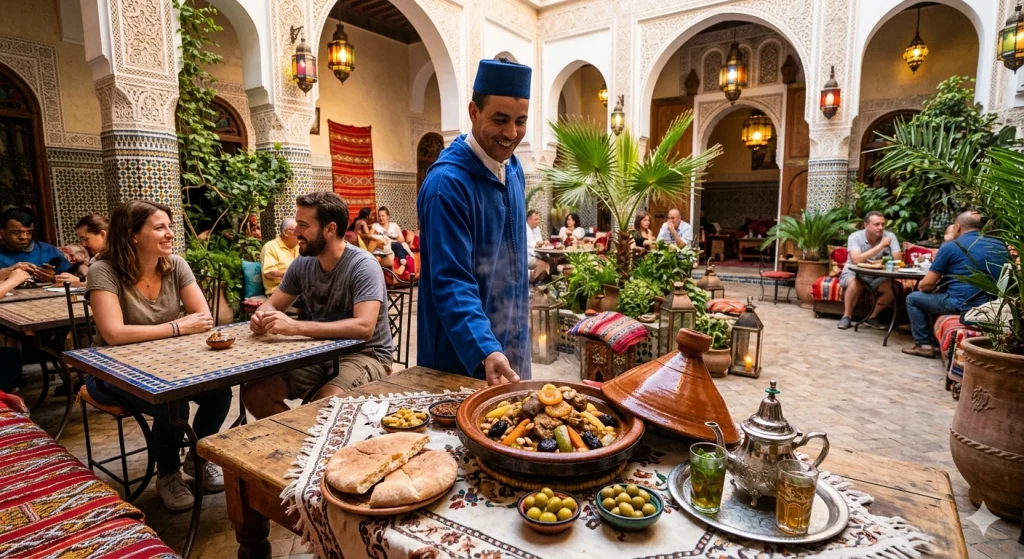
Accepting mint tea accepts hospitality, not obligation — you may drink and still not buy the carpet. Refusing entirely is allowed but softer with shukran, maybe later. Pour-height is the host’s flourish; your job is to admire it.

Dress, mosques and photographs
Covered shoulders and knees serve both respect and sun; beachwear belongs to beaches and pools. Working mosques are closed to non-Muslim visitors — admire from the door — with the great exception of Casablanca’s Hassan II. And people are not scenery: ask before photographing anyone, accept the no, expect performers to earn a tip (the tipping guide covers the rates).
Hands, homes and Fridays
Eat and pass with the right hand at shared tables; bread is treated with respect (never binned in sight). Invited home? Accept if you possibly can — bring pastries — and remove shoes at the door if your hosts have. Friday’s long prayer slows the country until mid-afternoon; plan gently.
The meta-rule
Warmth outranks protocol: Moroccans read intention, not perfection. Every guide on our private tours doubles as your etiquette safety net — and the deeper questions live in the culture & etiquette FAQ.
Everything on this page can be woven into a private itinerary — start from historical sites of Morocco or book the 7-day Imperial Cities circuit, and we shape the rest around you.
Abdellah Naciri — Abdellah covers culture and etiquette — the guest's guide to Moroccan life. His pieces explain the things locals rarely think to say out loud: how tea is offered and refused, what to wear where, how a moussem festival works, why Friday changes a town's rhythm. He writes them so that a first-time visitor can move through Morocco with ease rather than anxiety.