★★★★★ Rated 4.5/5 — 204 Google reviews · 576 reviews · 5.0/5 on Tripadvisor · Written by a licensed Marrakech tour operator, on the road since 2011
Moroccan music announces its instruments before you see them — the metallic gallop of the qraqeb, the low camel-skin thump of the bendir, a lute line snaking over Jemaa el-Fna. Here is the field guide to what you are hearing, tradition by tradition.
The Gnaoua trance kit
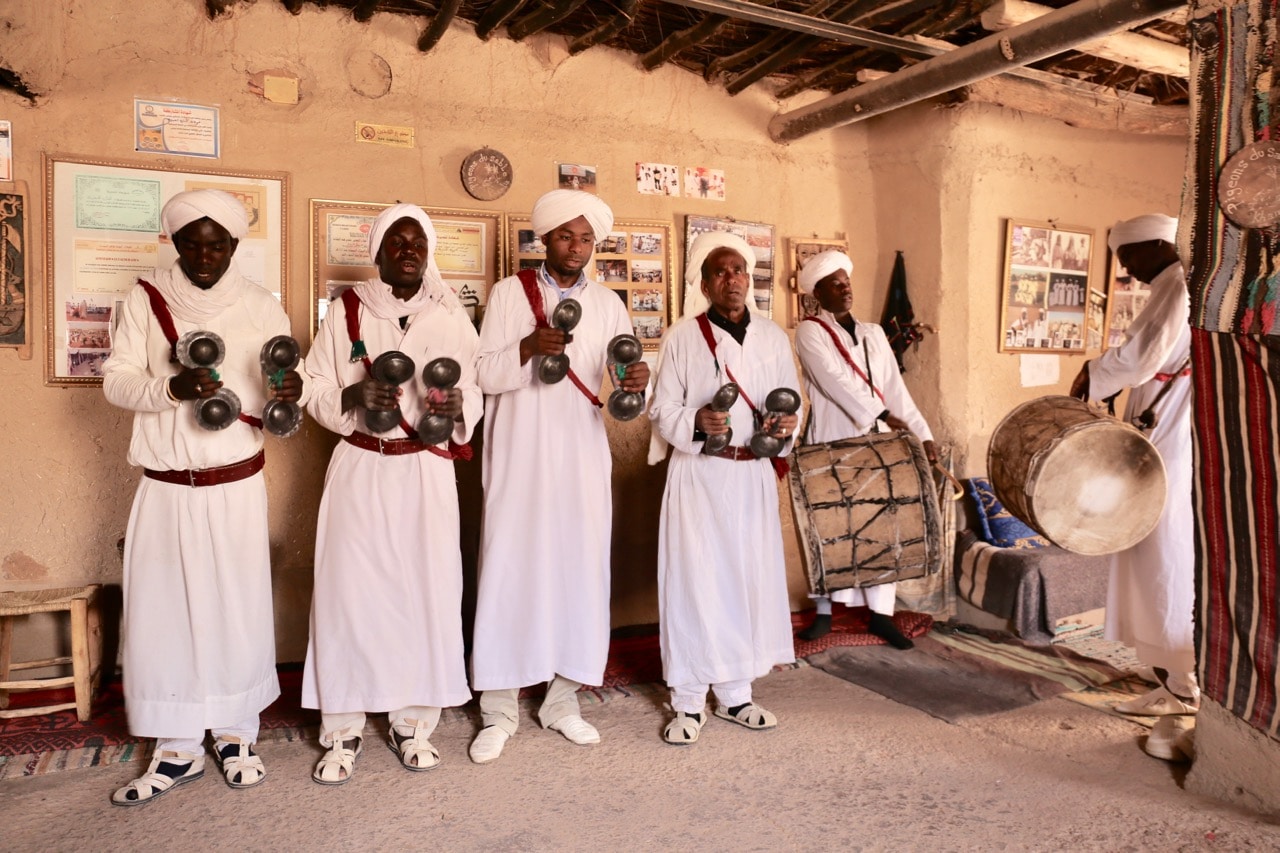
The guembri — a three-stringed bass lute with a camel-skin face — anchors Gnaoua music’s hypnotic loops, while iron qraqeb castanets lay the galloping rhythm said to echo caravan chains. You will meet the pairing in Essaouira (whose Gnaoua festival owns a June weekend), in Khamlia village by the Merzouga dunes, and nightly on Jemaa el-Fna.
The Amazigh village voices
The frame drum bendir, with its buzzing snare of gut strings, powers the collective ahouach and ahidous dances of the Atlas — whole villages in a swaying line. The one-stringed fiddle heard in Middle Atlas ensembles and the reed flutes of shepherds complete the mountain palette; you will hear them at weddings, harvest feasts and the desert camps’ firesides.
The Andalusi refinement
Fes and the northern cities keep the classical tradition carried from medieval Iberia: the oud (fretless lute), rbab, violin played upright on the knee, and the darbuka goblet drum, arranged in long suites (nubas). Listen for it in riad courtyards and at the sacred-music festivals.
Hearing them properly
The camp musicians on our desert circuits play bendir and qraqeb under actual stars — request a seat by the drum and you will be handed one before the night ends. City-side, our guides know which square corners and cultural houses host the real thing over the tourist medley. Festival timing (Gnaoua, sacred music, rose and date seasons) lives in the festivals FAQ.
Everything on this page can be woven into a private itinerary — start from historical sites of Morocco or book the 7-day Imperial Cities circuit, and we shape the rest around you.
Zineb Lahlou — Zineb writes about Moroccan traditions, crafts and celebrations. She grew up between Fes and Casablanca in a family where every wedding involved three cities' worth of relatives, which turned out to be excellent training for explaining Moroccan social life to visitors. Her beat runs from zellij workshops to Gnaoua music to the etiquette of a hammam.