★★★★★ Rated 4.5/5 — 204 Google reviews · 576 reviews · 5.0/5 on Tripadvisor · Written by a licensed Marrakech tour operator, on the road since 2011
One hundred and ten metres of water falling into a green canyon, rainbows on schedule most sunny mornings, and wild monkeys in the olive trees: Ouzoud is Morocco’s most spectacular waterfall and one of its easiest great days out.
Getting there from Marrakech
Count 2h30 each way on a good road through olive country — comfortably a day trip, with the falls earning three to four unhurried hours in the middle. Private tours (ours include riad pickup) beat the cramped shared-minibus versions on timing above all: arriving before the midday wave changes everything.
What the visit looks like
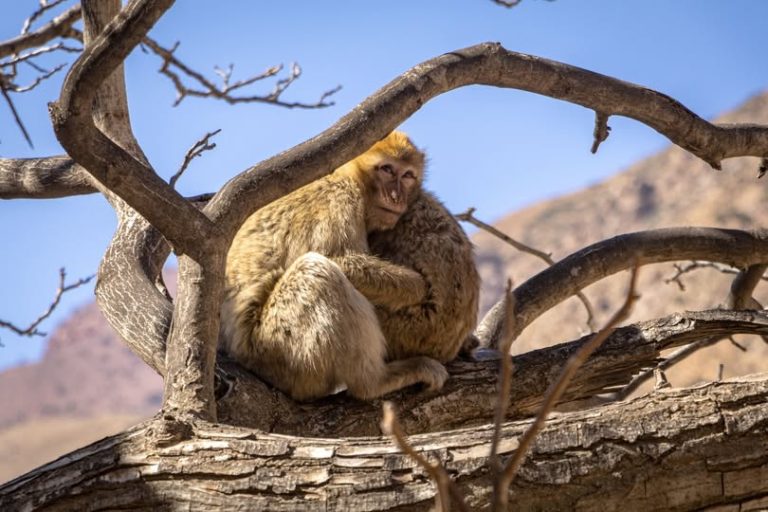
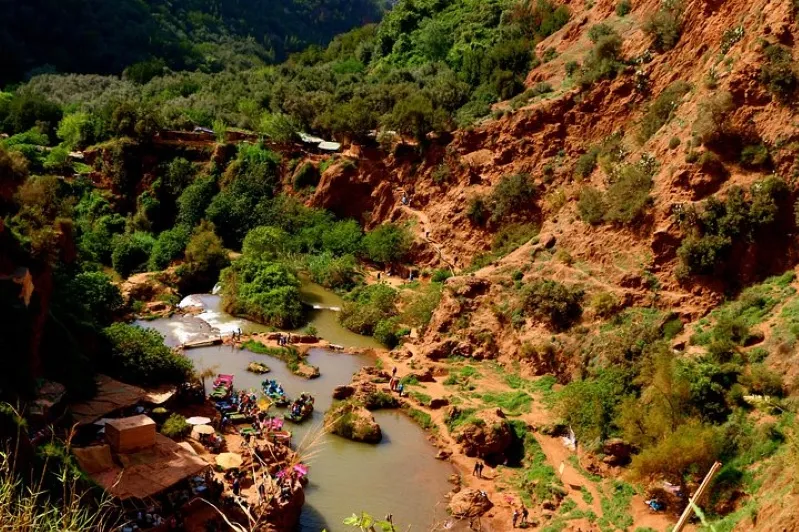
A stepped path descends the canyon past café terraces to the pools at the base, where little boats paddle you close enough to feel the spray. The far-bank trail is quieter and prettier; the Barbary macaques appear where the olives thicken — photogenic, confident, and best unfed. Swimming in the lower pools is glorious in the warm months; water shoes help.
Eat with the view
The canyon-edge terraces grill tagines all day. Order the local trout if it is on, and take the table with the rainbow.
Worth combining?
Ouzoud pairs naturally with the lake of Bin el-Ouidane for a longer loop, and features as the nature day in several tailor-made itineraries — ask us via plan your journey. Practicalities (season, what to bring, crowds) are covered in the Ouzoud FAQ chapter.
Prefer a ready-made day from Marrakech? Ouzoud Excursions runs small-group and private day trips to the falls — round-trip transport, the valley walk down to the cascades and the boat to the foot of the falls, all booked online.
Everything on this page can be woven into a private itinerary — start from hiking in Morocco or book the 3-day Atlas valleys trek, and we shape the rest around you.
Khadija El Fassi — Khadija writes about trekking and mountain travel, from family-friendly valley walks to multi-day traverses. She started hiking the Atlas as a student with a borrowed pack and bad shoes, and her articles are shaped by that memory — they assume nothing, explain the mule logistics, and always answer the question people are embarrassed to ask: how fit do I actually need to be?