★★★★★ Rated 4.5/5 — 204 Google reviews · 576 reviews · 5.0/5 on Tripadvisor · Written by a licensed Marrakech tour operator, on the road since 2011
Somewhere past Erfoud, menus start offering “Berber pizza” — and behind the tourist nickname hides one of Morocco’s great regional dishes: madfouna, the stuffed bread of the Tafilalet oases. Here is what it actually is, and why it is worth timing your desert route around.
The dish itself
Madfouna — “the buried one” — is a broad disc of bread dough packed with a spiced filling (minced meat or beef, onions, almonds, herbs, warm spices; egg in the richer versions), sealed like a giant calzone and traditionally baked buried in hot sand and embers, desert-oven style. It emerges blistered, smoky and built to feed a table — the caravan trade’s answer to portable feasting.
Where it belongs
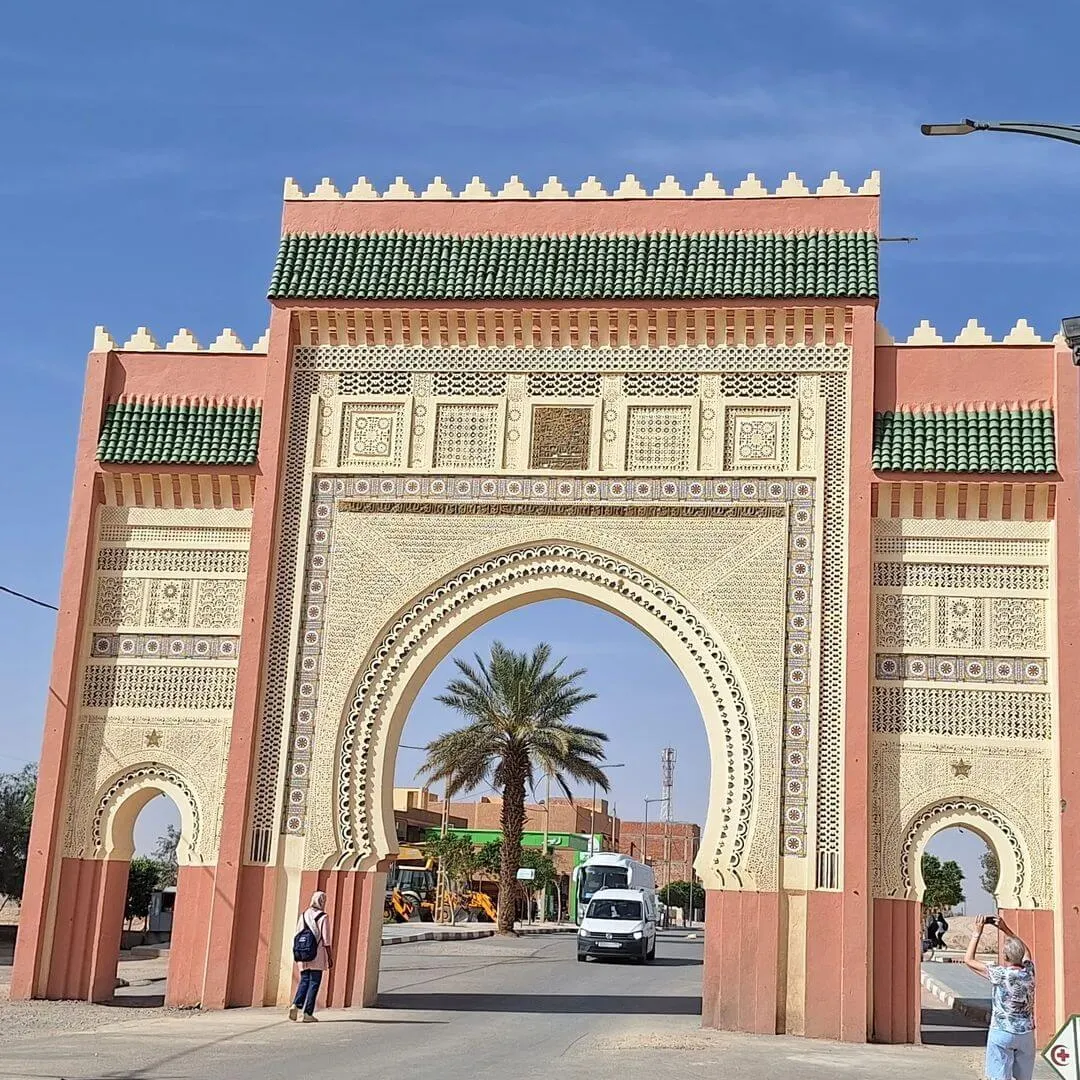
Rissani — the old caravan capital at the edge of the Tafilalet palm groves — is madfouna’s spiritual home, and ordering it there (often an hour ahead, made to order) is part of the ritual. The Merzouga camps and Erfoud’s family restaurants do honourable versions; anywhere north of the Atlas, it is a transplant.
Eating it right
Shared, torn by hand, with mint tea — one madfouna feeds two to four. The made-to-order wait is the authenticity certificate: real madfouna cannot sit in a window.
Building it into a route
Rissani sits naturally on the Erg Chebbi circuits (from €600) — tell your driver madfouna matters and the lunch stop arranges itself; it is a standing flag on our food routes through the south. The rest of the desert’s table is in the canon.
Everything on this page can be woven into a private itinerary — start from a private Marrakech day with a food-savvy guide, and we shape the rest around you.
Driss Bouzidi — Driss covers food and drink. He plans entire itineraries around a single dish — a Friday couscous in the Middle Atlas, a tanjia slow-cooked in Marrakech ashes, sardines at the Essaouira port — and then writes up where the detour is genuinely worth it. His restaurant notes favour places that feed locals on a Tuesday over places that photograph well.