★★★★★ Rated 4.5/5 — 204 Google reviews · 576 reviews · 5.0/5 on Tripadvisor · Written by a licensed Marrakech tour operator, on the road since 2011
Two food Moroccos coexist: the one cooking for its own people, and a beige parallel version invented for tour buses. Both are easy to find; only one is worth your appetite. Here is how to tell them apart in ten seconds.
The authenticity tells
The queue speaks Darija. Locals voting with their lunch money is the only review that matters. The menu is short. Four dishes done daily beat forty done never. Something is visibly cooking — a simmering pot, a turning grill, bread going into a wall oven. Prices are posted in dirhams without a “tourist menu” in four languages.
The warning signs
Laminated photo menus with sun-faded couscous; a greeter physically herding you in; “traditional show” bundled with dinner; tagines stacked pre-cooked in a window, waiting since morning. None of this is dangerous — it is just the beige version, at triple the price of the real thing two lanes away.
Where the real thing clusters
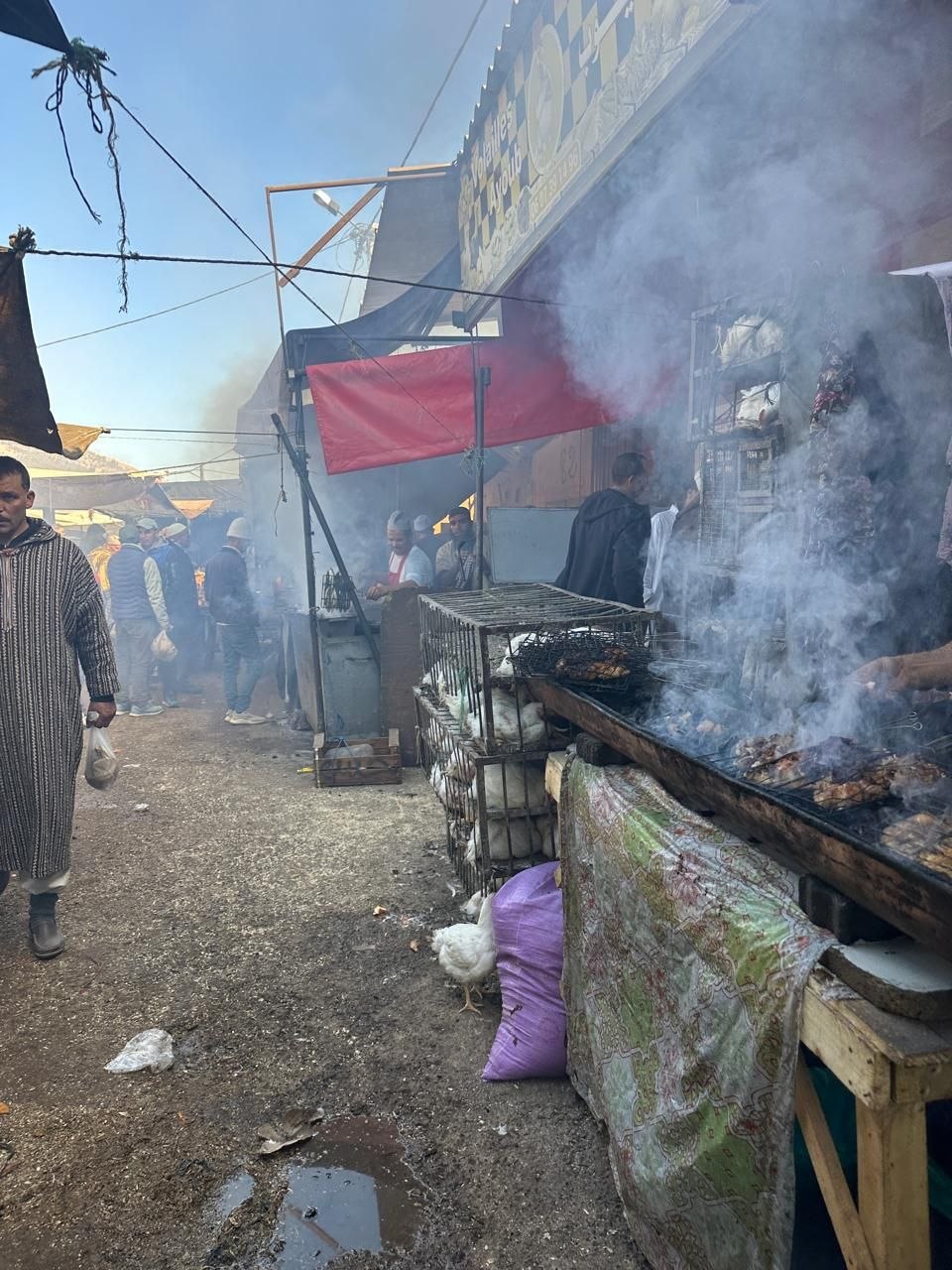
Market lunch counters at midday; mahlabas (milk bars) for breakfast and harira; the mechoui and tanjia specialists near working souks; port grills where the fish walked off a boat; and family dars where dinner is cooked, not performed. Our Marrakech food map names the categories lane by lane.
The unfair shortcut
Eat with someone who eats there weekly. On our food routes the guide’s actual job is steering you to the pots that sell out by two — and translating the menu that was never written down. The stomach-safety layer is covered in the food FAQ.
Everything on this page can be woven into a private itinerary — start from a private Marrakech day with a food-savvy guide, and we shape the rest around you.
Driss Bouzidi — Driss covers food and drink. He plans entire itineraries around a single dish — a Friday couscous in the Middle Atlas, a tanjia slow-cooked in Marrakech ashes, sardines at the Essaouira port — and then writes up where the detour is genuinely worth it. His restaurant notes favour places that feed locals on a Tuesday over places that photograph well.