★★★★★ Rated 4.5/5 — 204 Google reviews · 576 reviews · 5.0/5 on Tripadvisor · Written by a licensed Marrakech tour operator, on the road since 2011
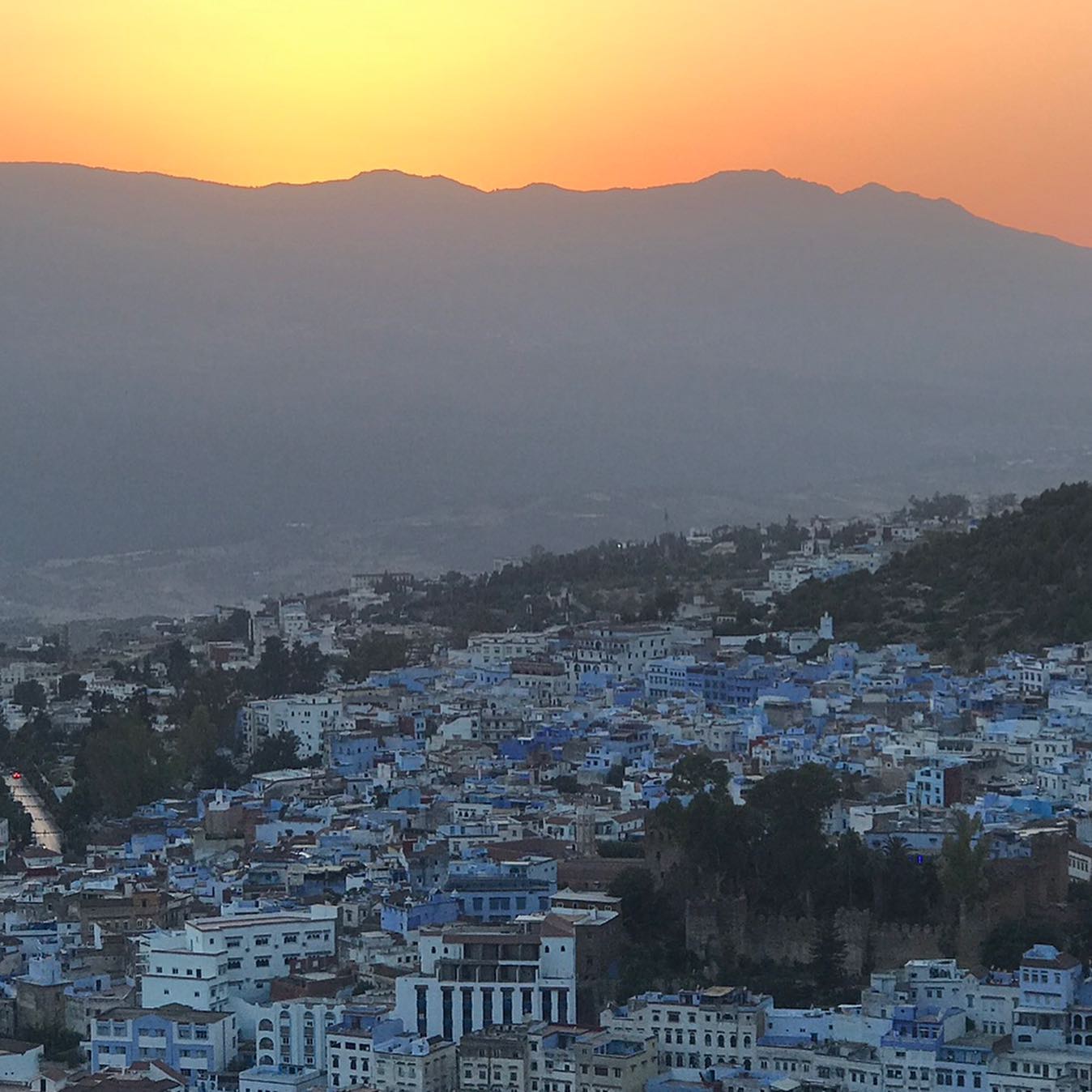
Chefchaouen is blue because its people keep painting it blue — every spring, with lime wash tinted in shades from powder to indigo — and the honest answer to why is that several histories overlap. Here are the explanations you will hear in town, ranked by how much truth each carries.
The Jewish heritage explanation
The most historically grounded account: Jewish refugees who settled here — many after the 1930s — painted with tekhelet blue, the colour of divinity and the sky in Jewish tradition, extending a practice known from mellahs across Morocco. The habit outlived most of the community itself, which largely left after 1948, and the town kept the colour as its own.
The practical explanations
Locals will also tell you blue keeps houses cool, that it repels mosquitoes, and that lime wash is simply the traditional hygiene coat with pigment added. Each holds a grain of truth — lime wash genuinely disinfects — though none explains why this town went all-in while its neighbours stayed white.
The explanation nobody says out loud
Since the 1970s the blue has been renewed with growing enthusiasm because it works: it made a small Rif mountain town one of the most photographed places in Africa. There is no shame in it — the repainting is real, communal and constant. Walk up toward the Ras el-Maa spring at the medina’s edge and you can watch where the blue ends and the ordinary town begins.
Seeing it properly
The blue is at its deepest in early morning light, before the day-trip crowds arrive from Fes and Tangier — one argument for sleeping over rather than passing through (what to see while you are here). Chefchaouen anchors our 4-day northern cities circuit (from €600 per person) and the 10-day northern grand tour (from €1500) — both private, never in a group. More questions in the Chefchaouen & the Rif FAQ.
Everything on this page can be woven into a private itinerary — start from Morocco city breaks or book the 7-day Imperial Cities circuit, and we shape the rest around you.
Omar Chraibi — Omar writes about the north: Tangier, Tetouan, Chefchaouen and the Rif behind them. He has a soft spot for port cities and the particular light of the Strait, and he checks his recommendations the slow way — by bus, on foot, over too many glasses of mint tea in café windows. If a route through the blue city avoids the crowds, it is probably because Omar walked it at three different hours to be sure.