★★★★★ Rated 4.5/5 — 204 Google reviews · 576 reviews · 5.0/5 on Tripadvisor · Written by a licensed Marrakech tour operator, on the road since 2011
Tangier has been the door between Africa and Europe for three thousand years, and it wears every era at once: Phoenician tombs, a Portuguese kasbah, café tables where half of twentieth-century literature sat down. Here is what deserves your time.
The kasbah and the medina
Start at the top: the Kasbah museum in the old sultan’s palace, then drift downhill through white lanes to the Grand Socco, where the market noise begins. The medina is small by Fes standards — an hour of happy wandering — and the terrace cafés above the port watch two continents at once.
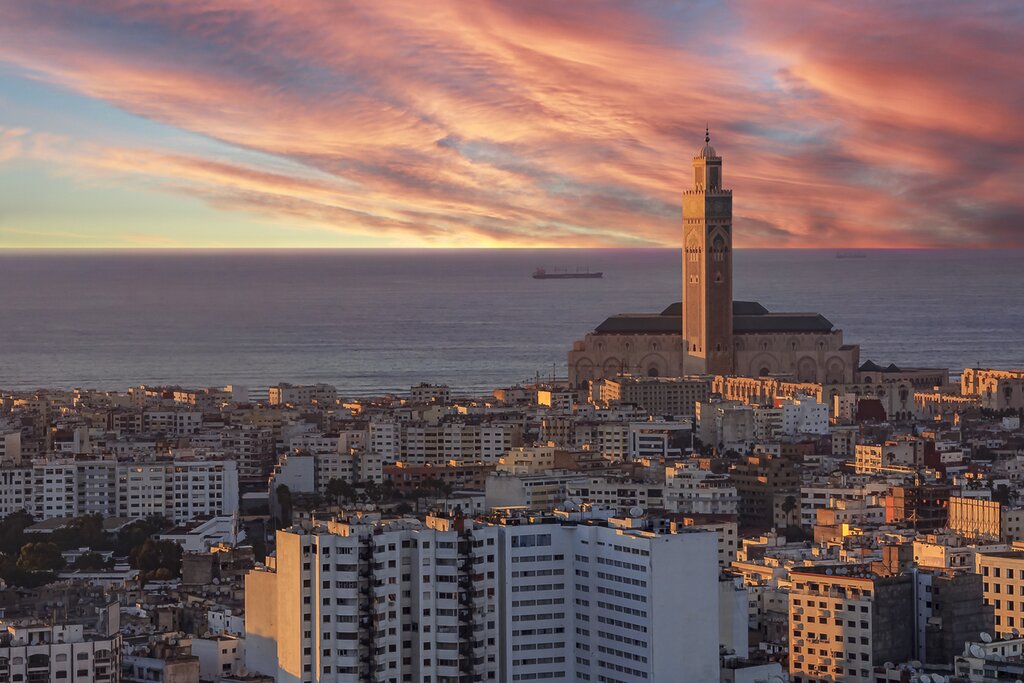
Cape Spartel and the Caves of Hercules
Twenty minutes west, the lighthouse at Cape Spartel marks where the Mediterranean meets the Atlantic. Below it, the Caves of Hercules open to the ocean through their famous Africa-shaped window. Go late afternoon and stay for the sunset.
The café pilgrimage
The Café Hafa has poured mint tea over the strait since 1921; the cafés of the Petit Socco hosted everyone from Bowles to the Beats. Order, sit, and do nothing — that is the activity.
Making Tangier the start of something
Tangier is Morocco’s best front door, especially off the Spain ferry: Chefchaouen is 2h30 away and the whole country unrolls south. That is the logic of our Tangier-to-Marrakech route and the 10-day northern culture tour — and the Tangier FAQ answers the ferry and logistics questions.
Everything on this page can be woven into a private itinerary — start from Morocco city breaks or book the 7-day Imperial Cities circuit, and we shape the rest around you.
Omar Chraibi — Omar writes about the north: Tangier, Tetouan, Chefchaouen and the Rif behind them. He has a soft spot for port cities and the particular light of the Strait, and he checks his recommendations the slow way — by bus, on foot, over too many glasses of mint tea in café windows. If a route through the blue city avoids the crowds, it is probably because Omar walked it at three different hours to be sure.


