In the Footsteps of the Artists – 10 Days: Tangier to Essaouira
- Private vehicle & driver — Pick-up at your riad, pace set by you
- Local licensed guide — Licensed guide nº2898 · since 2011
- Book on WhatsApp — Reply within 1 hour · no payment at this stage
- Tangier, two nights — Matisse's light, Delacroix's notebooks, Bowles's Interzone, the American Legation
- Chefchaouen at the painter's hours — dusk and dawn, slept-in
- Fes, two nights — the pattern school — zellige, Bou Inania, the workshops
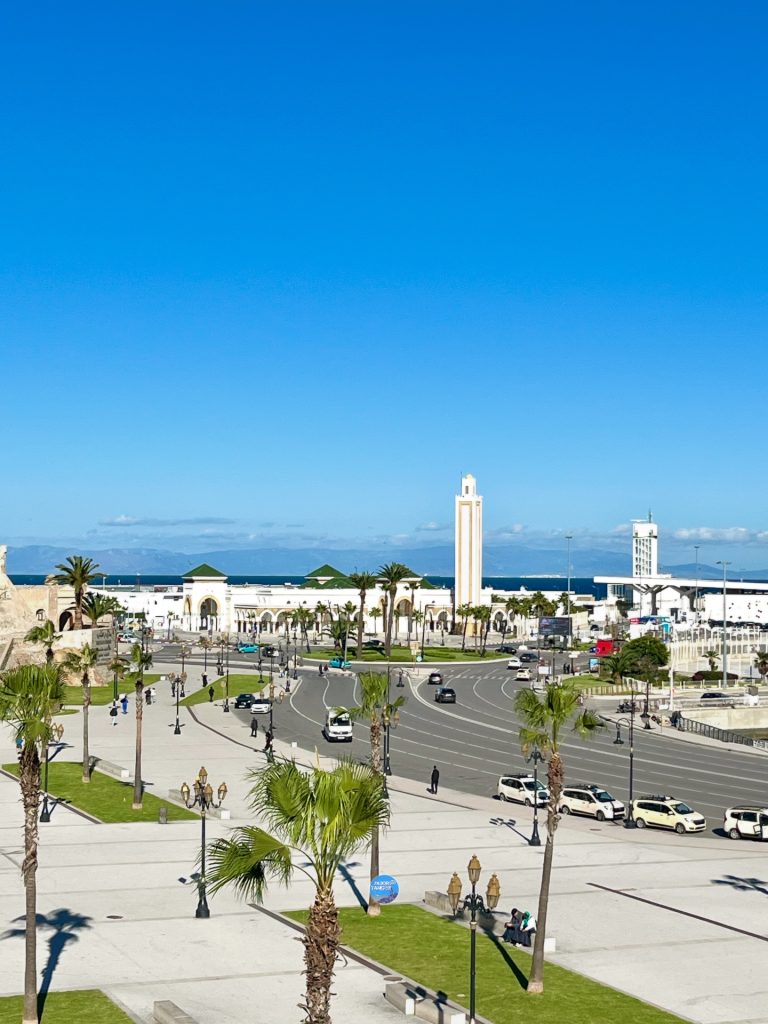

In the Footsteps of the Artists is a 10-day private art-history journey from Tangier to Essaouira, from €1500 per person — nine riad and guesthouse nights half-board, licensed guides in Tangier, Fes and Marrakech, and entries arranged at the Maison de la Photographie and the Majorelle, following the actual ground of the painters who made Morocco a subject: Delacroix’s 1832 notebooks, Matisse’s two Tangier winters, Churchill’s 1943 Koutoubia — his only wartime painting — and Saint Laurent’s cobalt garden. The route runs north to south with no backtracking, sleeps in Chefchaouen so both painter’s hours belong to you, gives Fes a full day as the world’s living pattern school, and ends where the lineage continues working: Essaouira’s galleries, Gnaoua rhythms and the silver Atlantic light Gruyaert made famous. Guides lead where the history is densest; every golden hour stays free for your own camera or sketchbook. Written quote within the hour on WhatsApp.
| Duration | 10 Days |
| Price | From €1500 per person — car, driver and accommodation included |
| Departures | Your dates — every departure is private, never a shared group |
| Languages | English- and French-speaking driver-guides; licensed city guides where included |
| Booking | WhatsApp +212 661 454 738 — written quote within 1 hour, no payment at this stage |
No other itinerary we run — and few anywhere — treats art history as the map itself. The sequence is deliberate: the northern light that started it, the blue town as a single-hue masterclass, the medieval pattern laboratory, the city of the modern colourists, and the colony where it all still happens, in the order the light itself travels.
Against our other formats: the 10-day North-to-South covers similar ground as a grand tour; this version curates it as a gallery. Working artists wanting production time should pair it with the Painter’s Light or the Writer’s Silence — this one feeds the eye; those feed the page and the panel.
- Tangier, two nights — Matisse's light, Delacroix's notebooks, Bowles's Interzone, the American Legation
- Chefchaouen at the painter's hours — dusk and dawn, slept-in
- Fes, two nights — the pattern school — zellige, Bou Inania, the workshops
- Marrakech, two nights — Churchill's Koutoubia view, the Majorelle, YSL, the Maison de la Photographie
- Essaouira, two nights — the living art colony and Gruyaert's colour country
- Licensed guides where the art history lives; free golden hours everywhere
Itinerary
Open a day to see the detail: transport, accommodation, meals and activity time.
Day 1 Tangier, the ancestral studio
Arrival in the city that taught Matisse new colour. First walk at the painter's hour: the kasbah's diagonal light, the port below, mint tea where the Interzone writers took theirs.
Day 2 Tangier with a guide: Legation, medina, the light
The American Legation's art rooms — the United States' oldest diplomatic property, and Tangier's finest small museum — then the medina Delacroix raided for seven notebooks in 1832, and the viewpoints Matisse worked from across two winters. Evening free on the roofline.

Day 3 To Chefchaouen, slept-in
The Rif road to the blue city — and the difference the night makes: dusk from the Spanish Mosque path with the lanes emptying, then dawn with the blue at its coldest and purest before the day-trippers arrive. One hue, a thousand surfaces, both painter's hours kept.

Day 4 Chefchaouen dawn, then the road to Fes
The early pages or frames in empty lanes, then south past Volubilis's Roman mosaics — the oldest pictures in Morocco — to a Fes riad by evening.

Day 5 Fes: the pattern school
A guided day inside art history's working classroom: Bou Inania's geometry, the zellige cutters assembling patterns face-down from memory, the tannery palette from the terraces, the carved cedar overhead. For anyone who draws, the densest sketchbook day in Morocco.

Day 6 The long road south, broken properly
The Middle Atlas route to Marrakech — cedar forest, Ifrane's alpine interlude, the plains — with stops wherever the light argues. Arrival for the first ochre-walled golden hour.
Day 7 Marrakech: Churchill, Majorelle, the photographers
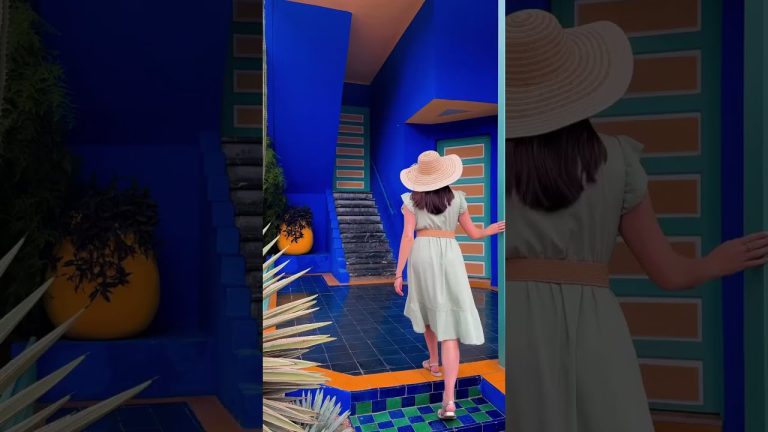
The art-pilgrim's day: the Koutoubia and ramparts Churchill painted in 1943 — his only wartime canvas, given to Roosevelt — the Majorelle Garden and Berber Museum in Saint Laurent's cobalt, and the Maison de la Photographie's historic collection with its rooftop view. Guided, with the golden hour left free.
Day 8 Marrakech at your own easel
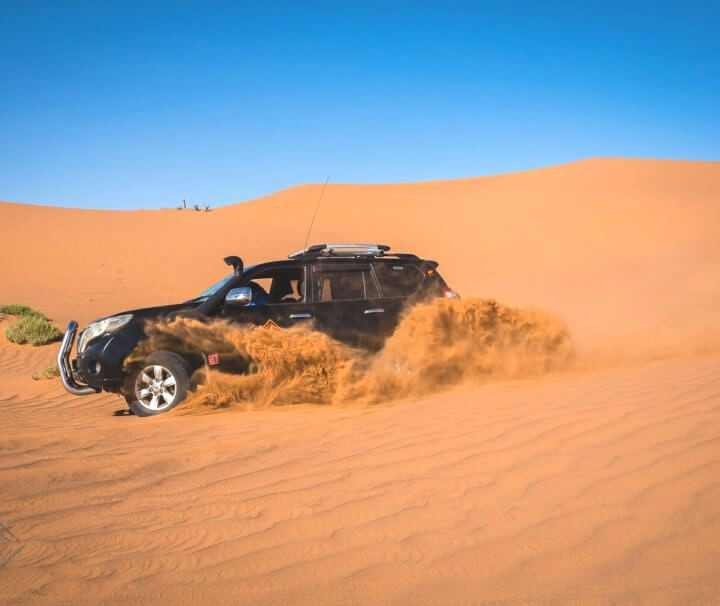
A free day for your own work: the souks' pattern language, Jemaa el-Fna at blue hour, or the optional Agafay golden-hour excursion. The city rewards the second look — that is why every painter stayed longer than planned.

Day 9 To Essaouira, the living colony
Through the argan belt to the town where the lineage continues: medina galleries, thuya carvers, Gnaoua rhythms, and the silver Atlantic light Harry Gruyaert made famous. Evening on the Skala with the whole week behind the lens.

Day 10 Essaouira morning, departure
Dawn at the port — the oldest subject on this coast — then your transfer: Essaouira's airport, or Marrakech three hours east. The notebooks go home heavier; that was the itinerary.

An art-history pilgrimage with the primary sources on the walls and in the streets: Delacroix filled seven notebooks here in 1832; Matisse rewired modern colour over two Tangier winters (1912-13); Churchill painted his only wartime canvas — the Koutoubia — from Marrakech in 1943; Saint Laurent anchored his palette (and his ashes) in the Majorelle. The route walks their actual ground in their actual order of light, north to south. Guides lead where the history is densest; golden hours stay free for your own camera or sketchbook. Pure travellers welcome — this is also simply the most beautiful north-to-south line we run.
Included in your tour
- Private air-conditioned vehicle with English/French-speaking driver — 10 days
- Pickup at Tangier airport or port; drop-off at Marrakech or Essaouira
- Nights 1-2: riad in the Tangier kasbah — half-board
- Night 3: guesthouse in the Chefchaouen medina — half-board
- Nights 4-5: riad in the Fes medina — half-board
- Nights 6-7: riad in the Marrakech medina — half-board
- Nights 8-9: riad in the Essaouira medina — half-board
- Guided visits: Tangier (incl. the American Legation), the Fes medina, Marrakech
- Entries arranged: Maison de la Photographie, Majorelle & Berber Museum
- The route runs one-way — no backtracked kilometres
Not included
- International flights
- Lunches and beverages
- Entrance fees to monuments and historical sites (optional — pay directly)
- Tips for guide and driver
- Personal expenses
- Travel insurance (recommended)
- Yves Saint Laurent Museum entry (timed tickets — arranged, paid directly)
Explore more
Questions travellers ask
How much does In the Footsteps of the Artists – 10 Days: Tangier to Essaouira cost?+
From €1500 per person, per person. The price includes private air-conditioned vehicle with english/french-speaking driver — 10 days, pickup at tangier airport or port; drop-off at marrakech or essaouira, nights 1-2: riad in the tangier kasbah — half-board. You receive a written itemised quote before paying anything — no hidden fees.
How long is this tour and when does it depart?+
10 Days, departing on the dates you choose — there is no fixed schedule, because every departure is arranged for you alone.
Is this a group tour or private?+
Fully private: your own vehicle, driver and licensed guide, never seat-in-coach and never mixed with other travellers. The daily pace flexes around you.
What are Morocco's iconic shots?+
Chefchaouen's blue lanes at dawn, the Erg Chebbi dunes at first and last light, the Fes tanneries from a terrace, Aït Ben Haddou at golden hour, Jemaa el-Fna's smoke and lanterns at dusk, and the Majorelle cobalt. Our routes are effectively built along this list.
When is the light best?+
The hour after sunrise and before sunset, everywhere — and Moroccan middays are harsh. Photography-minded tailor-made days invert the usual rhythm: shoot early, rest at noon, shoot late; drivers and guides adjust happily.
What is the etiquette for photographing people?+
Ask first, accept refusals gracefully, and tip performers and posed portraits modestly. Long-lens candids of unwilling subjects are what earns photographers a bad name; a smile and two words of Darija earn better pictures anyway.
Can I fly a drone in Morocco?+
Effectively no for visitors — drones require prior authorisation and undeclared ones are confiscated at the border. Leave it at home; the dunes photograph magnificently from their own crests.
More answers in the “Photography in Morocco” chapter of our Travel FAQ →
Itinerary and prices last updated October 2026.

