Morocco Tour with Atlas Hiking – 10 Days: Cities, Sahara & Trek
- Private vehicle & driver — Pick-up at your riad, pace set by you
- Local licensed guide — Licensed guide nº2898 · since 2011
- Book on WhatsApp — Reply within 1 hour · no payment at this stage
- The complete cities-and-Sahara circuit in the first week
- Two guided hiking days in the Atlas above Amizmiz
- Guided days in Fes and Marrakech


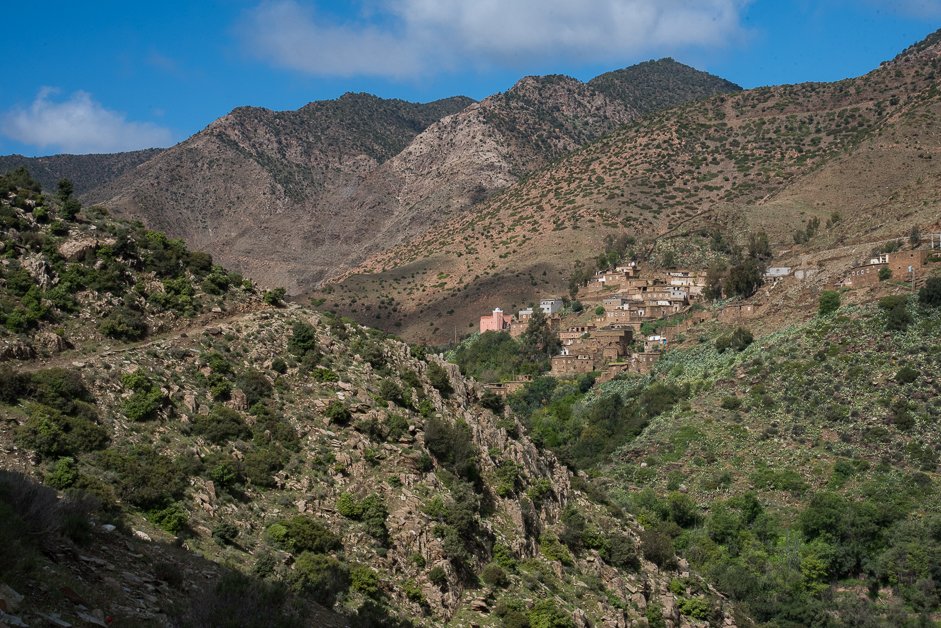
A private 10-day itinerary starting in Casablanca — from €1500 per person with accommodation and guiding included, never shared with a group. You will see Fes, Meknes and Volubilis along the route.
| Duration | 10 Days |
| Price | From €1500 per person — car, driver and accommodation included |
| Departures | Your dates — every departure is private, never a shared group |
| Languages | English- and French-speaking driver-guides; licensed city guides where included |
| Booking | WhatsApp +212 661 454 738 — written quote within 1 hour, no payment at this stage |
Ten days that join the two trips visitors usually have to choose between: the full cultural circuit — Casablanca, Fes, the Sahara, Marrakech — and two genuine days of walking in the High Atlas above Amizmiz. Cities and desert first, boots on for the finale, and Casablanca’s airport waiting at both ends.
The walking is real but humane: village paths and ridge lines, four to five hours a day, lunches at family tables, a guesthouse night among the terraces. It converts a classic sightseeing loop into something your legs remember too — and it comes after the desert, when your eyes are full and your body wants a turn.
Private vehicle and driver-guide throughout; licensed medina guides; a licensed mountain guide for both hiking days; ensuite camp at the erg.
Ten days that end in walking boots: the cultural cities and the Sahara first — Volubilis and Meknes to Fes, the medieval medina with a guide, the Middle Atlas down to the dunes, the oases and gorges, Aït Ben Haddou and the Tichka to Marrakech — then two full days in the High Atlas foothills above Amizmiz, on ridge paths between Berber villages with lunch in family homes. From €1500 per person, car, driver, guides and hotels included.
Most 10-day Morocco tours finish with shopping days; this one finishes with altitude. The hiking stages are genuine but moderate — village-to-village paths, three to five hours a day, no technical ground — and the same private vehicle carries your bags ahead, so you walk light.
It suits travellers who want the classic circuit but cannot sit in a car for ten straight days. Private departure on your dates, never in a group: send them on WhatsApp and the day-by-day quote comes back within the hour.
Balanced is the word the market uses for this shape, and it fits: imperial cities and the Sahara first, then — where other grand tours end with a transfer — two days on foot in the Amizmiz hills, ridge paths and village lunches among people whose valley sees almost no tourism. The walking flexes to your legs, from stroll to full ridge day. It is the classic 10-day loop with its humanity restored.
- The complete cities-and-Sahara circuit in the first week
- Two guided hiking days in the Atlas above Amizmiz
- Guided days in Fes and Marrakech
- Erg Chebbi camel trek and ensuite camp night
- Casablanca in, Casablanca out — one-airport simplicity
Photos from the tour


Itinerary
Open a day to see the detail: transport, accommodation, meals and activity time.
Day 1 Casablanca arrival
Casablanca's one indispensable hour: the Hassan II Mosque, guided, inside — the ocean under glass, the cedar roof that opens, the sense of scale that photographs refuse to carry. Then a Corniche evening and a real night's sleep; the country begins in earnest at breakfast.

Day 2 Volubilis and Meknes to Fes
East with the empire road: Volubilis' Roman mosaics bare to the sky, a viewpoint pause for holy Moulay Idriss, Meknes for the great gate — then Fes by late afternoon, its medina humming behind your riad's studded door.

Day 3 Fes, the medieval city
The full Fes day, guided: the blue gate, the madrasas' carved interiors, the doorway glimpses of the world's oldest university, the tanneries from a mint-scented terrace, the artisan rows working as they have for centuries. Evening on the rooftops as the swallows take over.

Day 4 Across the Middle Atlas to the Sahara
The great crossing: cedars and macaques in the Middle Atlas, the long Midelt plain, the Ziz gorges spilling palms toward the sand. Merzouga at golden hour delivers the ritual in full — camels into the Erg Chebbi, ensuite camp, lantern dinner, drums, stars beyond audit.

Day 5 Oases, gorges and film country
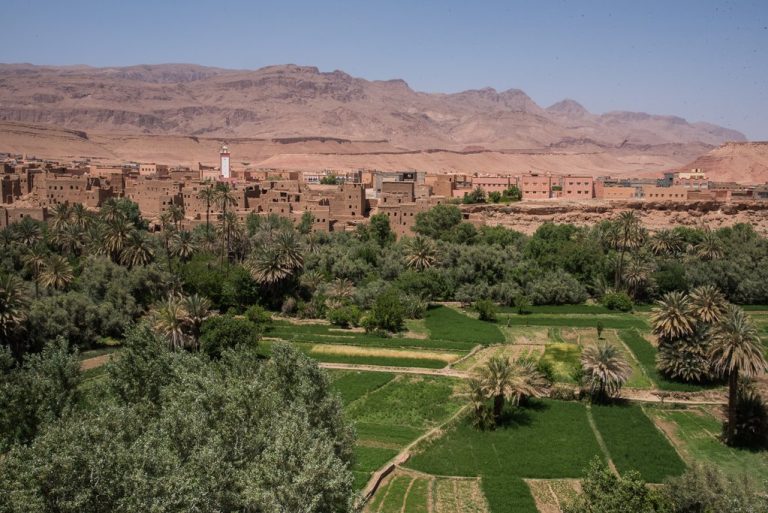
Dune-crest sunrise, then westward through the oasis belt: Todra's canyon walk, the kasbah-lined road, and Ouarzazate — film country — for the night. The Atlas stands ahead, tomorrow's business visible from tonight's terrace.
Day 6 Aït Ben Haddou and the Tichka to Marrakech
Aït Ben Haddou early, guided to the granary viewpoint before the crowds, then the Tizi n'Tichka's mint-tea switchbacks and the descent into Marrakech's pink haze. First souk contact at dusk; Jemaa el-Fna handles the rest of the evening unassisted.

Day 7 Marrakech, guided
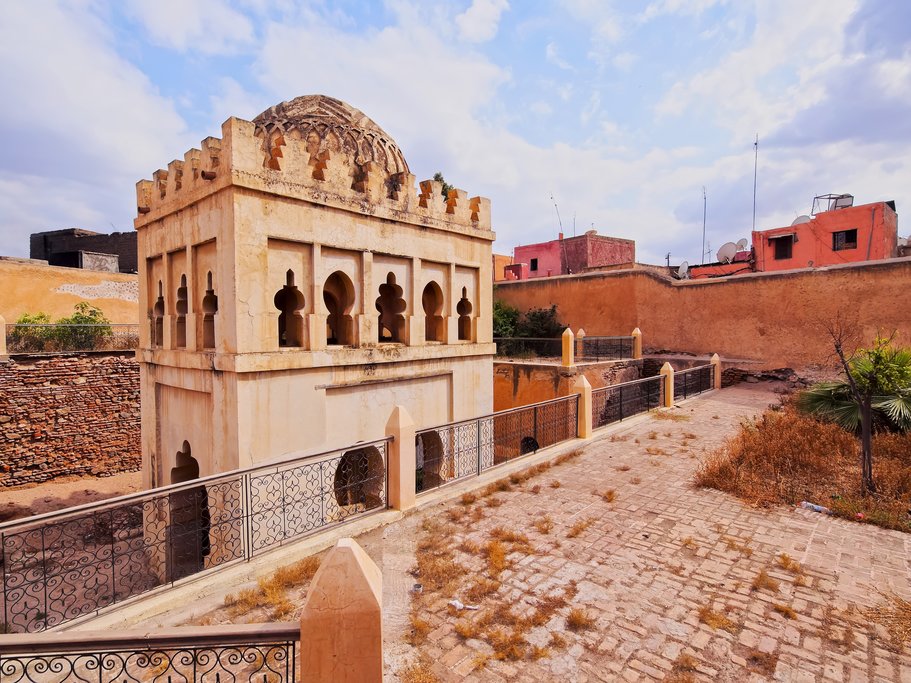
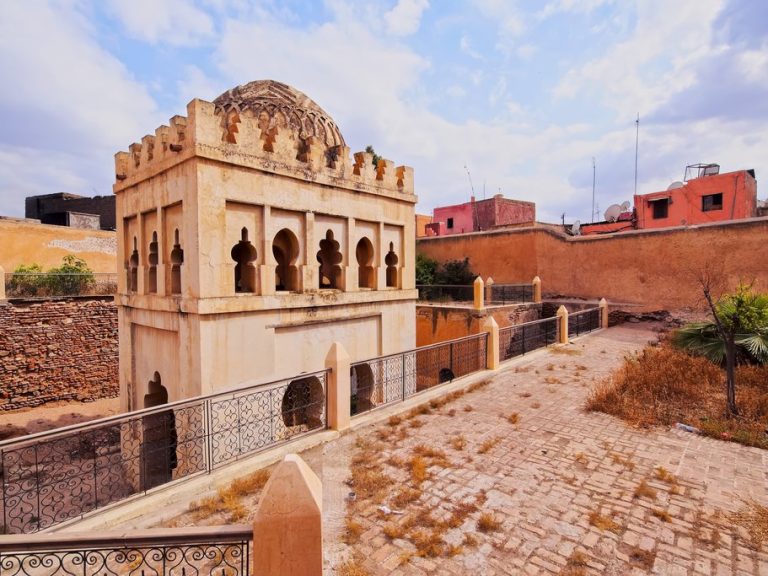
Marrakech decoded with a licensed guide — Bahia, the Saadian Tombs, the Koutoubia gardens, souk arteries mapped — with the afternoon free for Majorelle, a hammam, or strategic idleness. Early night advised: tomorrow you climb into cooler air.

Day 8 Into the hills: Amizmiz
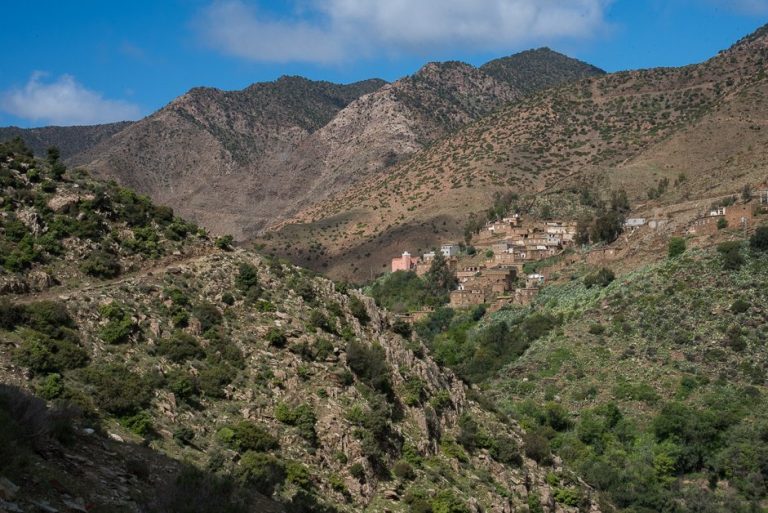
Boots on: an hour south to the Amizmiz valleys, where a mountain guide leads the first walk — village to village on mule paths, terraces stacked like green staircases, tea on a rooftop mid-route. The night is a valley guesthouse among the walnut trees, dinner by the stove.
Day 9 Ridge paths and village lunches
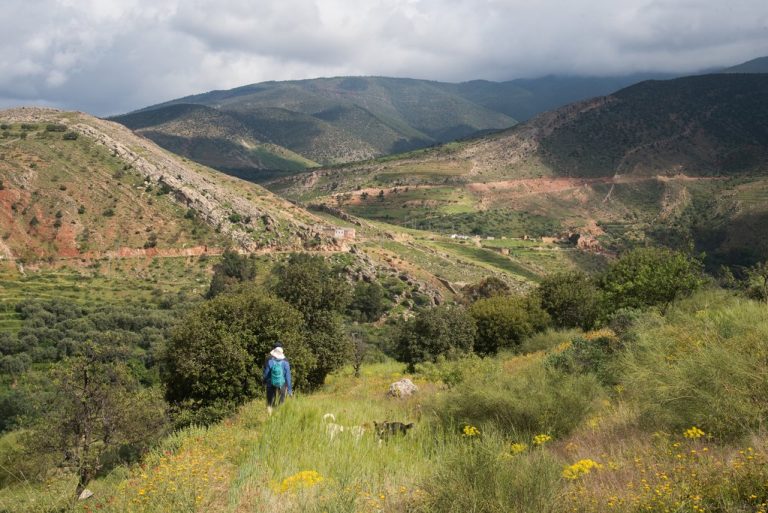
The full hill day: ridge paths with the Haouz plain silvering below, hamlets that measure time in harvests, lunch at a family table that refuses moderation — four to five hours of the Atlas at walking speed. Down to the vehicle by late afternoon and back to Marrakech, legs pleasantly spent.
Day 10 Return to Casablanca
North on the motorway to Casablanca, timed to your departure — ten days that stacked cities, desert and mountains in the right order and sent you home with all three still humming.
The hikes need ordinary fitness: 4–5 hours on village paths with the vehicle never far, swappable for valley drives if knees vote otherwise. May–October gives the surest mountain weather; the full route runs March–November happily.
Included in your tour
- Private air-conditioned 4×4 or minivan with English/French-speaking driver-guide — 10 days
- Pickup at Casablanca airport or your hotel
- Night 1: Casablanca hotel — half-board
- Nights 2–3: Fes riad (2 nights) — half-board
- Night 4: luxury ensuite desert camp — half-board
- Night 5: kasbah hotel, Ouarzazate — half-board
- Nights 6–7: Marrakech riad (2 nights) — half-board
- Night 8: Amizmiz hotel — half-board
- Night 9: Marrakech riad — half-board
- Guided visit of Fes with a licensed local guide (Day 3)
- Guided visit of Marrakech with a licensed local guide (Day 7)
- Guided visit inside the Hassan II Mosque, Casablanca
- Guided visit of the Aït Ben Haddou ksar (UNESCO)
- Camel trek in the dunes
- Drop-off at your Casablanca hotel or at the airport
Not included
- International flights
- Lunches and beverages
- Entrance fees to monuments and historical sites (optional — pay directly)
- Tips for guide and driver
- Personal expenses
- Travel insurance (recommended)
Explore more
Desert tours Hiking & trekking Marrakech High Atlas Fes Ouarzazate Casablanca
Questions travellers ask
How much does Morocco Tour with Atlas Hiking – 10 Days: Cities, Sahara & Trek cost?+
From €1500 per person, per person. The price includes private air-conditioned 4×4 or minivan with english/french-speaking driver-guide — 10 days, pickup at casablanca airport or your hotel, night 1: casablanca hotel — half-board. You receive a written itemised quote before paying anything — no hidden fees.
How long is this tour and when does it depart?+
10 Days, departing on the dates you choose — there is no fixed schedule, because every departure is arranged for you alone.
Is this a group tour or private?+
Fully private: your own vehicle, driver and licensed guide, never seat-in-coach and never mixed with other travellers. The daily pace flexes around you.
Where is the desert in Morocco?+
South and east of the Atlas mountains. The named destinations, in order of distance from Marrakech: the Agafay stone desert 45 minutes away (no sand dunes), the Zagora dunes down the Draa valley at 360 km, Erg Chigaga beyond M'Hamid where the tarmac ends, and the great Erg Chebbi dune sea at Merzouga, 560 km out — the Sahara of the photographs.
How much of Morocco is desert?+
Broadly, everything south and east of the Atlas watershed is arid or Saharan — roughly half the country by area. The photogenic sand seas are actually small pockets of that expanse: Erg Chebbi and Erg Chigaga are each a day's drive apart, islands of dunes in a vast landscape of stone, oases and kasbah valleys.
What should I wear on a Morocco desert tour?+
Layers, always: desert days can hit 30°C while nights drop near freezing outside summer. The working formula is light long sleeves and trousers for sun and camels, a warm fleece or jacket for the camp evening, closed shoes for sand and stones, sunglasses, and a scarf (a cheche) — bought in any souk for a few dirhams — for sun, wind and the photograph. Luggage stays in the vehicle; you carry a small overnight bag to the camp.
How far is the Sahara desert from Marrakech?+
The honest ladder: the Agafay stone desert is 45 minutes away (no sand dunes, but real desert scenery); the first true Sahara dunes at Zagora are 360 km — about 6 hours over the Tizi n'Tichka; the great Erg Chebbi dunes at Merzouga are 560 km — 8 to 9 hours, which is why serious itineraries take 3–4 days. There is no Sahara 'day trip' from Marrakech worth the name — anyone selling one is selling Agafay.
More answers in the “The desert experience” chapter of our Travel FAQ →
Itinerary and prices last updated October 2026.


