Royal Morocco: A Luxury Journey – 10 Days
- Private vehicle & driver — Pick-up at your riad, pace set by you
- Local licensed guide — Licensed guide nº2898 · since 2011
- Book on WhatsApp — Reply within 1 hour · no payment at this stage
- Hand-picked riads and boutique addresses, best suites reserved early
- Fine dining reserved ahead in Rabat, Fes and Marrakech
- Golden-hour photoshoot session in Chefchaouen's blue lanes


From Casablanca, this fully private 10-day route costs from €1500 per person, with your own driver and licensed guide throughout — no group departures. Key stages: Chefchaouen, Rabat and Fes.
Ten days on the classic Casablanca-to-Marrakech arc, staged at luxury pitch. The route is Morocco’s greatest hits — the capital, blue Chefchaouen, medieval Fes, the Erg Chebbi, Aït Ben Haddou, the Red City — but every day inside it is upgraded: fine riads with the best rooms reserved early, tables booked before you land, a golden-hour photoshoot in the blue lanes, a royal hammam ritual in Fes, a private camp pitched away from every other light in the desert, and a sunrise balloon over the Marrakech palmery to close.
Luxury here is not marble lobbies; it is staging. Drivers who read the day and shift it around light and crowds. A second desert night that buys you the silence. The small theatrical touches — arranged, never announced — that turn a trip into an event. Tell us your occasions (an anniversary, a proposal, a birthday) and the route will quietly know.
Fully private, of course: your vehicle and driver-guide throughout, private guides in each medina, and every reservation handled before you think to ask.
- Hand-picked riads and boutique addresses, best suites reserved early
- Fine dining reserved ahead in Rabat, Fes and Marrakech
- Golden-hour photoshoot session in Chefchaouen's blue lanes
- Royal hammam ritual in Fes after the guided medina day
- Private luxury camp deep in the Erg Chebbi — two desert days
- Sunrise hot-air balloon over the Marrakech palmery
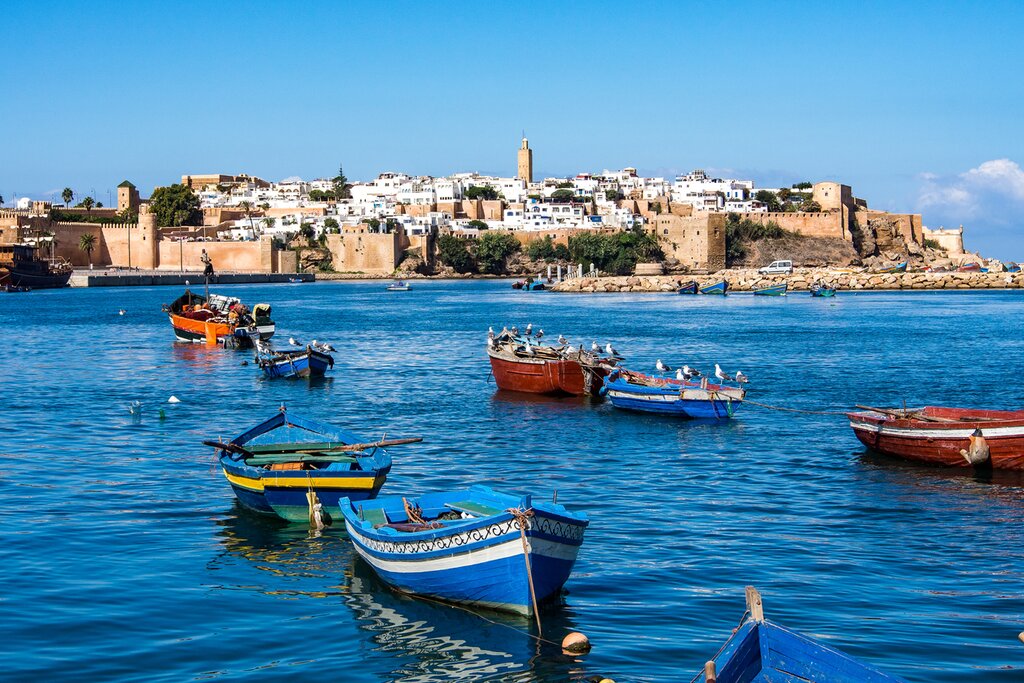
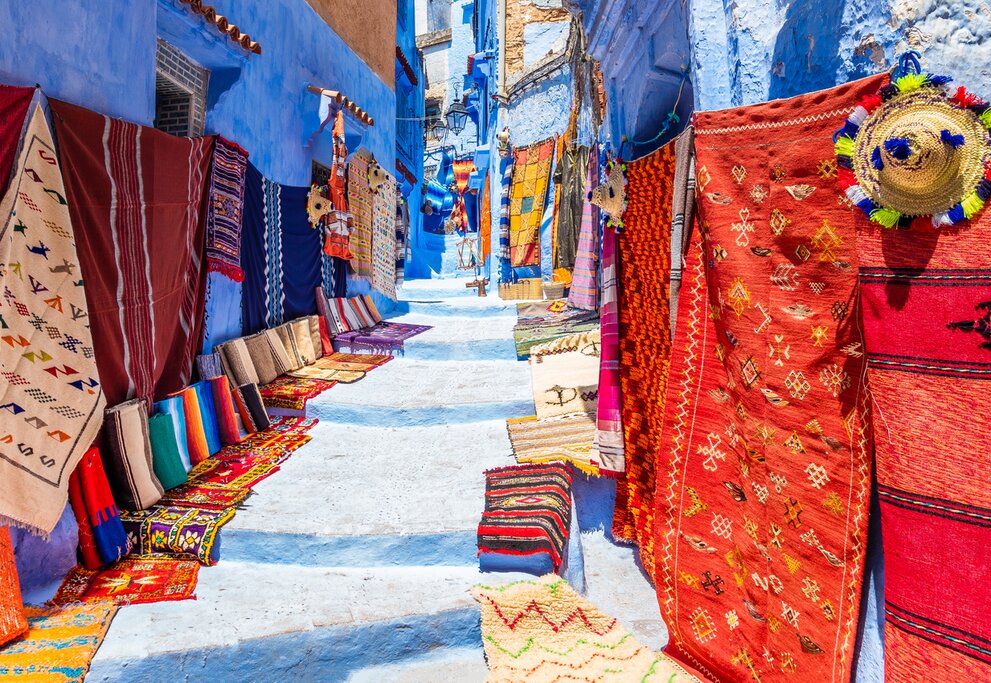
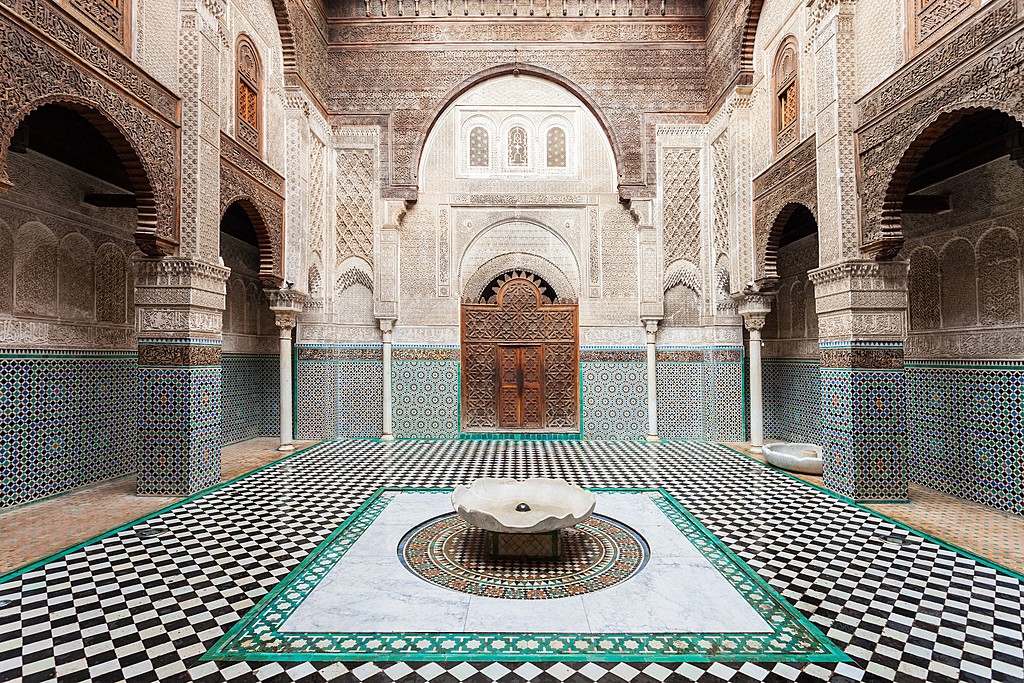
Photos from the tour




Itinerary
Open a day to see the detail: transport, accommodation, meals and activity time.
Day 1 Casablanca to Rabat, dinner reserved
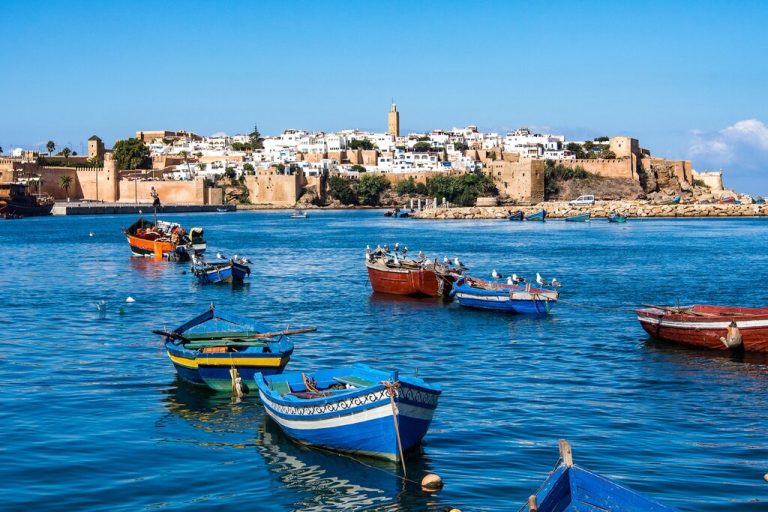
A private welcome at Casablanca airport and a gentle first act: the coast road to Rabat, the calmer of the two capitals, with time for the Kasbah of the Oudayas — blue-and-white lanes above the river mouth — before checking into your riad. Dinner is already booked at one of Rabat's finest tables; all you have to do is arrive hungry.
Day 2 Rabat guided, Chefchaouen by dusk — camera ready
A guided half-day gives Rabat its due — the Hassan Tower, the mausoleum's carved marble, the Chellah's storks — before the Rif road north. Chefchaouen appears in the late afternoon, stacked blue against the mountains, and this is where the staging begins: a photoshoot session in the lanes at golden hour, when the light is soft and the day-trippers are gone. The photographs from this hour tend to become the ones framed at home.

Day 3 Volubilis and Meknes to a Fes riad
South through the olive hills with two imperial pauses — Roman Volubilis, its mosaics open to the sky, and Meknes for the great gate of Bab Mansour — before Fes closes the day. Your riad sits inside the old city; dinner is reserved at one of the medina's celebrated houses, where Fassi cooking shows why this city considers itself Morocco's kitchen.

Day 4 Fes guided, then the royal hammam
Fes el-Bali with a private licensed guide: the madrasas' carved cedar and zellige, the view into Al-Qarawiyyin, the tanneries from a quiet terrace, the artisan quarters at working pace. And then the counterpoint the day deserves: a royal hammam ritual — steam, black soap, the kessa scrub, rose water, silence — leaving you polished for a slow rooftop evening.

Day 5 South to the dunes, camels at sunset
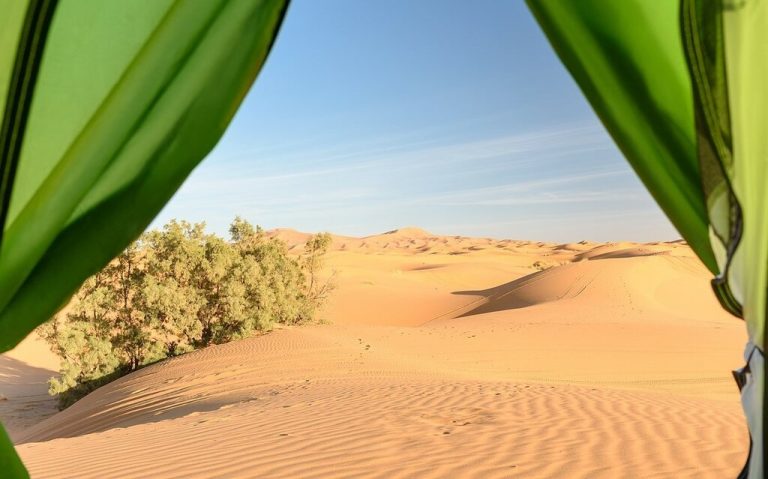
The long road south is part of the theatre: cedar forests, the Ziz palm gorges, and finally the sand. At Merzouga your camels are saddled for the golden hour, and the camp waiting beyond the dunes is the private kind — away from the rows of party tents, ensuite and lantern-lit, with dinner served under the stars and the fire crackling for you alone.

Day 6 A full desert day
A full day of Sahara with nothing mandatory in it. Sunrise from the crest, then as much or as little as you like: 4×4 lines through the dune sea, gnawa musicians in Khamlia, tea with a nomad family, or simply the shade of the camp and a book. The second night is when the desert does its real work — the novelty settles and the silence arrives.
Day 7 The kasbah road to Aït Ben Haddou
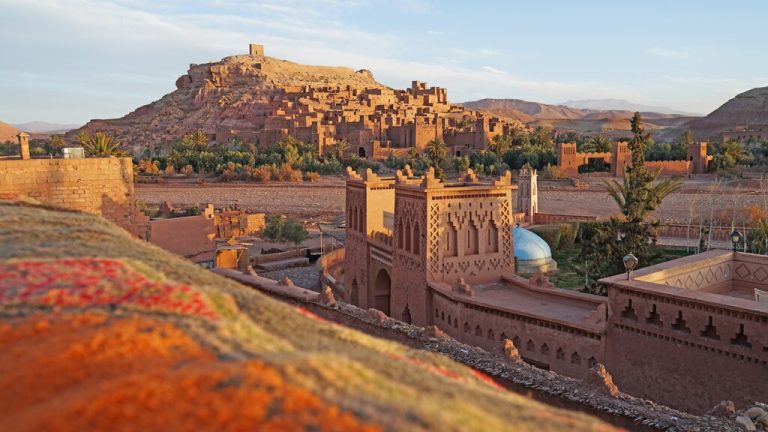
West along the kasbah road — the Todra Gorge's canyon walk, the Dades valley's mudbrick fortresses — to end inside a legend: Aït Ben Haddou at golden hour, guided to the granary viewpoint, with the crowds long gone. The night is spent in kasbah country, dinner by the fire.
Day 8 Over the Tichka to Marrakech
Over the Tizi n'Tichka with viewpoint pauses, then down into Marrakech and straight into comfort: your riad's courtyard, the hammam if you wish, an afternoon at leisure. The evening makes its own suggestion — Jemaa el-Fna at dusk is ten minutes' walk, and your driver knows the rooftop with the best view of it.

Day 9 Balloon at dawn, Marrakech guided
Dawn belongs to the balloon: lift-off over the palmery as the Atlas catches first light, champagne breakfast on landing. The rest of the day pairs a private guided tour — Bahia Palace, the Saadian Tombs, the souks decoded — with reserved time at the Jardin Majorelle. A farewell dinner is booked at one of the city's great tables.

Day 10 Departure
A slow breakfast in the courtyard, a last errand in the souk if something has been calling you, and a private transfer to Marrakech airport. Ten days, staged end to end — and the sequel plans itself whenever you are ready.

This itinerary is paced for comfort: no day exceeds one long drive, and every stage ends somewhere exceptional. Book eight weeks ahead for the signature riads (they are small and famous). October to May is the season of choice; tell us any occasion you are celebrating and we will stage it discreetly.
Included in your tour
- Private air-conditioned 4×4 or minivan with English/French-speaking driver-guide — 10 days
- Pickup at Casablanca airport or your hotel
- Night 1: Rabat riad — half-board
- Night 2: Chefchaouen riad — half-board
- Nights 3–4: Fes riad (2 nights) — half-board
- Nights 5–6: luxury ensuite desert camp (2 nights) — half-board
- Night 7: kasbah hotel, Ait Ben Haddou — half-board
- Nights 8–9: Marrakech riad (2 nights) — half-board
- Guided visit of Fes with a licensed local guide (Day 4)
- Guided visit of Marrakech with a licensed local guide (Day 9)
- Guided visit of Chefchaouen with a licensed local guide (Day 2)
- Guided visit of Rabat with a licensed local guide (Day 2)
- Guided visit of the Aït Ben Haddou ksar (UNESCO)
- Camel trek in the dunes
- Sunrise hot-air balloon flight over the palmery
- Traditional hammam session
- 4×4 desert excursion
- Drop-off at your Marrakech hotel or at the airport
Not included
- International flights
- Lunches and beverages
- Entrance fees to monuments and historical sites (optional — pay directly)
- Tips for guide and driver
- Personal expenses
- Travel insurance (recommended)
Questions travellers ask
What exactly happens in a hammam?+
Steam room, black-soap lather, a serious kessa-glove scrub by an attendant, rinse, and often a rhassoul clay or argan finish — 45 minutes to an hour, and you emerge polished. Spa hammams are private and bookable; neighbourhood hammams are cheap, sociable and bring-your-own-kit.
Is the hammam mixed or separated?+
Public hammams are strictly separated by sex (by room or by hours). Private spa hammams offer couples sessions — the honeymoon favourite — and single sessions with same-sex attendants on request.
What should I bring or wear?+
In a spa hammam everything is provided, with disposable underwear the norm. In a public one, bring underwear to wear, a towel, flip-flops and your own soap and glove — buying the kit at any corner shop is part of the fun.
What are Morocco's signature treatments?+
Argan-oil massages, rhassoul clay wraps (the mineral clay of the Fes region), rose-water everything from the Dades valley, and orange-blossom scents from the south. Our luxury and honeymoon routes weave them in at the right pauses.
More answers in the “Wellness & hammams” chapter of our Travel FAQ →
You may also like

Magic in Morocco: Casablanca, Marrakesh, Agafay & Essaouira – 15 Days

Grand Tour of Morocco: Cities, Desert & Mountains – 16 Days
