Home /Monuments of Morocco /Draa Valley
Monuments of Morocco

Tamnougalt & the Ksour of Agdz

Draa Valley · Monument guide

★★★★★ Rated 4.5/5 — 204 Google reviews · 576 reviews · 5.0/5 on Tripadvisor · Visiting notes updated October 2026

  • Visited on our private tours — Your own licensed city guide
  • Real visiting notes — Hours, tickets and the quiet hours
  • Plan it on WhatsApp — Reply within 1 hour
  • 16th-century capital of the Mezguita — the Draa's proudest ksar
  • Labyrinth of covered lanes, towers and a caïd's kasbah
  • Jewish quarter memory within the walls
Tamnougalt & the Ksour of Agdz
Reply within 1 hour · no payment at this stage
Private departures only — never in a group

Where the Draa valley properly begins its million-palm run south, Tamnougalt stands as its senior monument: a sixteenth-century ksar that governed the Mezguita oasis, capital of a caïdat whose fortified lanes, towers and grand houses still huddle in magnificent earthen density under the pyramid peak of Jbel Kissane.

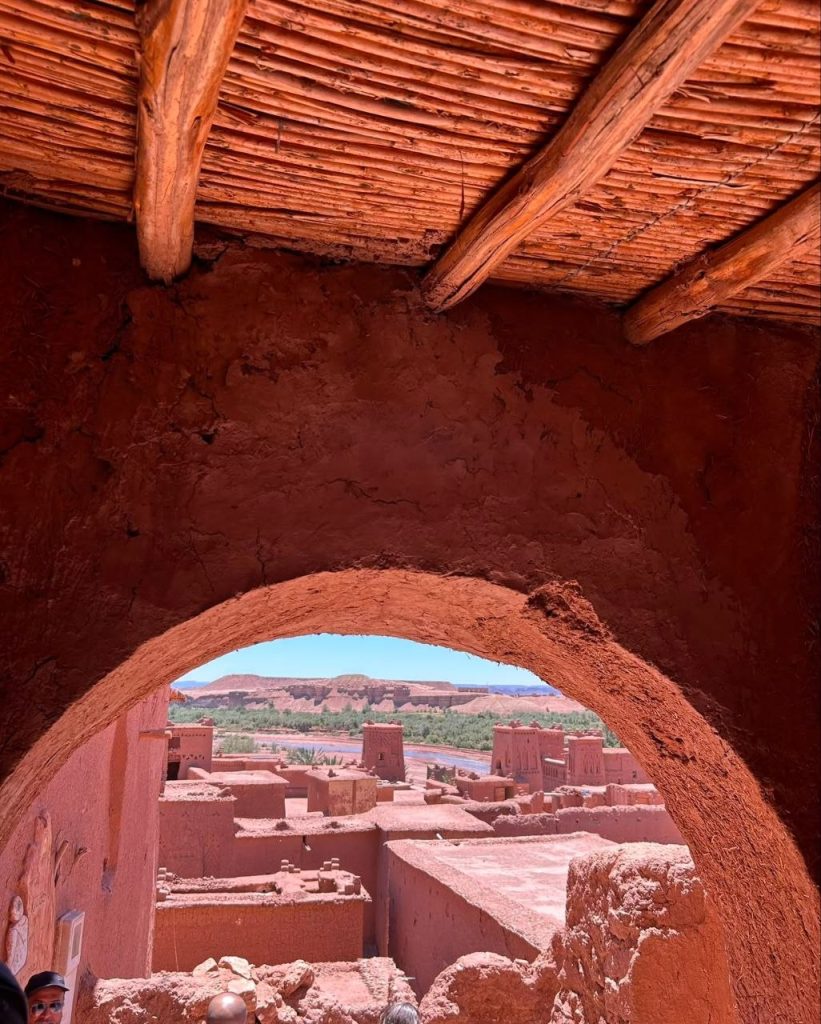
This is ksar architecture at maximum atmosphere: entrance gates worn to sculpture, covered streets tunnelling in cool darkness between houses, light-wells striping the dust, carved and painted lintels announcing old status. The caïd’s kasbah at the heart — courts, judgment rooms, guest salons under decorated ceilings — has been part-restored and receives visitors; some halls now host the area’s cultural gatherings.

Memory layers the lanes: a Jewish quarter thrived within these walls in the caravan centuries — the Draa was a corridor of communities — and guardians point out its houses and the traces of its life, a story our Jewish-heritage travellers ask for by name.

Visits run on the oldest system: village guardians (often descendants of the caïd’s households) walk you through for a modest agreed fee, torch beams carving the covered passages — theatrical, informative and the local economy working as it should. Below, paths drop through the palm gardens to the Draa’s water, completing the oasis lesson.

Tamnougalt lies just off the Agdz road: the natural first deep stop on our Marrakech–Zagora 2-day desert route and every Draa itinerary — one hour minimum, golden light preferred, Jbel Kissane composing every wide shot.

Ksar, palms, mountain: the Draa formula at its origin point. Dates on WhatsApp and we thread it into the desert road properly.

Key facts
  • 16th-century capital of the Mezguita — the Draa's proudest ksar
  • Labyrinth of covered lanes, towers and a caïd's kasbah
  • Jewish quarter memory within the walls
  • Palm groves and the Jbel Kissane pyramid as backdrop
  • First great stop on the Marrakech–Zagora desert road
Good to know

Local guardians guide the labyrinth for a modest fee (30–50 MAD spoken locally — agree kindly first); their torchlit shortcuts are half the experience. The palm-grove walk to the river completes it. En route to Zagora: build in an hour.

Questions travellers ask

What is Aït Ben Haddou?+

A fortified mud-brick village — a ksar — stacked up a hillside on the old caravan route between the Sahara and Marrakech, and a UNESCO World Heritage site since 1987. Its towers and granary have stood in for ancient cities in dozens of films, and a handful of families still live inside the walls.

How old is Aït Ben Haddou?+

The site has been a caravan stop since around the 11th century, though earthen buildings need constant renewal — most of the structures standing today date from the 17th century onward, repaired generation after generation in the same mud-brick technique.

Is Aït Ben Haddou worth visiting?+

Yes — it is the finest ksar in Morocco, and the reason it appears in every film shot here. The key is timing: early morning or golden hour, before or after the day-trip wave, climbing the lanes to the granary viewpoint. It is best folded into a desert route rather than rushed as a photo stop.

How long is the drive from Marrakech to Aït Ben Haddou?+

About 3 and a half to 4 hours for roughly 185 km — the road crosses the High Atlas at the Tizi n'Tichka pass (2,260 m), which is an attraction in itself. It works as a long day trip with Ouarzazate, and even better as day one of a desert circuit.

More answers in the “Ouarzazate & kasbah country” chapter of our Travel FAQ →

Turn the reading into a journey

The private tours below pass through the places this guide talks about — every departure is yours alone, on your dates.

Visit it on a private tour — WhatsApp