★★★★★ Rated 4.5/5 — 204 Google reviews · 576 reviews · 5.0/5 on Tripadvisor · Written by a licensed Marrakech tour operator, on the road since 2011
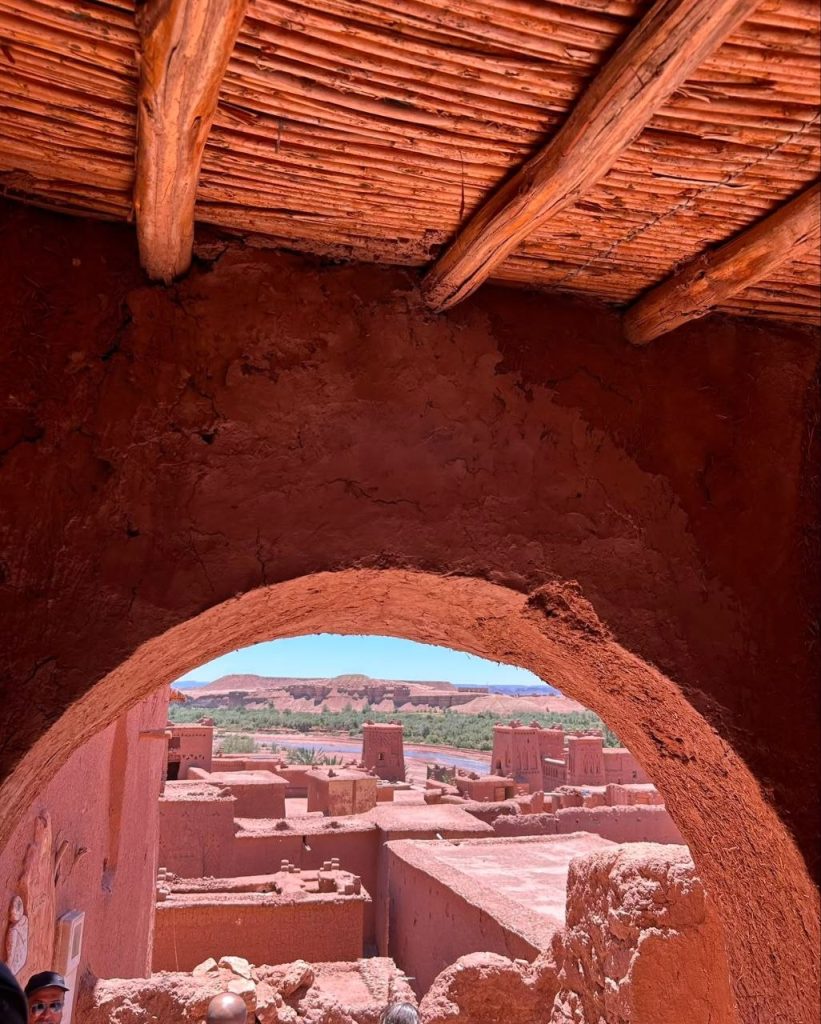
Aït Ben Haddou is the earthen city every film location scout eventually calls: a UNESCO-listed ksar of stacked kasbahs climbing a hill above the Ounila river, looking exactly as a desert citadel should. It is also busier and shallower than it needs to be if you arrive at the wrong hour. This is the guide to doing it right.
What you’re actually looking at
A ksar — a fortified village of earthen homes behind shared walls — on the old trans-Saharan caravan road, its oldest surviving structures dating back centuries and its silhouette essentially medieval. A handful of families still live inside; the rest of the village moved across the river decades ago, leaving the old town to restoration, artisans and the light. The hilltop granary (agadir) crowns it with a 360° panorama of palm valley and stony desert.

The hour that changes everything
Between roughly 10am and 4pm, the ksar hosts every desert-bound convoy at once. Sleep nearby instead — the guesthouses across the river are good and cheap by any standard — and walk in at 8am or after 5pm: lanes empty, light molten, the granary yours. It is the single highest-yield timing decision in southern Morocco, and our circuits schedule it deliberately.
Cinema’s favourite backdrop
Lawrence of Arabia, Gladiator, Game of Thrones’ Yunkai — the credits list is long, and local guides delight in matching walls to scenes. Filming brought restoration money and craft continuity; the mud renders are maintained the traditional way after each rainy season. See it as living heritage with a side-career, not a film set.
Visiting well
Cross by the stepping-stones or the bridge, wander freely (small tips where you enter decorated homes), and climb to the granary — 20 unhurried minutes. Pair it with Telouet’s faded kasbah over the Ounila valley road, the connoisseur’s approach. Aït Ben Haddou anchors every desert route we run — the Ouarzazate day trip (from €30 per person) for the time-poor, the 4-day desert circuit (from €600) for the overnight that unlocks the empty hours. History and logistics both live in the kasbah-country FAQ.
Everything on this page can be woven into a private itinerary — start from Morocco desert tours, and we shape the rest around you.
Fatima Zahra Ouazzani — Fatima Zahra covers the desert south — Merzouga, Zagora, the Draa Valley and the oasis routes between them. Her writing keeps returning to the people of the region: the families who run the camps, the date harvest in autumn, the way a khettara irrigation channel organises an entire palm grove. She is our reference for travellers who want the Sahara with its context still attached.