★★★★★ Rated 4.5/5 — 204 Google reviews · 576 reviews · 5.0/5 on Tripadvisor · Written by a licensed Marrakech tour operator, on the road since 2011
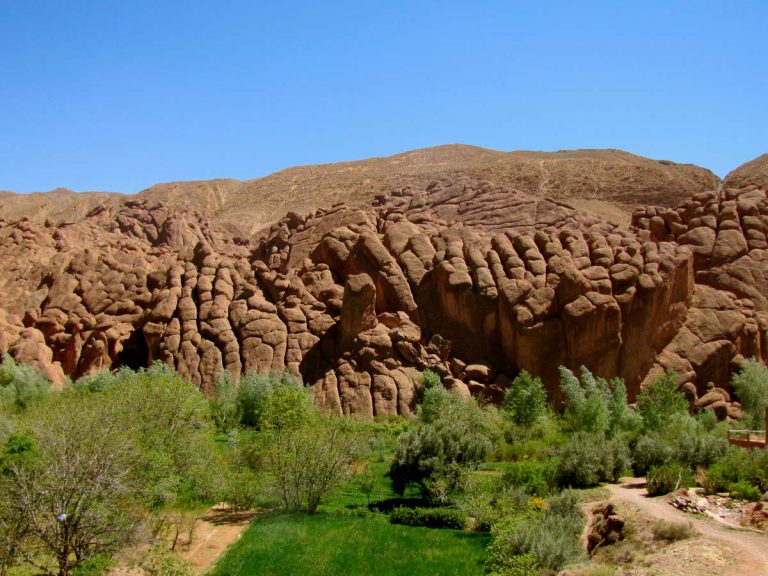
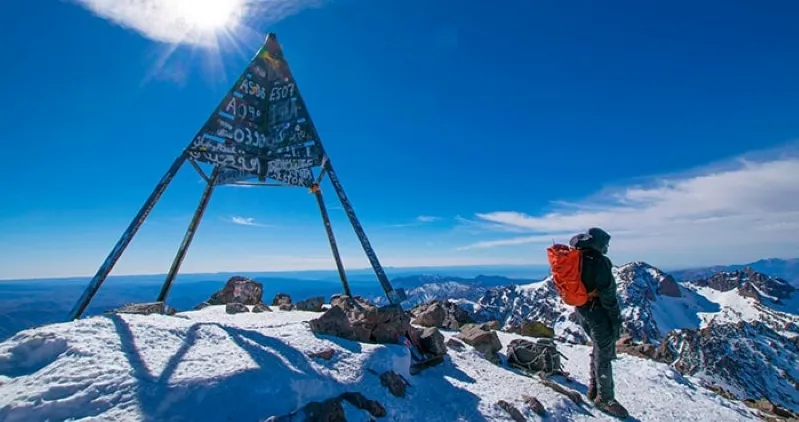
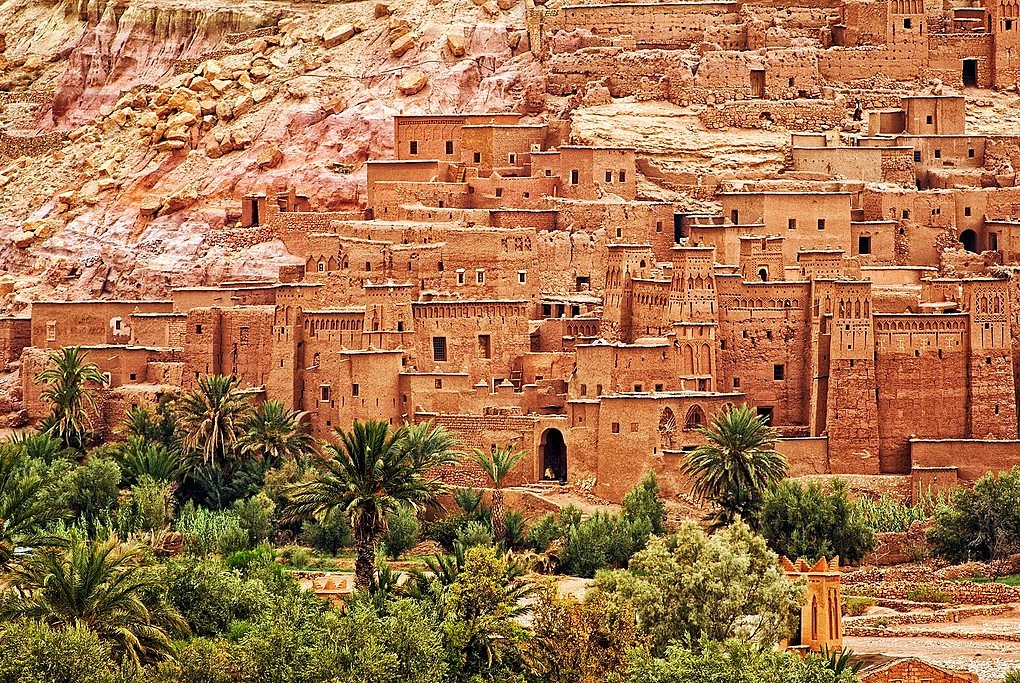
Aït Bouguemez earned its nickname — the Happy Valley — from the improbable green of its valley floor: a two-kilometre-wide ribbon of barley, apple orchards and poplars laid between 2,000-metre walls, four hours’ drive from Marrakech and a century from it in rhythm. For walkers who want the Atlas without the Toubkal crowds, this is the answer.
Why walkers love it
The valley floor walking is gentle — flat farm paths between a dozen villages, granaries on the spurs, the odd dinosaur footprint in the rock above Ibaqalliwn — while the side valleys climb seriously toward M’Goun, Morocco’s second great massif at 4,071 metres. One base, every difficulty level: that flexibility is rare in mountain travel.
The village life around the walking
Bouguemez runs on gîtes d’étape — family guesthouses where dinner is what the garden gave — and on a farming calendar you walk through: ploughing behind mules, apple harvest in autumn, women carrying alfalfa like green haystacks with legs. Guests who come for the trails leave talking about the kitchens.
The practical shape
Count a full travel day each way from Marrakech (the Aït Blal road is scenic and slow), so the honest minimum is three nights; five lets you traverse toward the M’Goun gorges. Spring and autumn are ideal; winter buries the passes and summer stays pleasant at 1,800 m.
Walking it with us
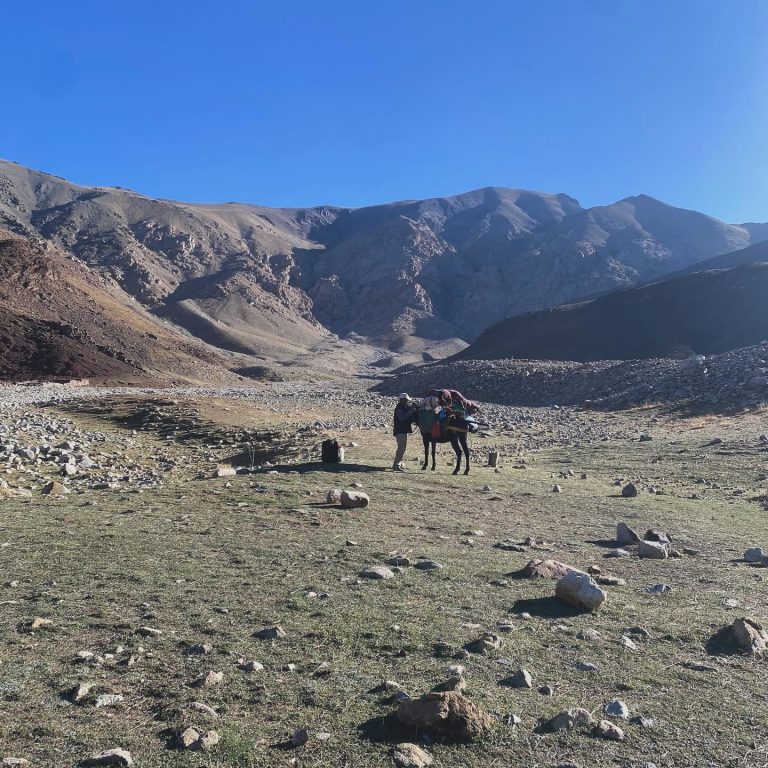
We run Bouguemez as a tailor-made extension of our 3-day valleys trek (from €195 per person) — private group, licensed guide, mule support, gîte nights — and it pairs beautifully with Ouzoud’s falls on the drive back. Fitness and season questions are in the trekking FAQ.
Everything on this page can be woven into a private itinerary — start from hiking in Morocco, and we shape the rest around you.
Khadija El Fassi — Khadija writes about trekking and mountain travel, from family-friendly valley walks to multi-day traverses. She started hiking the Atlas as a student with a borrowed pack and bad shoes, and her articles are shaped by that memory — they assume nothing, explain the mule logistics, and always answer the question people are embarrassed to ask: how fit do I actually need to be?