★★★★★ Rated 4.5/5 — 204 Google reviews · 576 reviews · 5.0/5 on Tripadvisor · Written by a licensed Marrakech tour operator, on the road since 2011
If Morocco has a festive default, it is this: beef (or lamb) slow-cooked to collapse under a glossy crown of prunes, sesame and fried almonds — sweet-savoury cooking at its most confident. Here is the traditional method, sized for a family table and honest about the time it takes.
Ingredients (serves 6)
1 kg beef shin or shoulder in large chunks · 2 sliced onions · 3 crushed garlic cloves · 1 tsp each ginger and turmeric · ½ tsp cinnamon plus a stick · saffron threads · salt, pepper, olive oil · a small bunch of coriander/parsley. For the crown: 250 g soft prunes · 2 tbsp honey · ½ tsp cinnamon · toasted sesame seeds · fried blanched almonds.

The method
Brown nothing — this is a Moroccan braise: layer meat, onions, garlic, spices and oil in the pot with a glass of water, and simmer covered, low and patient, 2½ to 3 hours (45 minutes in a pressure cooker), until the meat yields to a spoon. Meanwhile simmer the prunes 15 minutes in water, then glaze them gently with honey and cinnamon until syrupy. To serve: meat and its reduced sauce first, prunes spooned over, sesame and almonds scattered — bread, not cutlery, does the rest.
The rules Moroccan cooks actually follow
Cheap gelatinous cuts beat steak every time; the sauce should reduce to a gloss, never swim; and the sweet element stays a crown, not a sauce — balance is the whole art. A conical tagine pot is atmospheric but optional; a heavy casserole cooks it identically.
Eat it where it was perfected
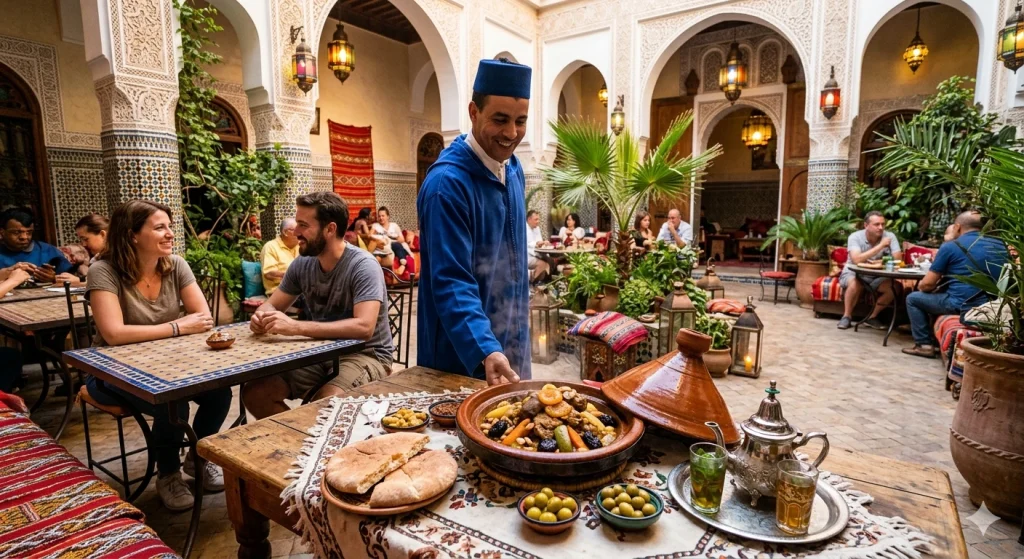
This dish headlines wedding tables and Friday feasts — and the version at a family table outranks any restaurant’s (where it sits in the canon). Learn it hands-on in a Marrakech cooking class, or eat your way to it along our food routes (from €1050 per person).
Everything on this page can be woven into a private itinerary — start from a private Marrakech day with a food-savvy guide, and we shape the rest around you.
Driss Bouzidi — Driss covers food and drink. He plans entire itineraries around a single dish — a Friday couscous in the Middle Atlas, a tanjia slow-cooked in Marrakech ashes, sardines at the Essaouira port — and then writes up where the detour is genuinely worth it. His restaurant notes favour places that feed locals on a Tuesday over places that photograph well.