★★★★★ Rated 4.5/5 — 204 Google reviews · 576 reviews · 5.0/5 on Tripadvisor · Written by a licensed Marrakech tour operator, on the road since 2011
If Morocco has one dish that means home, it is harira — the tomato, lentil and chickpea soup that breaks a nation’s fast every Ramadan evening and comforts it the rest of the year. Here is why a humble soup carries this much weight, and where to meet its best versions.
What harira actually is
A silken tomato base thickened with tadouira (a flour-and-water liaison), lentils and chickpeas for body, herbs in quantity — coriander, parsley, celery — warm spices, and often a little meat, though meatless versions abound. It arrives with dates and honeyed chebakia pastry on the side: the sweet-savoury pairing is the whole point.

The Ramadan ritual
At sunset in Ramadan, the entire country sits before the same bowl — the cannon sounds, dates first, then harira. Sharing that moment as a guest is one of Moroccan travel’s quiet privileges (visiting during the month, explained). Outside Ramadan, harira is breakfast for workers, supper for families, and the street pot that never empties.
Where to eat it well
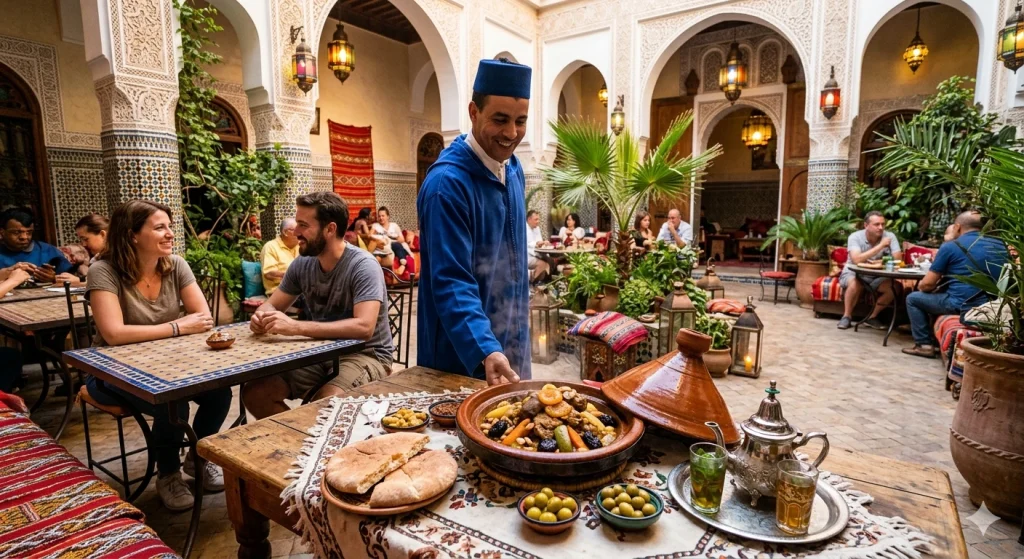
The street stalls with a queue of locals at dusk; the milk-bars (mahlabas) that ladle it all day; and any Moroccan home you are lucky enough to enter. A euro’s worth buys a proper bowl almost anywhere in the country.
Learning it
Harira is a standard request in the cooking classes we arrange — it travels home better than any souvenir. The rest of the canon is in what to eat in Morocco, and the tasting version of the country lives on our food routes.
Everything on this page can be woven into a private itinerary — start from a private Marrakech day with a food-savvy guide, and we shape the rest around you.
Driss Bouzidi — Driss covers food and drink. He plans entire itineraries around a single dish — a Friday couscous in the Middle Atlas, a tanjia slow-cooked in Marrakech ashes, sardines at the Essaouira port — and then writes up where the detour is genuinely worth it. His restaurant notes favour places that feed locals on a Tuesday over places that photograph well.