★★★★★ Rated 4.5/5 — 204 Google reviews · 576 reviews · 5.0/5 on Tripadvisor · Written by a licensed Marrakech tour operator, on the road since 2011
Every Moroccan market builds pyramids of olives — green, violet, wrinkled black, spiced red — and most visitors photograph them without ever decoding them. Here is what the pyramids mean, and why Morocco is one of the world’s great olive countries hiding in plain sight.
A country built on olive trees
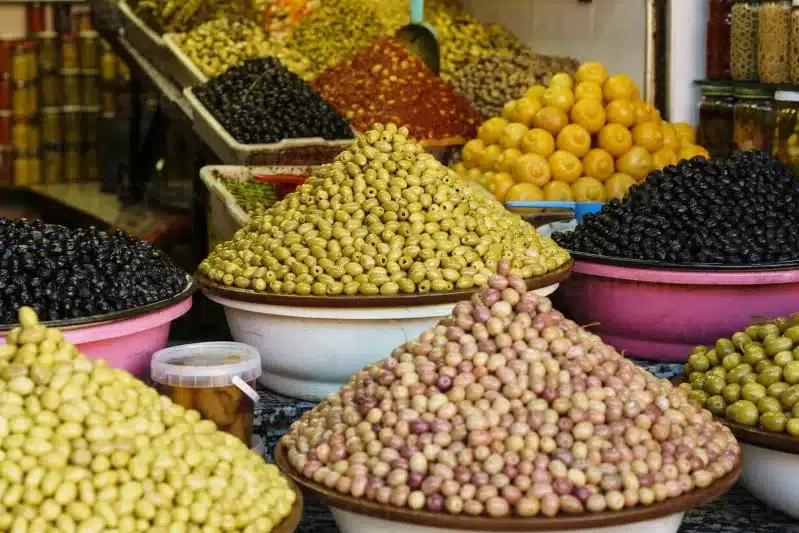
Morocco ranks among the world’s leading olive producers, with groves from Meknes — the olive heartland — to the Atlas foothills. The workhorse is the picholine marocaine, harvested at different ripeness stages that produce the souk’s whole colour spectrum: green (young, firm, bitter-fresh), violet (mid-ripe), black (fully ripe, soft, mellow).
Reading the pyramid stall
Beyond ripeness, the seasonings map the country: lemon-and-coriander greens, harissa-spiked reds, bitter-orange marinades, oil-cured wrinkled blacks for cooking. Ask to taste — vendors expect it — and buy a mixed scoop by weight for pocket change. The olives cooked into chicken tagine with preserved lemon are the violet, meaty ones.
The oil story
Village presses around Meknes and the Middle Atlas still run traditional stone mills each autumn harvest; peppery fresh oil sold in unmarked bottles at roadside stalls is one of Morocco’s great cheap luxuries — and a superb edible souvenir alongside the classics.
Tasting with intent
An olive-stall stop with a guide who knows the vendors turns a photo into a tasting; harvest season (roughly October to December) adds the presses. Both slot into the food & drink routes — and into any market morning we run.
Driss Bouzidi — Driss covers food and drink. He plans entire itineraries around a single dish — a Friday couscous in the Middle Atlas, a tanjia slow-cooked in Marrakech ashes, sardines at the Essaouira port — and then writes up where the detour is genuinely worth it. His restaurant notes favour places that feed locals on a Tuesday over places that photograph well.