★★★★★ Rated 4.5/5 — 204 Google reviews · 576 reviews · 5.0/5 on Tripadvisor · Written by a licensed Marrakech tour operator, on the road since 2011
Eid al-Fitr — the feast ending Ramadan — is Morocco’s warmest family holiday: two to three days when the country exhales, dresses up and eats cookies with heroic commitment. Travelling during Eid is not a problem to manage but a privilege to time well. Here is the honest picture.
What actually happens
The morning of Eid begins with mass prayers (squares and mosques overflow, beautifully), then the country goes home: new clothes for children, rounds of family visits, and trays of the pastry canon — this is what all that pre-Eid bakery frenzy was for. Streets are quiet on the first morning, festive by afternoon.

The traveller’s practicalities
Expect two public holidays (exact dates follow the lunar calendar and the moon sighting — they shift ~11 days earlier each year, so check close to travel). Banks and offices close; most tourist services — riads, drivers, restaurants in visitor zones — keep working, often with a festive mood bonus. Intercity transport is the one pinch point: Moroccans travel home for Eid, so trains and roads fill the day before — a private car sidesteps the scramble entirely.
Why it can be the best time to be here
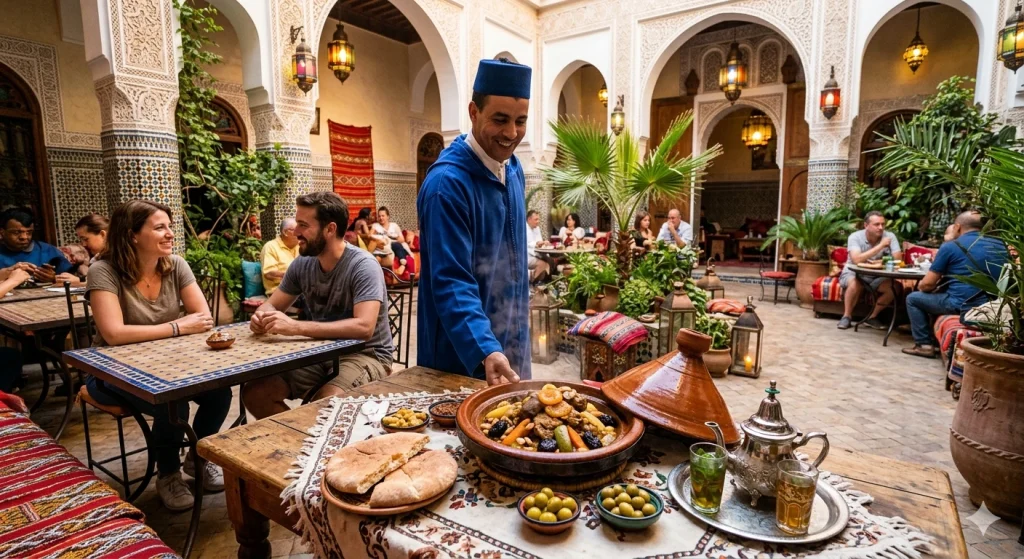
Guests in Morocco during Eid routinely report the trip’s warmest moments: sweets pressed on strangers, children parading new outfits, invitations that materialise from nowhere. Accept the third cookie; refusing all hospitality is harder work than accepting some. Say “Eid mubarak” and watch faces open.
Planning around (or into) it
If your dates brush Ramadan itself, that guide is here; for the year’s other feasts — Eid al-Adha’s bigger family logistics, Yennayer’s couscous — the moving calendar is annotated in the festivals FAQ. We schedule around the holidays’ pressure points as standard on private departures.
Everything on this page can be woven into a private itinerary — start from historical sites of Morocco or book the 7-day Imperial Cities circuit, and we shape the rest around you.
Abdellah Naciri — Abdellah covers culture and etiquette — the guest's guide to Moroccan life. His pieces explain the things locals rarely think to say out loud: how tea is offered and refused, what to wear where, how a moussem festival works, why Friday changes a town's rhythm. He writes them so that a first-time visitor can move through Morocco with ease rather than anxiety.