★★★★★ Rated 4.5/5 — 204 Google reviews · 576 reviews · 5.0/5 on Tripadvisor · Written by a licensed Marrakech tour operator, on the road since 2011
Morocco runs on liquid hospitality. Understand what is in the glass and half the culture explains itself — starting, of course, with the tea.
Mint tea, properly understood
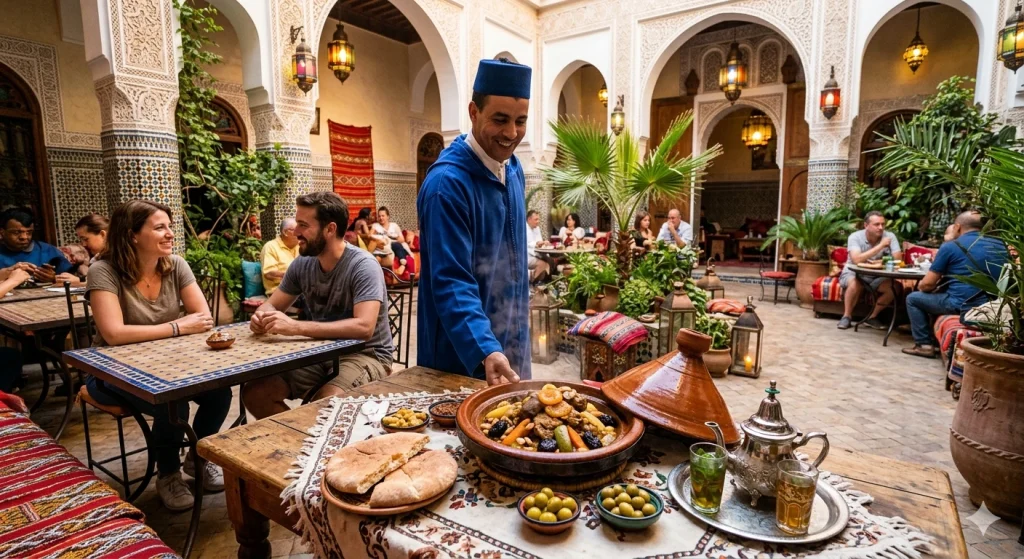
Gunpowder green tea, a fist of fresh mint, sugar in geological quantities, poured from a height to raise the foam. It is offered on arrival everywhere from carpet shops to nomad tents, and accepting is the point: the first glass is greeting, the second is conversation, the third is friendship. Refusing all three is the only real faux pas.

The juice bars and milk drinks
Fresh orange juice is a national treasure at pocket-change prices; in season, try sugarcane or pomegranate. Almond milk (sharbat) and avocado shakes thick enough to stand a spoon in are the juice stalls’ secret weapons — Marrakech’s Jemaa el-Fna carts compete on them nightly.
Coffee culture
Café society is serious: nous-nous (half coffee, half milk) nursed for an hour on a terrace is a legitimate activity, not a delay. Spiced coffee — cinnamon, nutmeg, a whisper of pepper — appears in older cafés and at desert camps.
And alcohol?
Available in licensed restaurants, riads and supermarkets; discreet by custom, quieter during Ramadan. Morocco’s own vineyards around Meknes produce very drinkable reds and gris — a tasting slots into tailor-made routes happily. The culture FAQ covers the etiquette; our food & drink tours cover the pleasure.
Everything on this page can be woven into a private itinerary — start from a private Marrakech day with a food-savvy guide, and we shape the rest around you.
Samira El Idrissi — Samira writes about Moroccan cooking and the culture around it: souk produce, home kitchens, street food you can trust your stomach to, and the pastry trays that appear whenever a Moroccan family decides you look thin. She tests the food safety advice she gives, which her colleagues consider either dedication or recklessness depending on the week.