Travellers brace for fire and meet perfume: Moroccan food is deeply spiced but rarely spicy-hot. Understanding that distinction is the key to the whole cuisine — and to ordering with confidence.
Spiced, not hot
The Moroccan flavour engine runs on cumin, ginger, turmeric, cinnamon, saffron, paprika and coriander — warmth, depth and aroma, not chilli burn. A classic tagine will not trouble a child’s palate; that is by design, not dilution. The famous ras el hanout (“head of the shop”) blends dozens of spices, and heat is barely among them.
Where the heat actually hides
Harissa arrives as a side paste — you administer your own fire. Chermoula for grilled fish carries gentle chilli warmth. Street grills offer a spicy kefta variant if you ask. In short: heat in Morocco is opt-in, sitting in a small dish beside your plate, never ambushing you from inside it.
Ordering by heat preference
Spice-averse: order anything; you are in the world’s safest “exotic” cuisine. Heat-seekers: say “bzaf dyal harissa” (lots of harissa) and watch the cook smile. Parents: this is the easiest adventurous food a family can meet — one reason Morocco works so well with kids.
Taste the spectrum properly
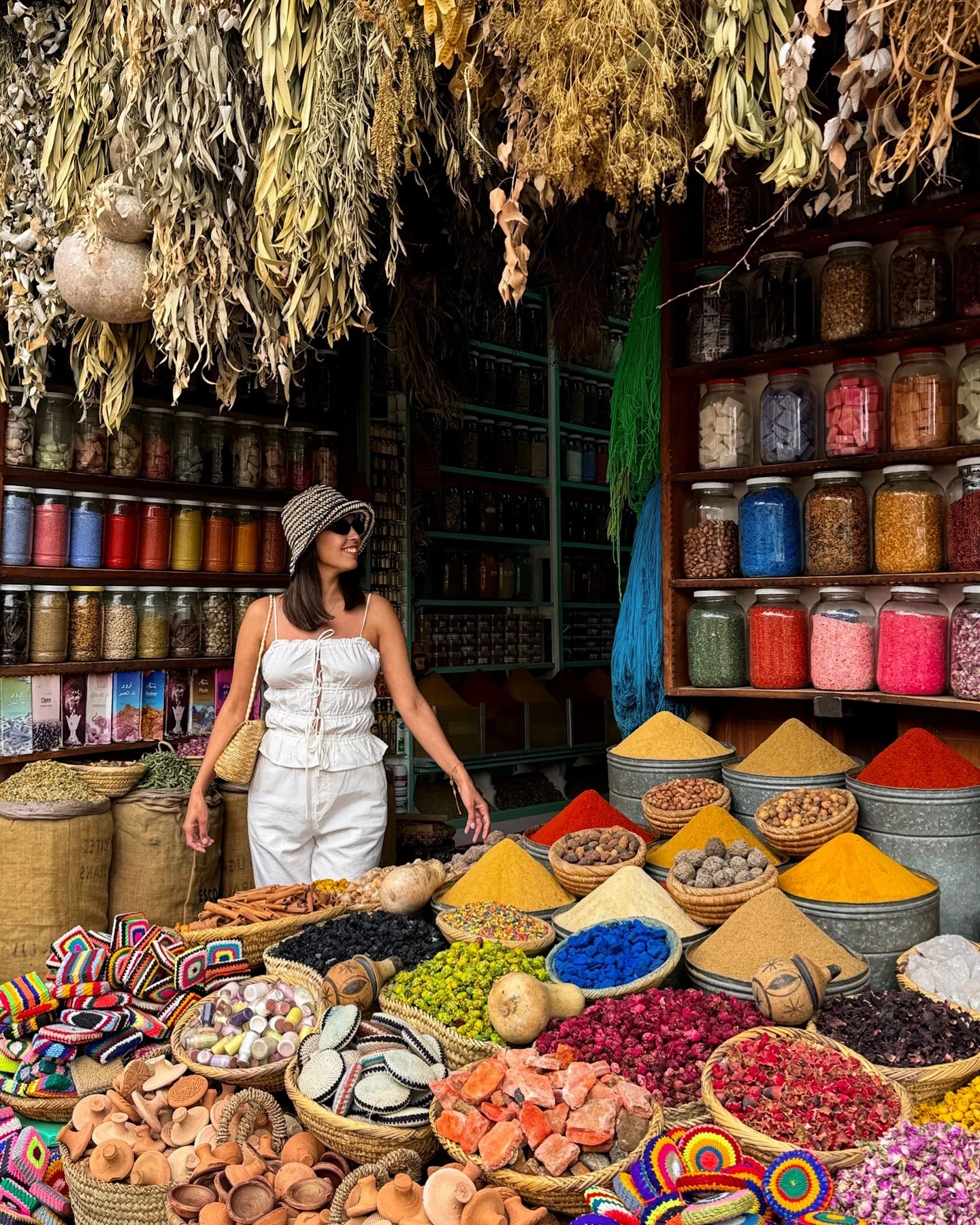
A spice-souk walk decodes the pyramids of colour, and a cooking class teaches the blending logic first-hand — both slot into any day of our culinary routes. The wider eating questions live in the food FAQ.
Samira El Idrissi — Samira writes about Moroccan cooking and the culture around it: souk produce, home kitchens, street food you can trust your stomach to, and the pastry trays that appear whenever a Moroccan family decides you look thin. She tests the food safety advice she gives, which her colleagues consider either dedication or recklessness depending on the week.