★★★★★ Rated 4.5/5 — 204 Google reviews · 576 reviews · 5.0/5 on Tripadvisor · Written by a licensed Marrakech tour operator, on the road since 2011
Every Moroccan city has couscous and tagine; only Marrakech has tanjia — beef and preserved lemon slow-cooked overnight in the ashes of a hammam furnace. It is the city’s true signature dish, and most visitors leave without meeting it. Fix that.
What it is, exactly
An urn-shaped clay pot packed with beef (traditionally cheek and shank), preserved lemon, garlic, cumin, saffron and a spoon of smen — Morocco’s aged butter — sealed with paper and buried in the embers that heat the neighbourhood hammam. Eight hours later: meat that surrenders to bread, in a sauce with no European equivalent.
The bachelor’s dish
Tanjia is nicknamed the bachelor’s tagine: historically a workers’ dish — souk artisans would drop their pots at the furnace in the morning and collect dinner after work. It remains communal, masculine, picnic-prone: Marrakchis take tanjia to the Menara gardens the way other cities take sandwiches.

Where to eat the real thing
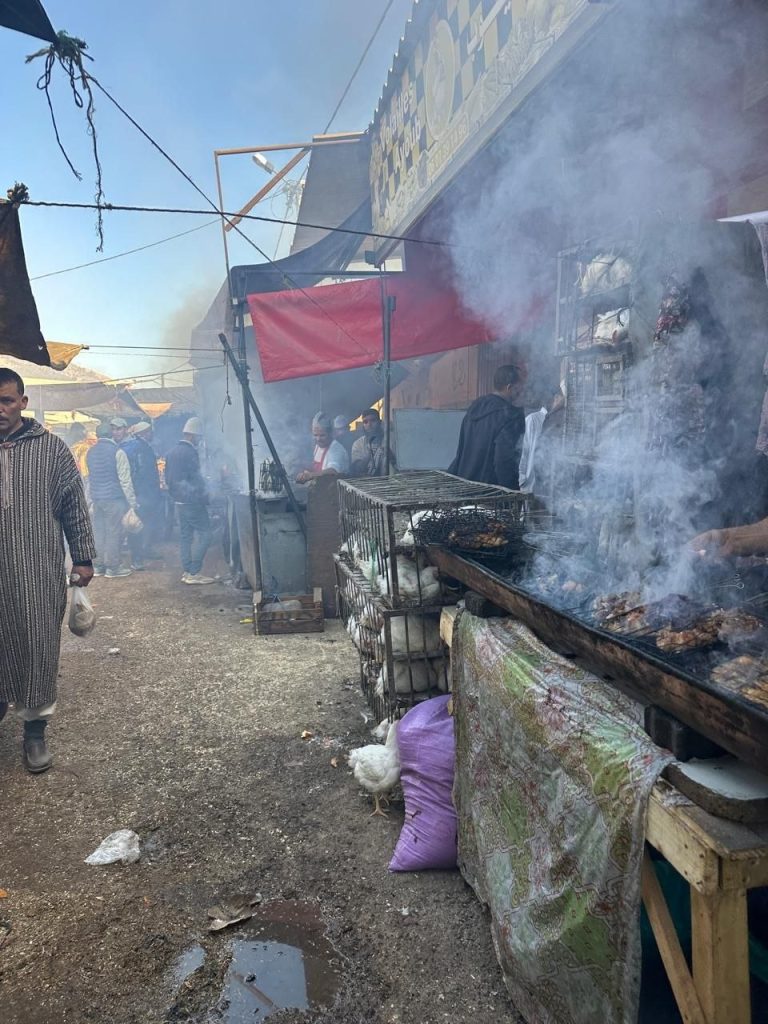
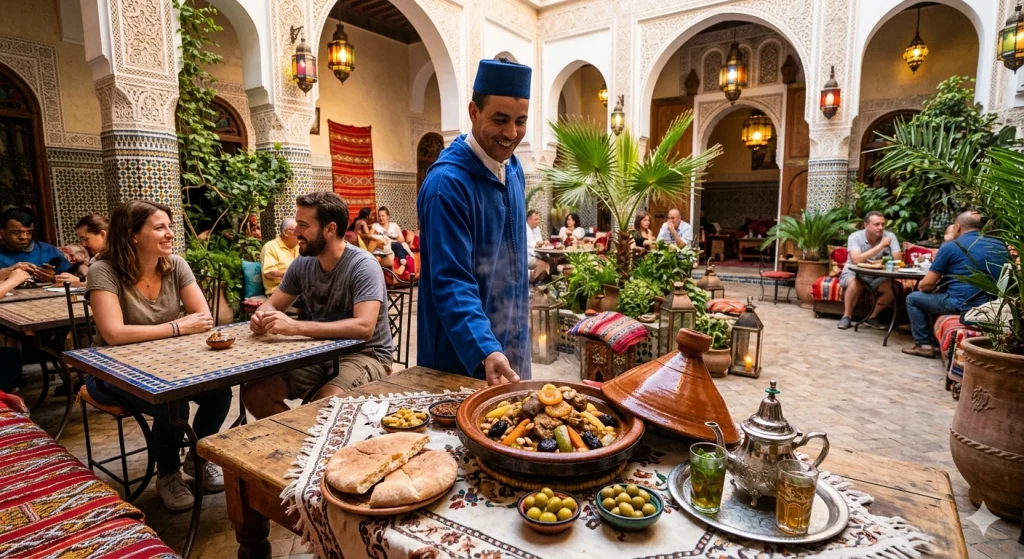
The honest addresses cluster near the Mellah and the mechoui alley — lunchtime spots where the pots come out of actual ashes and sell out by mid-afternoon. Order by weight, eat with bread and cumin salt, drink mint tea. If a menu offers tanjia at dinner in candlelight, it may still be good — but the ash-pit lunch is the cultural original.
What tanjia actually is
Tanjia is Marrakech’s only truly local dish — not a tagine, despite the similar name. It is an urban amphora of glazed clay, packed with beef or lamb, preserved lemon, garlic, cumin, saffron and a spoon of smen (aged butter), sealed with paper, and carried to the farnatchi — the man who tends the fire that heats the neighbourhood hammam — to cook for five to eight hours buried in the ashes. It is nicknamed the “bachelor’s dish” because it was traditionally prepared by working men, who dropped it off before work and collected dinner on the way home. The result is meat that has given up all resistance, perfumed with lemon and smoke.
Where to eat it (and what it costs)
The classic address is the Mechoui Alley off Jemaa el-Fna, where tanjia and roast lamb are sold by weight at lunchtime — expect around 60–120 dirhams for a generous portion, bread included. Several riad restaurants now do refined versions at 150–250 dirhams. The trick is timing: real tanjia sells out — go at lunch, not dinner. The wider eating map is in our Marrakech food guide, and any private city day can end at the farnatchi with a tanjia ordered that morning in your name.
Tasting it with us
A tanjia lunch slots naturally into any Marrakech day — tell your guide it is a priority and the right pot will be waiting. The full culinary city lives on our food & drink routes; cooking-class versions (your own pot, your own ashes) can be arranged via plan your journey.
Driss Bouzidi — Driss covers food and drink. He plans entire itineraries around a single dish — a Friday couscous in the Middle Atlas, a tanjia slow-cooked in Marrakech ashes, sardines at the Essaouira port — and then writes up where the detour is genuinely worth it. His restaurant notes favour places that feed locals on a Tuesday over places that photograph well.