★★★★★ Rated 4.5/5 — 204 Google reviews · 576 reviews · 5.0/5 on Tripadvisor · Written by a licensed Marrakech tour operator, on the road since 2011
Most day-trippers race the Tichka road straight to Aït Ben Haddou for the photograph. The connoisseur’s version adds one detour that transforms the day from sightseeing into a story: Telouet, the half-ruined palace of the Lords of the Atlas.
Telouet — the fallen palace
Off the pass road, at the head of the old caravan route, sits the Glaoui family’s mountain stronghold. Outside: earthen walls dissolving back into the hillside. Inside, astonishingly: reception rooms of pristine zellij, painted cedar and stucco — 1930s opulence frozen mid-sentence when the family fell with the French in 1956. Almost nobody comes. You will have imperial rooms to yourself, with a guardian’s stories echoing.

The back road to Aït Ben Haddou
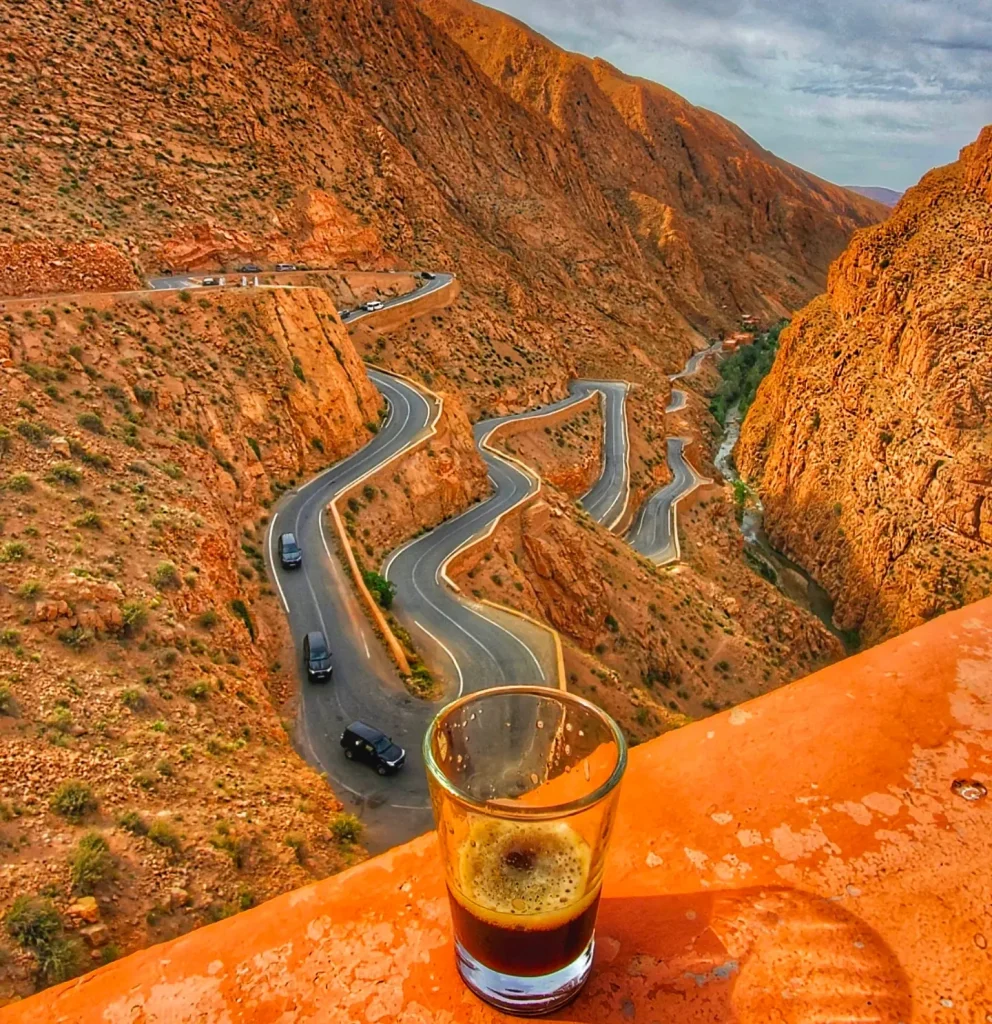
From Telouet, the Ounila valley road threads terraced villages, red gorges and lesser kasbahs to the back gate of Aït Ben Haddou itself — arriving via the valley that explains it, rather than the car park. It is one of Morocco’s great short drives, and buses cannot take it.
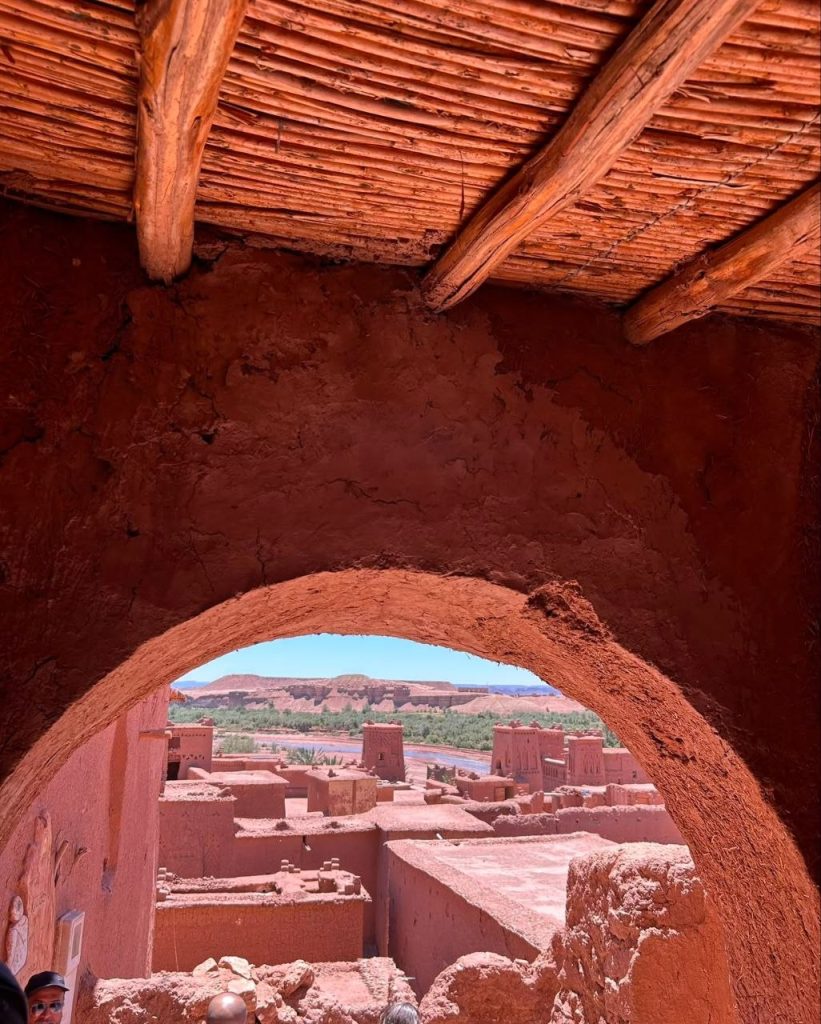
Aït Ben Haddou — the survivor
The UNESCO citadel needs no introduction — but timing needs insisting: crossing to the far bank and climbing to the granary for late-afternoon light, after the day-trip wave recedes, is a different monument from the noon version.
Doing the full loop
Tichka pass out, Telouet detour, Ounila valley, Aït Ben Haddou at the golden hour, motorway of stars home — a long, superb private day (the base itinerary is our Ouarzazate day trip, from €23; ask for the Telouet variant on plan your journey). Sleeping at the kasbah instead? That is day one of the 4-day desert circuit.
Everything on this page can be woven into a private itinerary — start from Morocco city breaks or book the 7-day Imperial Cities circuit, and we shape the rest around you.
Youssef El Amrani — Youssef grew up a few streets from Bab Doukkala and has watched Marrakech reinvent itself several times over without ever quite changing. He covers the city for our guides — the palaces and museums, yes, but mostly the practical texture of it: which gate to enter the souks by, when Jemaa el-Fna is worth your evening, how much a taxi should actually cost. His rule for every piece he writes: if a reader follows it on foot, it has to work.