★★★★★ Rated 4.5/5 — 204 Google reviews · 576 reviews · 5.0/5 on Tripadvisor · Written by a licensed Marrakech tour operator, on the road since 2011
Marrakech does luxury three different ways, and the right answer depends on what you want the city to feel like from your pillow. Here is the honest taxonomy — types, not tariffs — so you brief us (or any booker) in one sentence.
The medina riad: luxury as intimacy
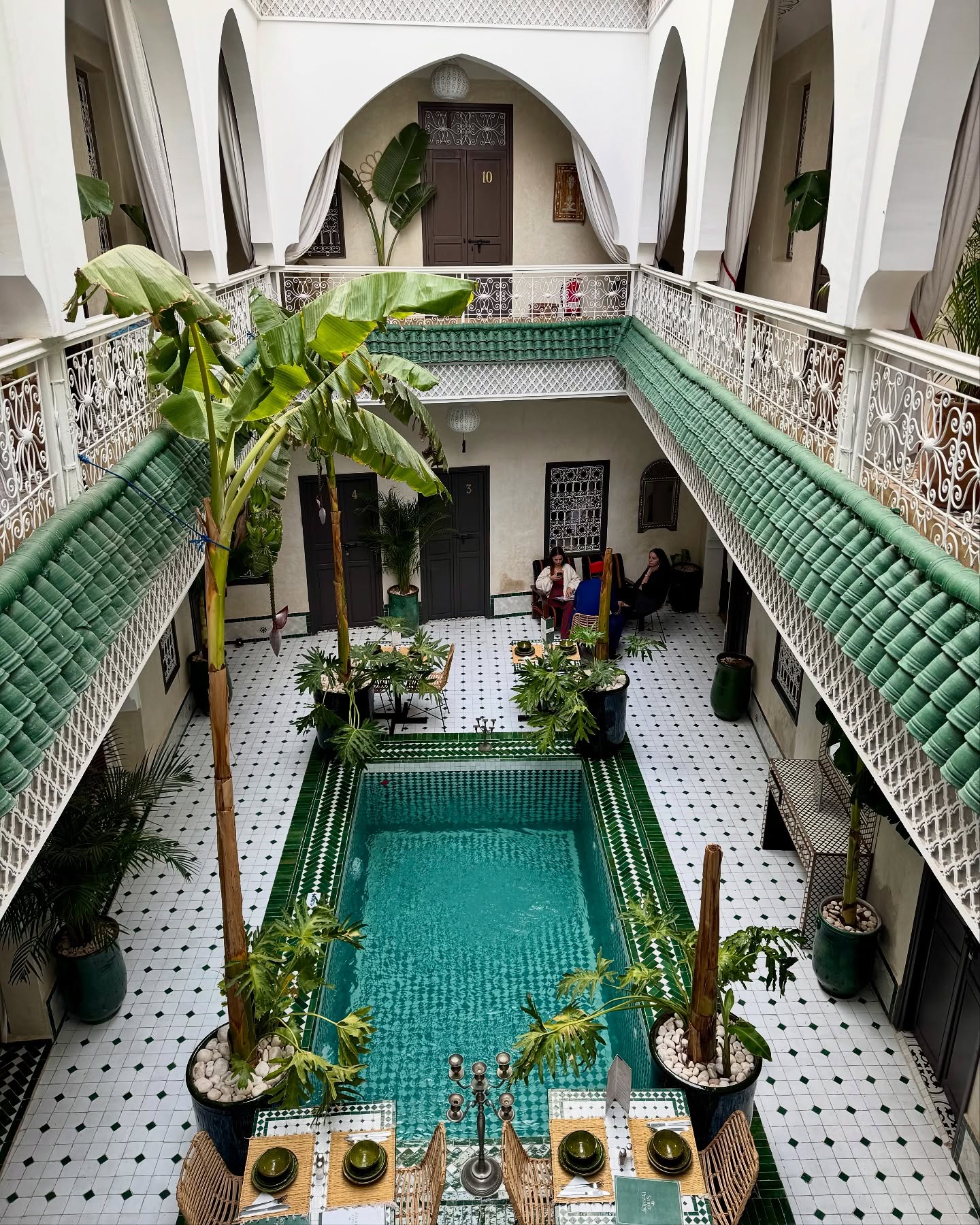
Six to ten rooms around a courtyard pool, carved cedar, staff who learn your breakfast by day two — the riad is Marrakech’s native luxury and the one we recommend for first visits. You live inside the old city: the souks start at your door, and the rooftop is your decompression chamber. The trade: stairs, no cars to the door (porters handle the last lanes), and intimacy over gyms.
The palace hotel: luxury as occasion
The grande-dame tier — the storied addresses with hammams the size of chapels and gardens measured in hectares — turns the stay itself into the event. Choose it for anniversaries, for winter pool days, for when the trip is the treat. The trade: you are near the medina rather than in it, and the city becomes an excursion.
The Palmeraie resort: luxury as space
Out among the palms: villas, horizon pools, golf, silence. The family-and-friends format — space for children to run and adults to do nothing beautifully. The trade: twenty minutes’ drive to everything, which a private driver dissolves.
Booking it like a pro
Spring and autumn book out months ahead for the small riads — reserve those first, flights second. Split-stay is the connoisseur’s move: three riad nights then two Palmeraie nights orders the trip from intensity to exhale. We hold house lists in all three tiers for our Royal Morocco journey (from €1500 per person) and luxury routes — tell us the feeling you want and we match the address, privately as always. Riad questions answered in the stays FAQ.
Everything on this page can be woven into a private itinerary — start from Morocco city breaks or book the 7-day Imperial Cities circuit, and we shape the rest around you.
Salma Benkirane — Salma writes about the Marrakech that sits one layer beneath the postcards — riad architecture, garden history, the hammam ritual, and where the city's craftspeople actually work. She spends most of her research time walking: a route is only recommended here after she has timed it, priced it and found the shade along the way. Her favourite hour in the city is the one just after the dusk call to prayer, when the lanes north of the Ben Youssef Medersa go quiet.