★★★★★ Rated 4.5/5 — 204 Google reviews · 576 reviews · 5.0/5 on Tripadvisor · Written by a licensed Marrakech tour operator, on the road since 2011
A Moroccan rug is the souvenir most likely to outlive you — and the purchase most surrounded by theatre. Here is the guide the carpet salons never hand out: what the types mean, what drives price, and how to buy one you will still love in twenty years.
Know the families
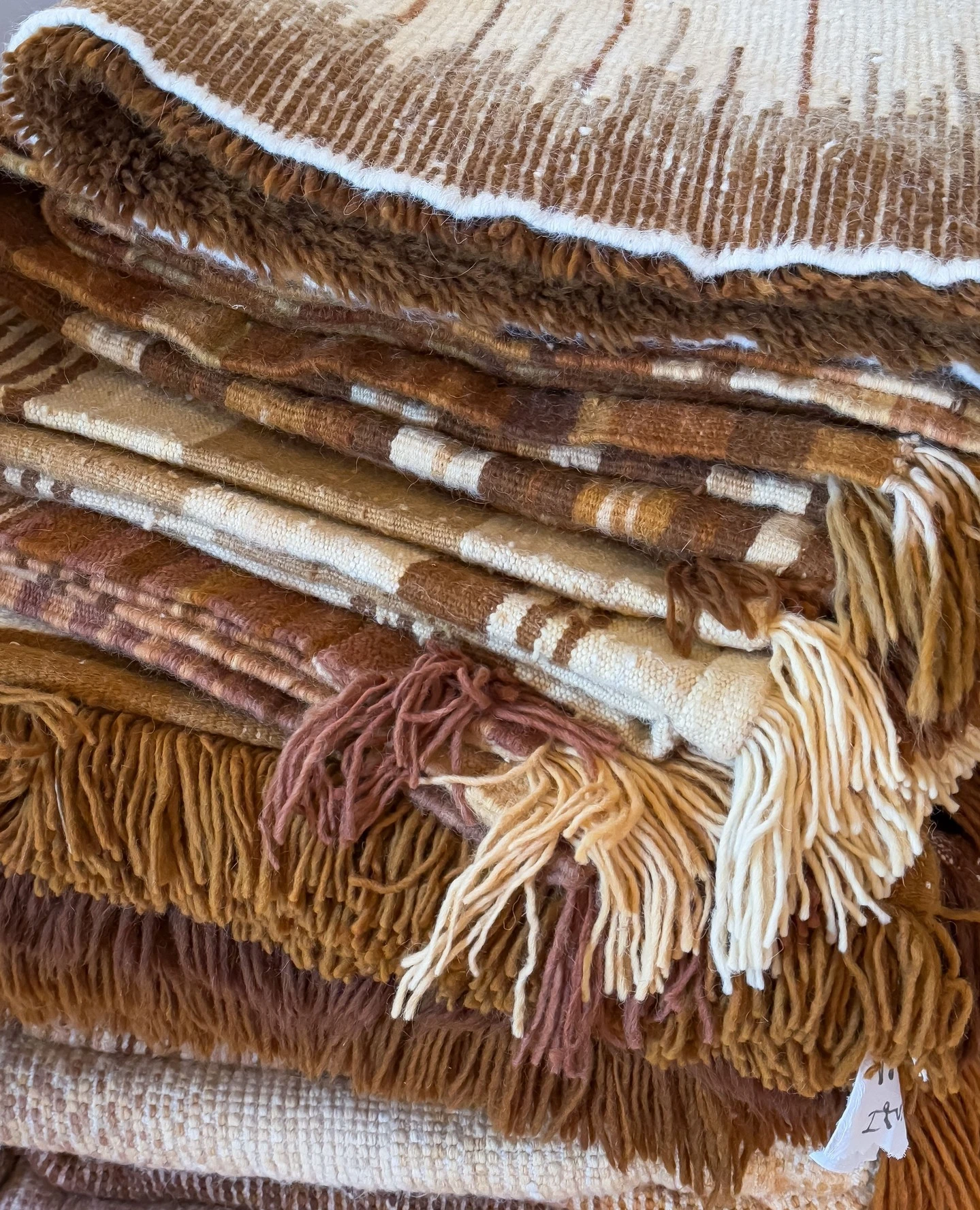
Beni Ourain — the famous ones: cream wool, black-brown geometry, Middle Atlas origins, thick pile for cold nights. Azilal — looser, brighter, more painterly. Boucherouite — joyful rag-rugs of recycled textile, the budget-friendly originals. Kilims/Hanbels — flat-woven, lighter, suitcase-kind. Taznakht/Ouarzazate — saffron-and-red wool from the south. Each family has a price logic; “Beni Ourain” on a label multiplies it, so learn to recognise the real weave.
Reading quality in two minutes
Flip it: hand-knotted backs show slightly irregular knots (perfection suggests machine). Wool should feel lanolin-alive, not plasticky; natural dyes shade subtly within colours. Old rugs earn their patina — “antique” claims deserve scepticism, but honest vintage shows wear where feet actually walk.
The buying theatre, played well
Tea is part of it (and creates no obligation); prices open high; thirds-to-half counters are normal — the full grammar is in our haggling guide. Fix your budget per square metre before the first unrolling, and buy for love: investment-grade carpet dealing is a profession, not a holiday activity.
Where we take people
Cooperative showrooms with posted provenance, and the weaving villages themselves on Atlas and southern routes — watching a rug leave a loom recalibrates every price in the souk. Ask on any circuit and the right detour appears; shipping home is routine from reputable dealers.
Everything on this page can be woven into a private itinerary — start from historical sites of Morocco or book the 7-day Imperial Cities circuit, and we shape the rest around you.
Zineb Lahlou — Zineb writes about Moroccan traditions, crafts and celebrations. She grew up between Fes and Casablanca in a family where every wedding involved three cities' worth of relatives, which turned out to be excellent training for explaining Moroccan social life to visitors. Her beat runs from zellij workshops to Gnaoua music to the etiquette of a hammam.