★★★★★ Rated 4.5/5 — 204 Google reviews · 576 reviews · 5.0/5 on Tripadvisor · Written by a licensed Marrakech tour operator, on the road since 2011
The Ouzoud falls drop 110 metres through olive terraces two and a half hours from Marrakech — Morocco’s tallest cascade and its most rewarding easy day trip. Most visitors do it wrong anyway. Here is how to do it properly.
What you are actually visiting
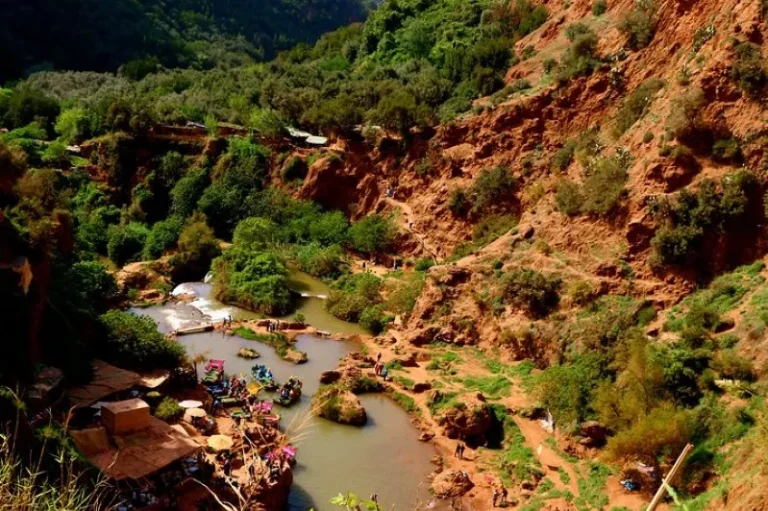
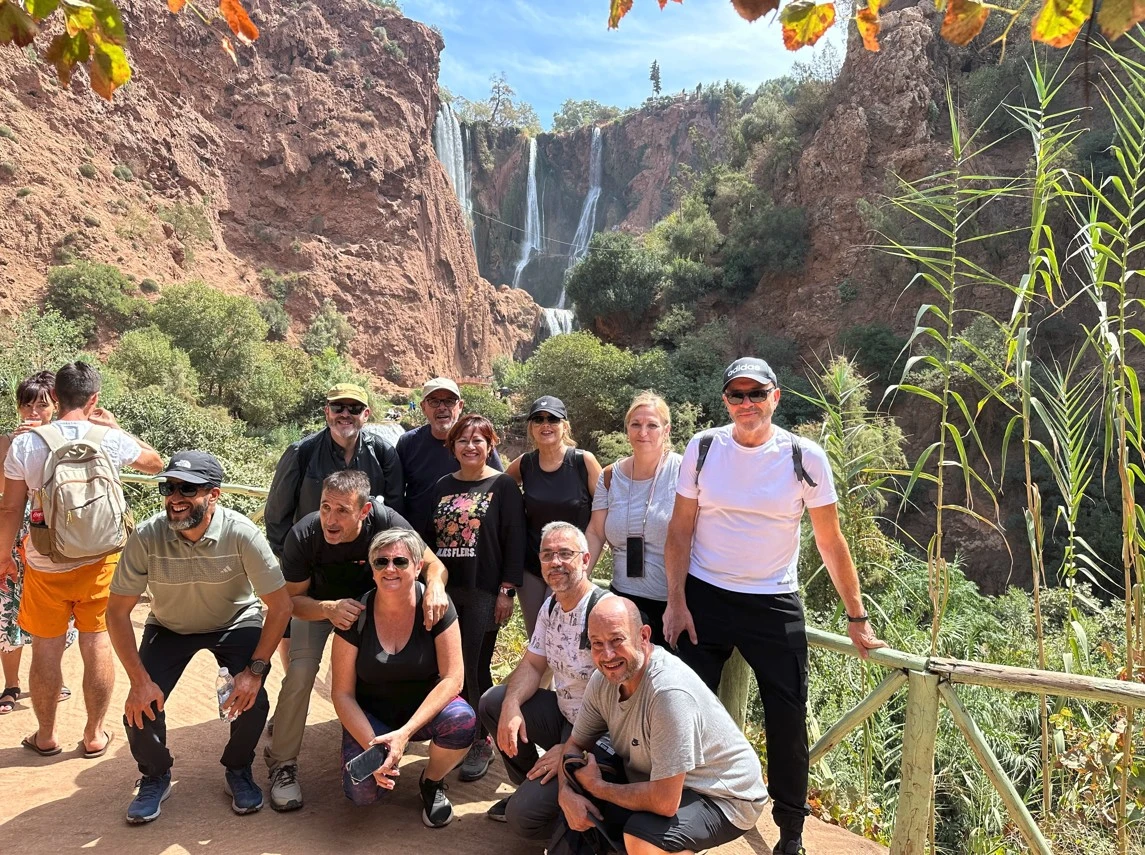
A triple-tiered fall on the Ouzoud river, rainbows in the spray by mid-morning, wild Barbary macaques in the trees (they are charming; do not feed them), and a path that descends through olive groves — ouzoud means olive in Tamazight — to the pools at the base, where small boats nose into the mist.
The two mistakes to avoid
Arriving at noon with every coach from Marrakech: the falls are at their crowded worst between 11am and 3pm. A private departure leaves early, walks the rim in soft light, and lunches by the water as the buses arrive. Doing only the viewpoint: the descent to the base is the actual experience — allow two hours and shoes with grip; the spray keeps the path damp.
When to come
Spring is the thunder season, snowmelt at full volume. Summer trades water for swimmable pools; autumn is the quiet connoisseur’s window. The falls flow year-round — this is no seasonal trickle.
Getting there our way
We run Ouzoud as a private day trip from Marrakech (from €19 per person) — early start, your own vehicle, a guided descent and time to swim. Walkers can fold it into the Atlas hiking routes; the Atlas FAQ answers the footwear question everyone asks.
Everything on this page can be woven into a private itinerary — start from the 3-day Atlas valleys trek, and we shape the rest around you.
Khadija El Fassi — Khadija writes about trekking and mountain travel, from family-friendly valley walks to multi-day traverses. She started hiking the Atlas as a student with a borrowed pack and bad shoes, and her articles are shaped by that memory — they assume nothing, explain the mule logistics, and always answer the question people are embarrassed to ask: how fit do I actually need to be?