★★★★★ Rated 4.5/5 — 204 Google reviews · 576 reviews · 5.0/5 on Tripadvisor · Written by a licensed Marrakech tour operator, on the road since 2011
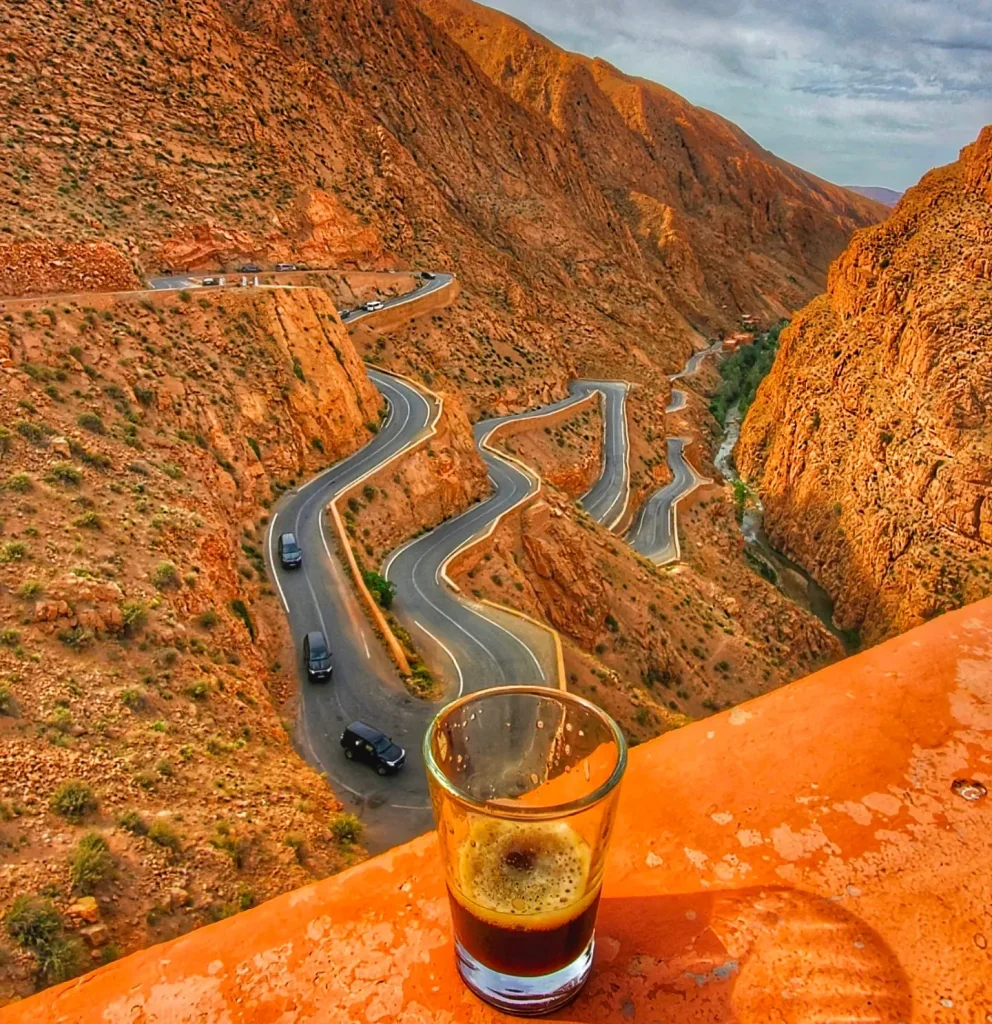
The Todgha (Todra) gorge is where the High Atlas shows its bones: a slot canyon whose smooth rose-coloured walls rise 300 metres over a river you can paddle in, ten minutes’ drive from Tinghir’s palm oasis. Every desert circuit passes it; this guide is for making the pass count.
The hour that matters
The gorge runs roughly north–south, so direct sun reaches the floor only around midday — which is exactly when the coaches arrive. Sleep in Tinghir or the gorge mouth and walk in at 8am instead: cool shade, echoing quiet, Amazigh women driving goats through the narrows, and the walls lighting up top-down like slow theatre. Late afternoon repeats the trick in reverse.

Beyond the postcard 200 metres
Most visitors see only the paved stretch between the walls. Keep walking: the tarmac ends, the canyon opens and closes twice more, and a loop path climbs to the nomad country of the plateau before dropping back through Berber hamlets — two to three unforgettable hours. Todgha is also Morocco’s rock-climbing capital, with hundreds of bolted routes and local guides who rent gear.
The oasis below
Tinghir’s palmeraie is the other half of the visit — a kilometre-wide river of palms, gardens and khettara channels best walked with someone who farms it. The mid-drive stop most tours give it an hour; it deserves an afternoon.
Building it in
Todgha anchors day three of most desert crossings — ours give it the overnight that unlocks the empty-gorge morning, on the 4-day desert adventure (from €600 per person) and every longer Sahara route on the desert collection. Kasbah-country questions live in the Ouarzazate FAQ.
Fatima Zahra Ouazzani — Fatima Zahra covers the desert south — Merzouga, Zagora, the Draa Valley and the oasis routes between them. Her writing keeps returning to the people of the region: the families who run the camps, the date harvest in autumn, the way a khettara irrigation channel organises an entire palm grove. She is our reference for travellers who want the Sahara with its context still attached.