Morocco runs Africa’s most impressive passenger railway — including its only high-speed line — and knowing exactly where the rails go (and pointedly don’t) is the key to using them well.
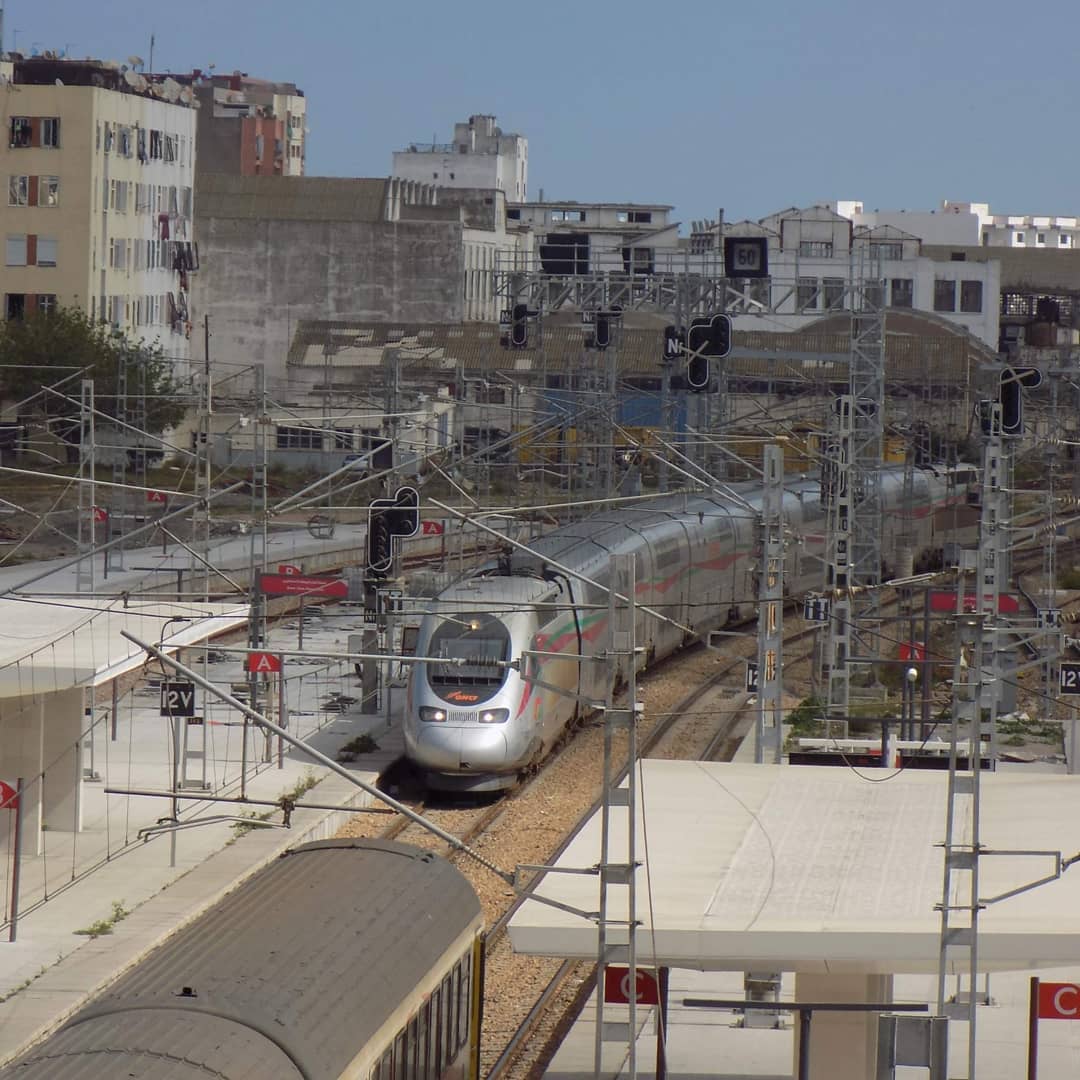
The star: Al Boraq
The high-speed line links Tangier and Casablanca in about 2h10, at up to 320 km/h, with Rabat and Kenitra on the way — comfortable, punctual and absurdly good value by European standards. First class costs little more and guarantees the seat. It is the best way to compress the Atlantic corridor.
The classic network
ONCF’s conventional lines connect Casablanca, Rabat, Fes, Meknes and Marrakech — honest, sociable trains where first class means air-conditioning and a reserved seat worth its small premium. Marrakech–Fes runs long; many travellers split it via Casablanca or take the road instead.
Where the rails stop — and it matters
No trains cross the Atlas. Ouarzazate, the gorges, Merzouga, Zagora, Essaouira, Chefchaouen: all road-only. This single fact shapes every itinerary — rails for the imperial corridor, wheels for everything that makes the postcards. It is precisely why the classic pattern is train where it shines, private driver where it doesn’t.
Practical notes
Buy Al Boraq seats a few days ahead in high season (station machines and the ONCF app both work); classic-line tickets sell same-day easily. Stations sit centrally — Marrakech’s is a monument in its own right.
Mixing rail and road
Plenty of our travellers arrive by train and meet their driver at the station — a circuit can start at any platform. Route logic and connections live in the getting-around FAQ.
Anas Benjelloun — Anas covers the practical side of travelling in Morocco — money, SIM cards, taxis, scams to sidestep, what things cost and when to book. He updates his pages the boring way, by checking, and takes a quiet pride in the fact that his airport-to-medina instructions have never stranded anyone. If a price appears in one of his articles, he has paid it recently.


