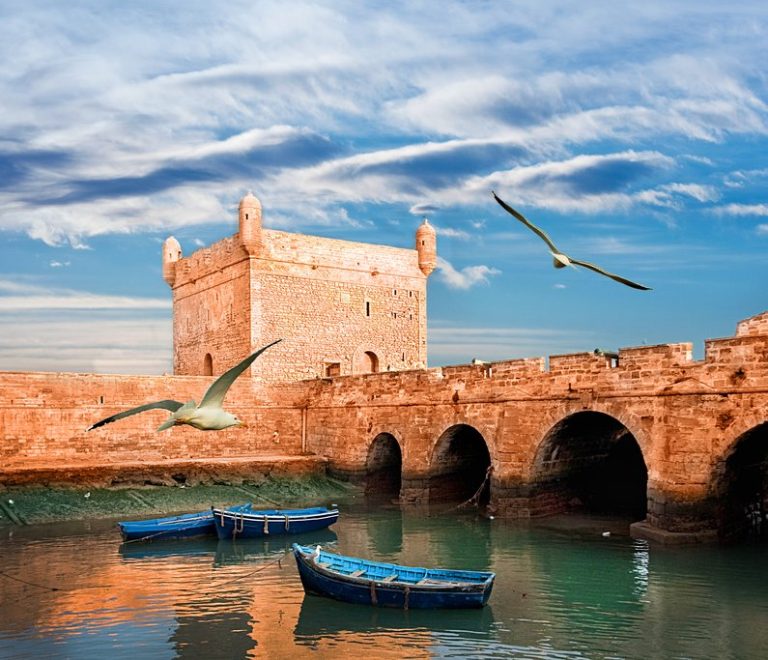
Morocco Tour for Seniors – 12 Days: Culture, Sahara & Enchantment
- Private vehicle & driver — Pick-up at your riad, pace set by you
- Local licensed guide — Licensed guide nº2898 · since 2011
- Book on WhatsApp — Reply within 1 hour · no payment at this stage
- Casablanca's Hassan II Mosque and Art Deco avenues
- Rabat's Kasbah of the Udayas above the Bou Regreg
- The Roman mosaics of Volubilis, in place since the 3rd century

The 12-day Morocco tour for seniors costs from $4500 per person and keeps the full classic loop — Casablanca, Rabat, Volubilis, Fes, the Sahara, the kasbah road, Marrakech — while removing its punishments: the Erg Chebbi dunes are reached by jeep rather than camel, the desert camp has real beds and ensuite bathrooms, no driving day exceeds about four and a half hours, and the long legs break at proper stops — Midelt’s apple country, the Valley of Roses. Eleven nights half-board in riads, lodges and the luxury camp, with licensed guides in six cities and a private driver throughout. Walking is steady but gentle, with level alternatives wherever a climb appears. Travellers who prefer to skip the desert entirely should compare the 10-day seniors tour, which flies the longest leg. Written quote, hotels and daily driving times named, within the hour.
| Duration | 12 Days |
| Price | From $4500 per person — car, driver and accommodation included |
| Departures | Your dates — every departure is private, never a shared group |
| Languages | English- and French-speaking driver-guides; licensed city guides where included |
| Booking | WhatsApp +212 661 454 738 — written quote within 1 hour, no payment at this stage |
The standard grand tour earns its reputation the hard way: eight-hour transfers and a camel lurch at the end of them. This version keeps the itinerary’s full sweep and removes its punishments. The Sahara night survives intact — stars, Berber hosts, dawn on the dunes — but arrives by 4×4; the long Fes-to-desert leg breaks at Midelt’s apple country; the gorge day ends at a streamside lunch table rather than a trailhead.
Choosing a seniors format: this 12-day journey is the everything-including-the-Sahara version; the 10-day seniors tour swaps the desert for the Atlantic coast and flies the longest leg. Both state hotels and pacing in writing before you book.
- Casablanca's Hassan II Mosque and Art Deco avenues
- Rabat's Kasbah of the Udayas above the Bou Regreg
- The Roman mosaics of Volubilis, in place since the 3rd century
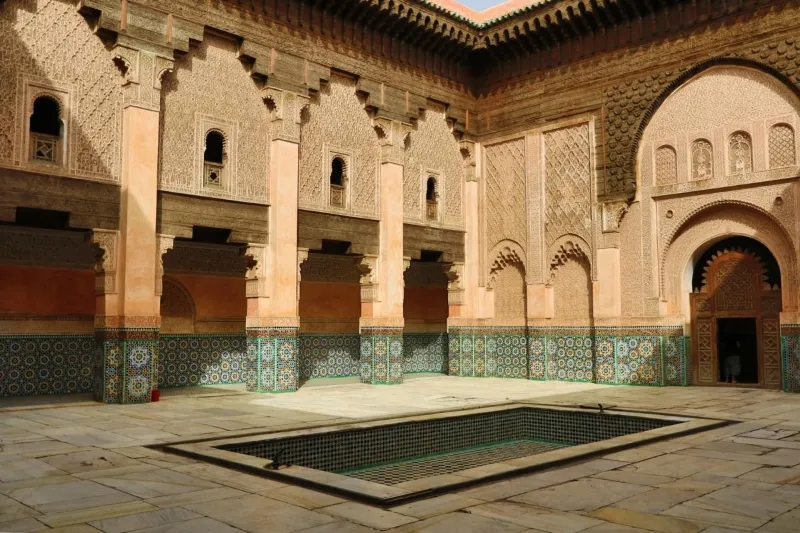
- Fes's Bou Inania madrasa and the Berber caravan town of Sefrou
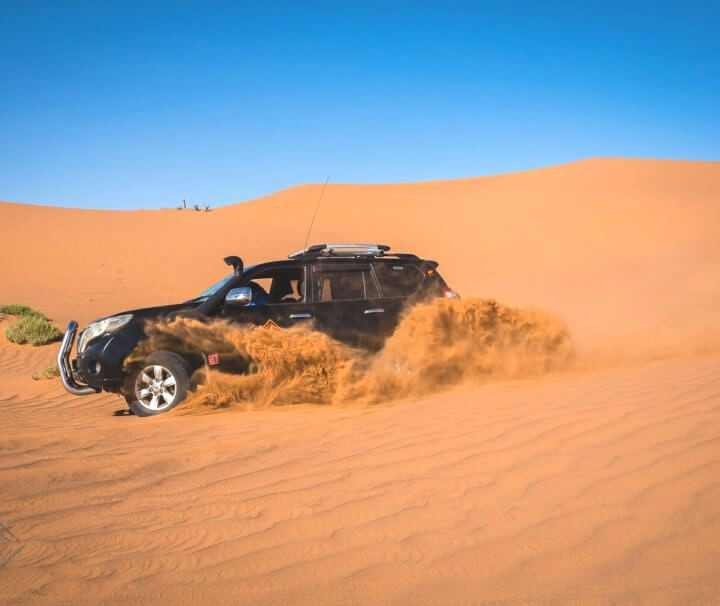
- A jeep — not a camel — into the Erg Chebbi dunes, and a luxury camp night
- Lunch by the stream beneath the 300 m walls of the Todra Gorge
- The Valley of Roses and the Road of a Thousand Kasbahs
- The Bahia Palace and Jemaa el-Fna to finish
Itinerary
Open a day to see the detail: transport, accommodation, meals and activity time.
Day 1 Golden shores of Casablanca
A welcome mint tea sets the tone after the airport transfer. Casablanca shows its French-colonial layers at strolling pace: Mohammed V square, the Art Nouveau Rialto theatre, and the Hassan II Mosque's minaret — the world's tallest — standing over the Atlantic.

Day 2 Capital elegance: Rabat
Casablanca by morning, then the short coastal hop to Rabat, the pirate base that became an elegant capital. The Kasbah of the Udayas — the city's oldest quarter — opens through the 12th-century Bab Oudaia gate onto whitewashed lanes and views over the Bou Regreg and the ocean.
Day 3 Collecting Roman images: Meknes and Volubilis
A guided day pairing imperial Meknes with the part-excavated Roman city of Volubilis: the Arch of Caracalla, the Decumanus Maximus, and mosaics — the House of the Athlete among them — lying exactly where Rome left them in the 3rd century. Fes by evening.

Day 4 The colours of Fes
Into the medieval heart of Morocco: Fes's labyrinth has run without interruption since the 9th century, tanneries and artisan stalls included. The day's masterpiece is the 14th-century Bou Inania madrasa — keyhole arches, geometric carving, a green-tiled minaret.

Day 5 Fes el Jedid and the Berber town of Sefrou
The 'new' Fes first — palace gates and the former Jewish Mellah — then a country excursion to Sefrou, a caravan crossroads since the 13th century, sitting at 1,000 m with an open-aisled medina that asks nothing steep of its visitors.
Day 6 Cedar country to the Sahara's edge
South through the Middle Atlas with a proper stop in Midelt, Morocco's apple capital: the Kasbah Myriem weaving and embroidery workshop that supports Berber women, and — with luck — Barbary macaques, North Africa's only monkeys, in the cedars. Merzouga by evening.
Day 7 The famous dunes, by jeep
A jeep safari rolls into the golden sands on the old Timbuktu caravan routes: Erg Chebbi, a 50-kilometre sea of dunes rising to 150 metres. The night is a luxury camp under the stars with Berber hosts — real beds, no camel required.

Day 8 Sunrise, then the walls of the Todra
Dawn over the dunes, then the road west to the Todra Gorge: red walls 300 metres high narrowing to a ten-metre corridor, the village of Tamtattouchte above, palm groves below, and lunch at a table beside the stream.
Day 9 Tea and roses on the kasbah road
The Road of a Thousand Kasbahs runs from Tinghir to Ouarzazate through the Dades's red, white and rose-coloured rock, past shepherd caves still in use. In the Valley of Roses, the harvest goes to the rosewater and rose-oil distilleries — and to your tea.

Day 10 Over the Atlas to the medina
The panoramic crossing to Marrakech under the snow-topped passes, then a riad in the old city's heart. The 12th-century Jemaa el-Fna supplies the evening: grills, snake charmers, storytellers — and a terrace café to watch it all from.

Day 11 The grandeur of the old town
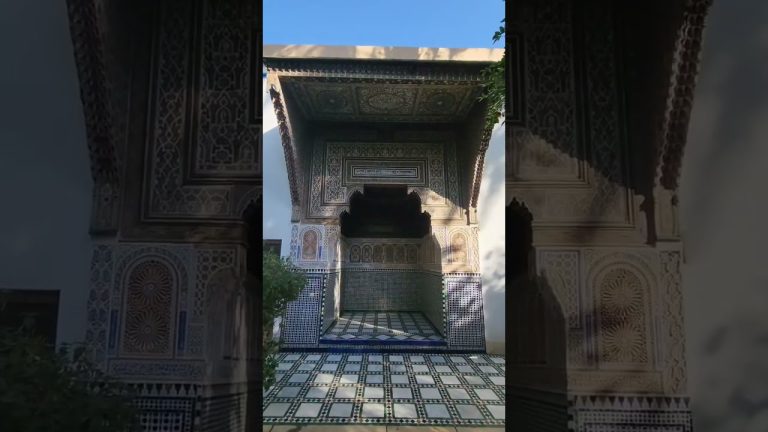
A guided day through Marrakech's enchantments, anchored by the Bahia Palace: eight thousand square metres of late-19th-century ambition — mosaic courts, fountains, a harem wing of woven silk panels and stained glass.
Day 12 Endless Morocco
A last slow morning to the sound of the riad fountain, then a private escort to Marrakech Menara for the flight home.
This is the full classic loop — Casablanca to the Sahara to Marrakech — rebuilt around comfort: the dunes are reached by jeep rather than camel, the camp has real beds and ensuite bathrooms, no single day exceeds about four and a half hours of driving, and the two long legs are broken by proper stops (Midelt's apple country, the Rose Valley). Walking is steady but gentle, with level alternatives wherever a climb appears.
Included in your tour
- Private air-conditioned vehicle with English/French-speaking driver-guide — 12 days
- Pickup at Casablanca Mohammed V airport, drop-off at Marrakech Menara airport
- Night 1: hotel in central Casablanca — half-board
- Night 2: riad in Rabat — half-board
- Nights 3-5: luxury riad in Fes — half-board
- Night 6: mountain lodge in Midelt — half-board
- Night 7: luxury desert camp at Erg Chebbi — full board, jeep transfer into the dunes
- Night 8: kasbah hotel at the Todra Gorge — half-board
- Night 9: kasbah hotel in Ouarzazate — half-board
- Nights 10-11: riad in the Marrakech medina — half-board
- Guided visits in Casablanca, Rabat, Meknes, Volubilis, Fes, Sefrou and Marrakech
Not included
- International flights
- Lunches and beverages
- Entrance fees to monuments and historical sites (optional — pay directly)
- Tips for guide and driver
- Personal expenses
- Travel insurance (recommended)
Explore more
Questions travellers ask
How much does Morocco Tour for Seniors – 12 Days: Culture, Sahara & Enchantment cost?+
From $4500 per person, per person. The price includes private air-conditioned vehicle with english/french-speaking driver-guide — 12 days, pickup at casablanca mohammed v airport, drop-off at marrakech menara airport, night 1: hotel in central casablanca — half-board. You receive a written itemised quote before paying anything — no hidden fees.
How long is this tour and when does it depart?+
12 Days, departing on the dates you choose — there is no fixed schedule, because every departure is arranged for you alone.
Is this a group tour or private?+
Fully private: your own vehicle, driver and licensed guide, never seat-in-coach and never mixed with other travellers. The daily pace flexes around you.
Is Morocco suitable for older travellers?+
Excellent for them — private pacing is the whole product: shorter walking blocks, unhurried starts, the car always near, and hotels chosen for comfort. Many of our most devoted guests are in their seventies.
How walkable are the medinas with limited mobility?+
Surfaces are cobbled and occasionally stepped, but the main arteries of Marrakech and Essaouira are manageable at a gentle pace, and guides route around stairs. Fes is the steepest — we adapt with shorter loops and terrace viewpoints.
Are there riads with elevators or ground-floor rooms?+
Traditional riads are stairs-first, but many have ground-floor rooms and several fine hotels offer lifts near every medina. Flag mobility needs at booking and we choose accordingly — this matters more than any other detail you can give us.
Can wheelchair users visit Morocco?+
With planning, yes: new-town hotels, adapted vehicles on request, the great sights that need no stairs (Volubilis' paths, the Hassan II esplanade, kasbah exteriors, desert sunsets by 4×4). We will be honest about which classics do not adapt — and build the trip from those that do.
More answers in the “Seniors & accessible travel” chapter of our Travel FAQ →
Itinerary and prices last updated October 2026.