Before Bologna, before Oxford, there was al-Qarawiyyin: founded in 859 by Fatima al-Fihri, a merchant’s daughter who spent her inheritance on a mosque for her community, and continuously teaching ever since — which is why UNESCO and the Guinness records both cite it as the oldest existing university on earth. Eleven centuries of scholars, from Ibn Khaldun to (by strong tradition) Pope Sylvester II, learned in these courtyards.
Honesty first: as a working mosque, its interior is closed to non-Muslims, like almost every mosque in Morocco. What visitors do is what Fassis accept with grace — pause at the great open gates on the surrounding lanes for the framed view of the marble courtyard, the fountains and the green-tiled roofs, stepping aside for worshippers. The glimpse is genuinely worth organising a walk around.
The building grew with the city: Almoravid expansions, Almohad rigour, Saadian pavilions in the courtyard that answer the Alhambra’s Court of the Lions — a millennium of Moroccan architecture compressed into one complex you read from its edges.
The al-Qarawiyyin library, one of the world’s oldest, was restored in the 2010s — manuscripts here include a 9th-century Quran and al-Fihri’s era documents. Public access is irregular: sometimes the reading room or an exhibition opens, often not. We check before your day in Fes rather than promising what the door decides.
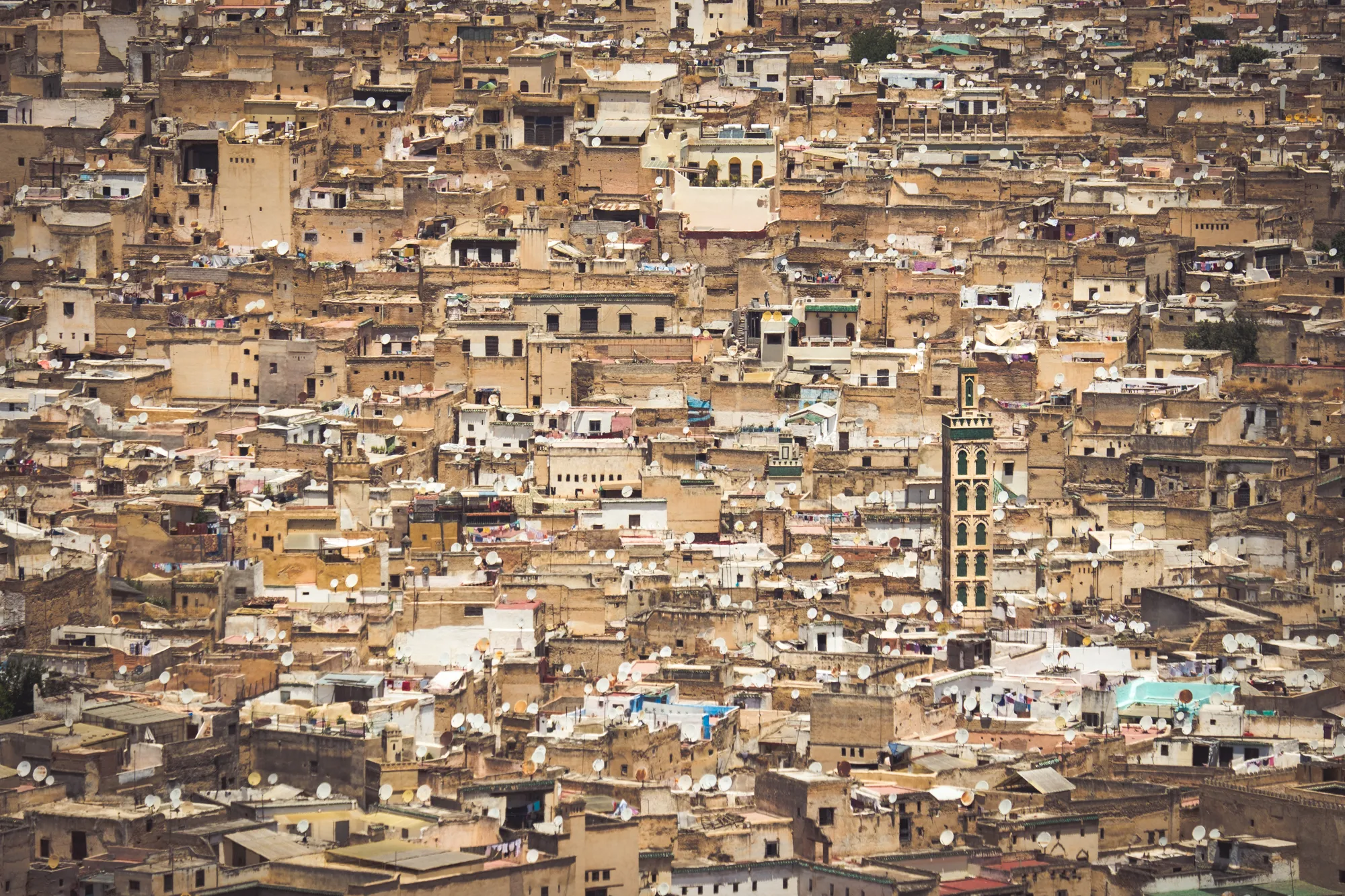
To grasp the scale, go up: several café and shop rooftops around the Seffarine square area look across the green roofs of the mosque spreading like a lake through the medina — the university is not a building but a quarter.
This is precisely the monument where a licensed guide changes everything: which gate frames the courtyard best at that hour, which rooftop is open, what eleven centuries of teaching actually looked like. It sits at the heart of our guided Fes day — dates on WhatsApp, and we build the walk around it.
- Founded in 859 by Fatima al-Fihri — often cited as the world's oldest existing university
- Heart of Fes el-Bali for over eleven centuries
- Mosque interior closed to non-Muslims — courtyard glimpses from the gates
- Restored medieval library, partially accessible
- UNESCO-inscribed as part of the Fes medina
The prayer hall is closed to non-Muslims; the courtesy is to look from the open gates without blocking worshippers. The restored library opens irregularly — ask us the day before whether visits are running. The surrounding lanes and rooftop views are the reliable way to grasp the scale.