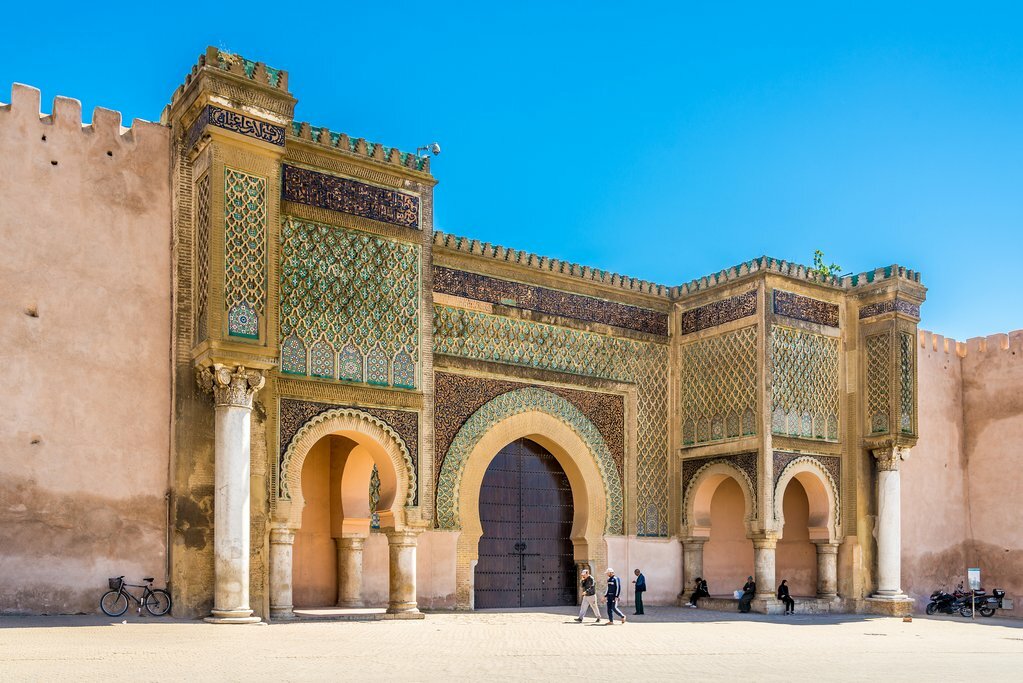
Every Moroccan city has gates; Meknès has the gate. Bab Mansour, completed in 1732 just after Sultan Moulay Ismail’s death, was the triumphal full stop on his imperial capital — a facade of interlaced green zellij and carved plaster nearly as wide as a city block, flanked by loggias on marble columns the sultan’s builders carried from Roman Volubilis. Recycling as a power statement: the old empire literally holds up the new one.
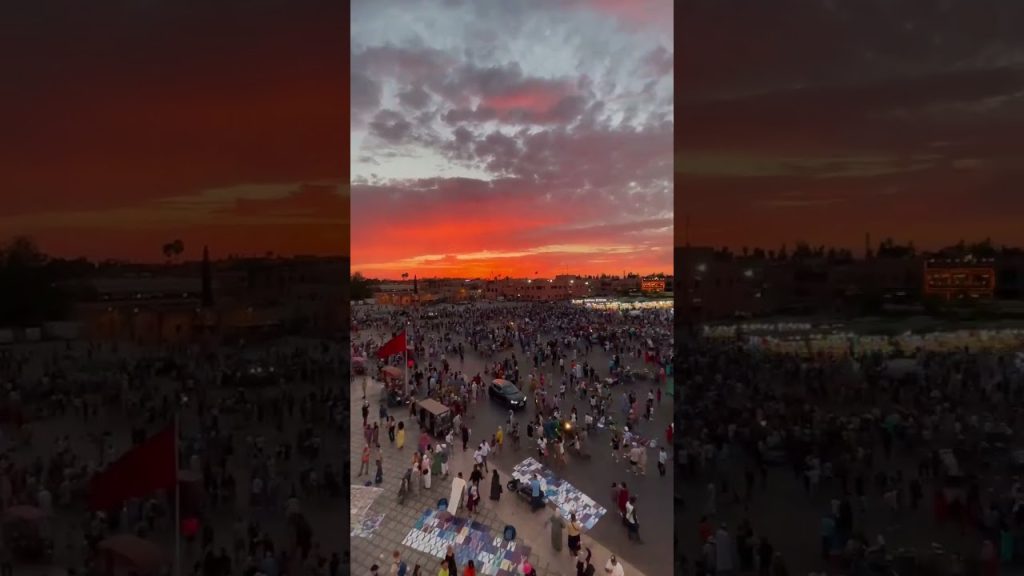
It is named for its architect, El-Mansour the renegade — a Christian convert whose fate under the notoriously demanding sultan varies by storyteller. The gate was ceremonial from birth: the real traffic used side entrances, leaving the great arch as pure theatre facing Place el-Hedim, Meknès’ answer to Jemaa el-Fna at sundown.
View it from the square with a coffee as the light angles across the zellij — then let it open the rest of imperial Meknès: the royal granaries and stables built for ten thousand horses, the mausoleum of Moulay Ismail, the quiet medina. Meknès pairs with Volubilis as the classic day from Fes on our imperial circuits (from €1050/person).
- Completed 1732 — the grandest gate in Morocco
- Green zellij facade; marble columns taken from Volubilis
- Faces El Hedim square — Meknès' living room
- Viewable free, anytime; interior hosts occasional exhibitions
- Pairs with the royal granaries and Moulay Ismail's mausoleum
The gate is the photograph; the granaries (Heri es-Souani) are the revelation — most visitors give Meknès two hours when it deserves five.