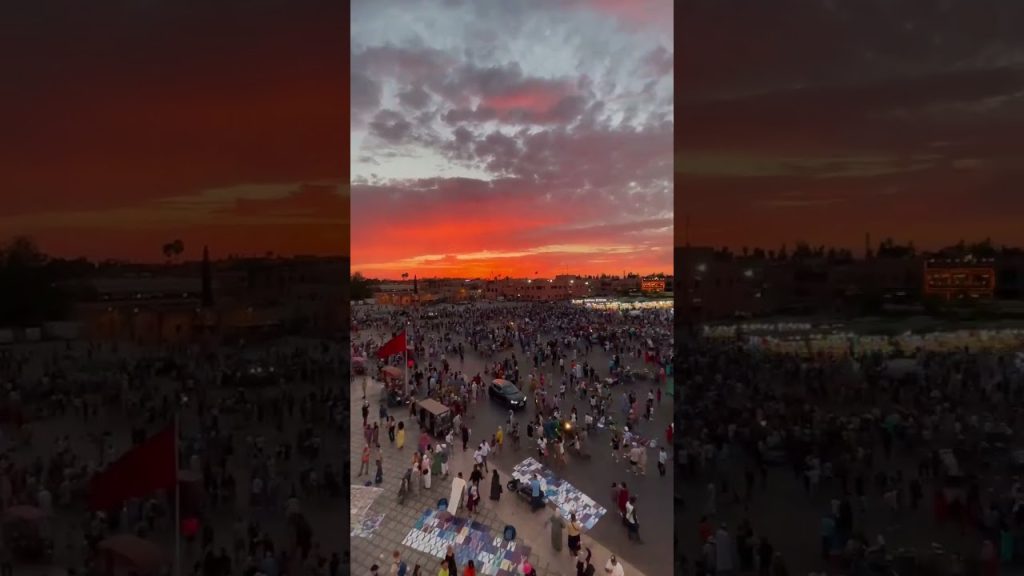
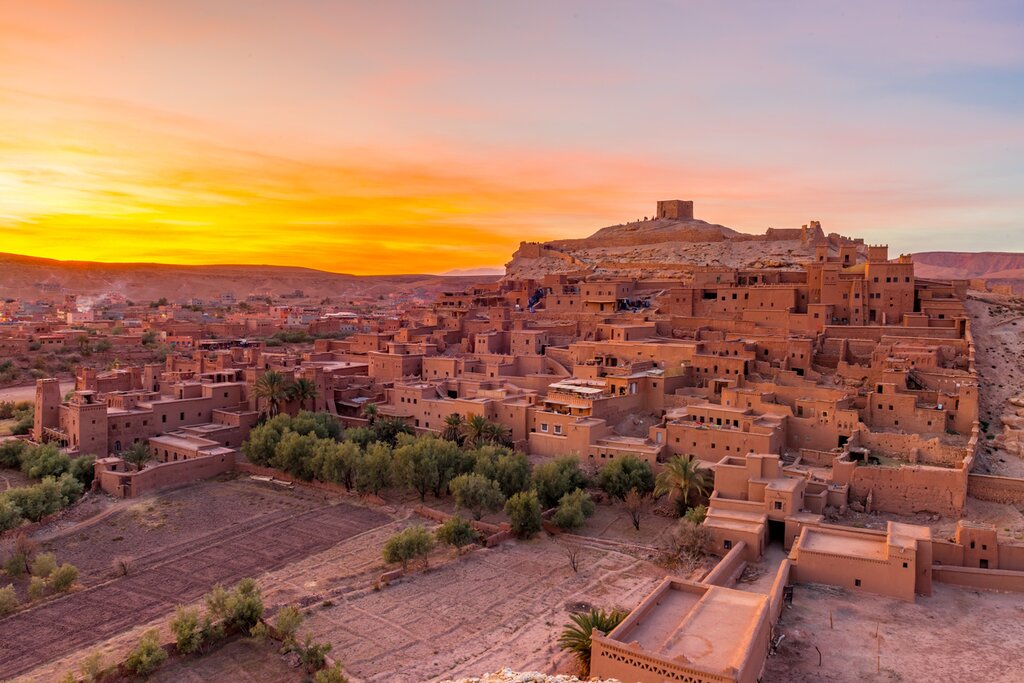
At the kingdom’s far southeastern point, where the map narrows against the Algerian border, seven fortified villages ring a sea of 200,000 palms: Figuig, the oasis at the end of every road, on UNESCO’s tentative list and off nearly every itinerary — which is precisely its glory for travellers who collect a country’s edges.
The seven ksour — Zenaga greatest among them, with Loudaghir, El-Maiz, Ouled Slimane and their brothers on the plateau above — are earthen towns of the classic desert grammar: covered lanes for shade and defence, tower houses, mosques whose mud minarets taper like termite art. Zenaga’s labyrinth alone absorbs a morning; its old quarter mosques and the palm-facing walls compose the oasis’s finest walks.
Water wrote Figuig’s civilisation: springs feed foggara channels whose flows are still divided by ancient timed rights — the clepsydra logic of the oases — through gardens of date palm (the boufeggous variety is the local aristocrat), figs, pomegranates and barley. Walking the palm groves between channels, gardeners waving you through, is the deep-Morocco hour few visitors ever bank.
History haunts gently: the oasis prospered on caravan branches and pilgrimage roads; the border’s closure beached it in silence. Emigration built new houses, elders keep the ksour, and guests — rare, thus honoured — meet hospitality with the old gravity.
Logistics are the filter: Figuig is genuinely far (the Oriental’s long road via Bouarfa), best in winter-spring, and richest with a local guide we arrange ahead. It suits the second-visit traveller, the desert-architecture devotee, the completist of ends.
For itineraries threading the Oriental — or purpose-built Figuig expeditions — dates on WhatsApp; we build the far east properly.
- Seven fortified ksour around a 200,000-palm oasis
- Morocco's far southeast — on UNESCO's tentative list
- Zenaga: the grandest ksar, with covered lanes and old mosques
- Foggara water channels still shared by ancient rights
- For travellers collecting the country's very ends
Reaching Figuig is the commitment (far southeast, border country); rewards are absolute authenticity and hospitality. Ksour lanes are open — local guides (arranged ahead) make the water system and etiquette legible. Winter and spring are the seasons.