★★★★★ Rated 4.5/5 — 204 Google reviews · 576 reviews · 5.0/5 on Tripadvisor · Written by a licensed Marrakech tour operator, on the road since 2011
The desert has no bad sunsets, but it absolutely has better months. After years of running the Erg Chebbi and Zagora routes in all of them, here is the calendar as we would give it to a friend.
The gold windows
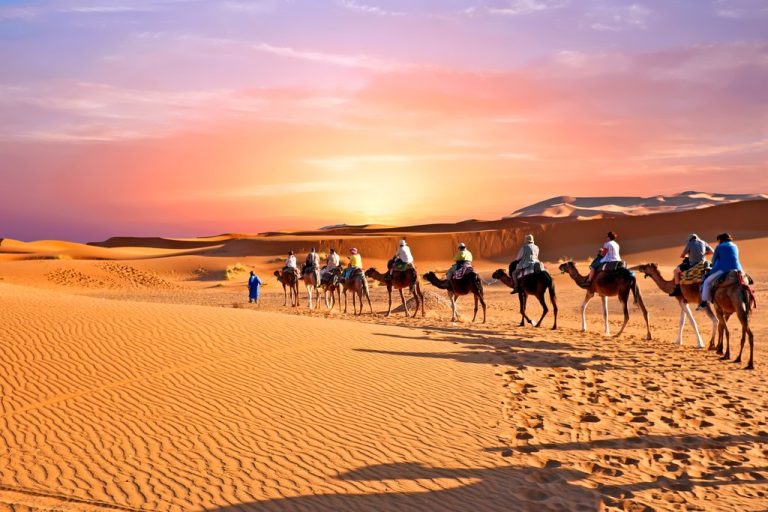
October–November: the champion — warm days (mid-20s to low 30s), starry mild nights, dunes recharged after summer, light at its amber best. March–April: the co-champion — spring clarity, comfortable camel hours, and the odd theatrical sky as seasons argue. Book these windows early; the good camps know their worth.
The honest middle
December–February: glorious days, cold nights — near freezing before dawn. The camps answer with thick blankets and fire; you answer with layers. Reward: the crispest stars of the year and the emptiest dunes. May and September: the shoulder gamble — mostly excellent, occasionally an early or late heat spike; we watch forecasts and shift camel hours accordingly.

The managed extreme
June–August: 40°C-plus afternoons. We still run it — dawn departures, air-conditioned kilometres, camp after sundown — and August nights under the stars remain wonderful. But if your dates are free, choose October. If they are not, read our desert FAQ heat answers and trust the choreography.
Matching month to route
Cold-sensitive? Spring. Heat-sensitive? Sept–April only. Photographers? November light. Families? School breaks land well in Feb, April and October — the 4-day circuit (from €600) runs year-round, and plan your journey turns your month into the right version of it.
Everything on this page can be woven into a private itinerary — start from Morocco desert tours, and we shape the rest around you.
Hassan Ait Brahim — Hassan writes our Sahara pages. He has crossed the Erg Chebbi and Erg Chigaga dunes in every season, including the ones we advise against, and his articles are built from that repetition: what a desert night actually feels like in January, how the camps differ, when the dunes hold their colour longest. He measures every itinerary against one question — is the drive worth what waits at the end of it.